So there are many inspiring examples of embroidery floating around. You see photos online (a reason I keep Facebook), in books, on greeting cards under the quintessential representation of a Uki Easter or Rizdvo eve feast, or worn or used in like proper real life by people.
I remember one such example, standing at the back of the hall at church, awaiting the blessing of Easter baskets, spying and admiring someone’s beautiful servetka. After the blessing, owner of said servetka whipped it off his basket and passed it over, to borrow, to copy. And copied it was… onto graph paper.
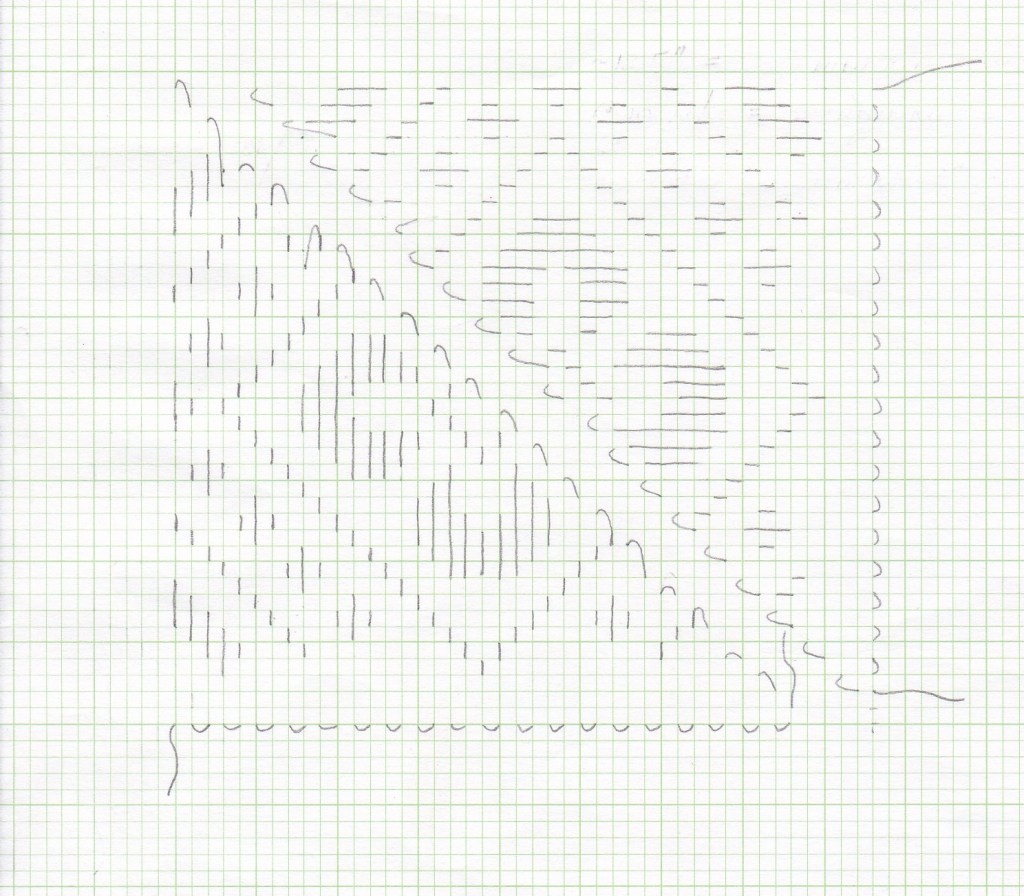
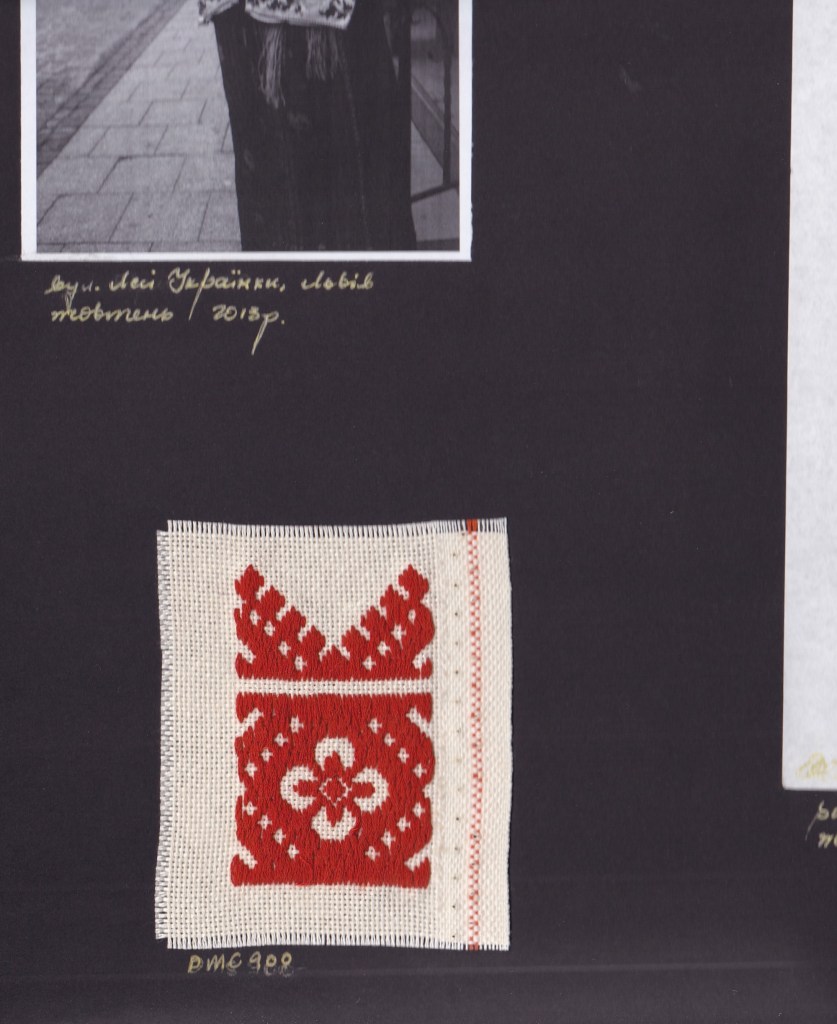
As the above may demonstrate, there is no question that a graphed design will make the most sense to the grapher.
Even from books where designs are drawn out in schematic diagrams, I prefer to draw them out for myself before getting under way.
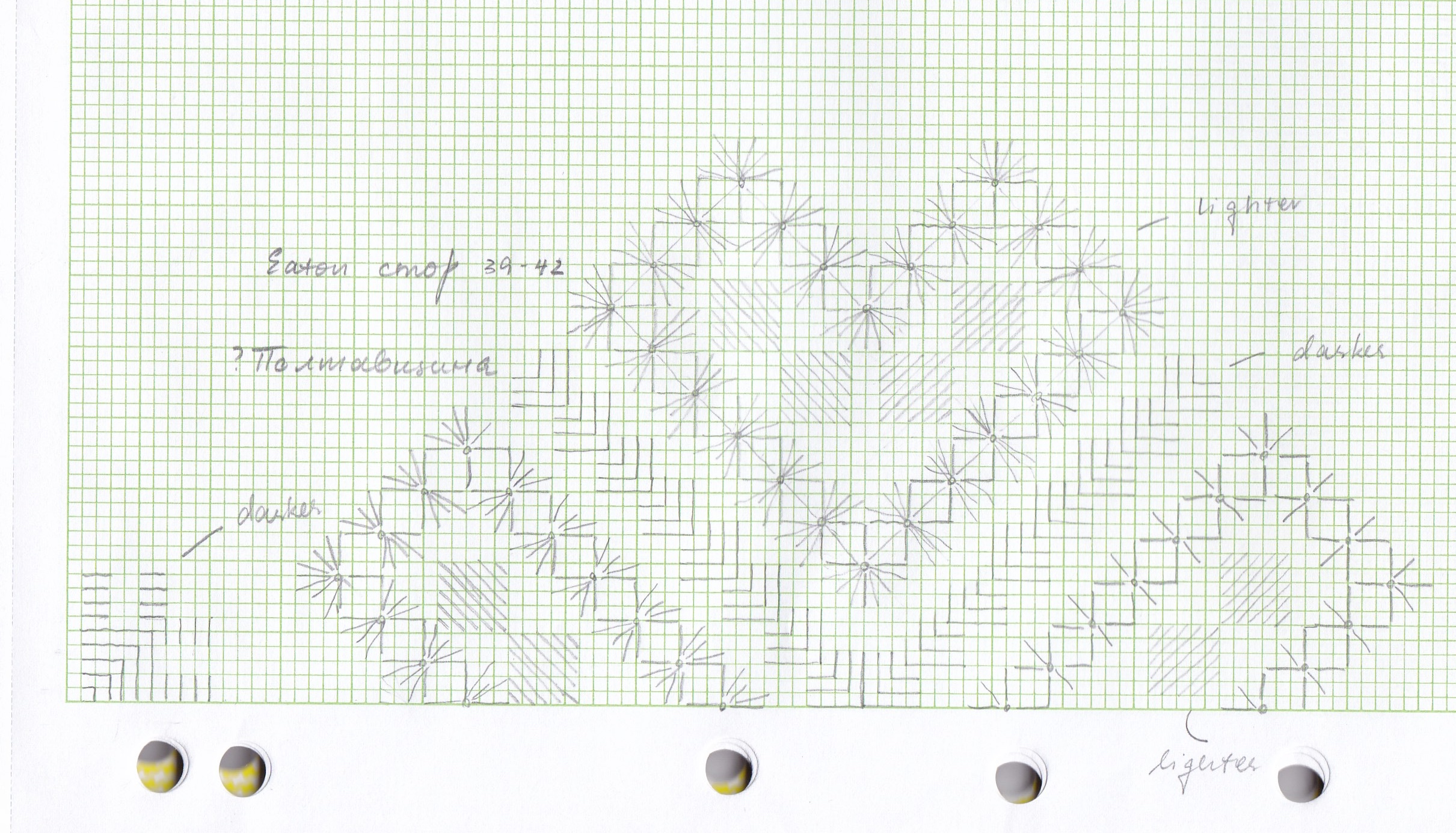
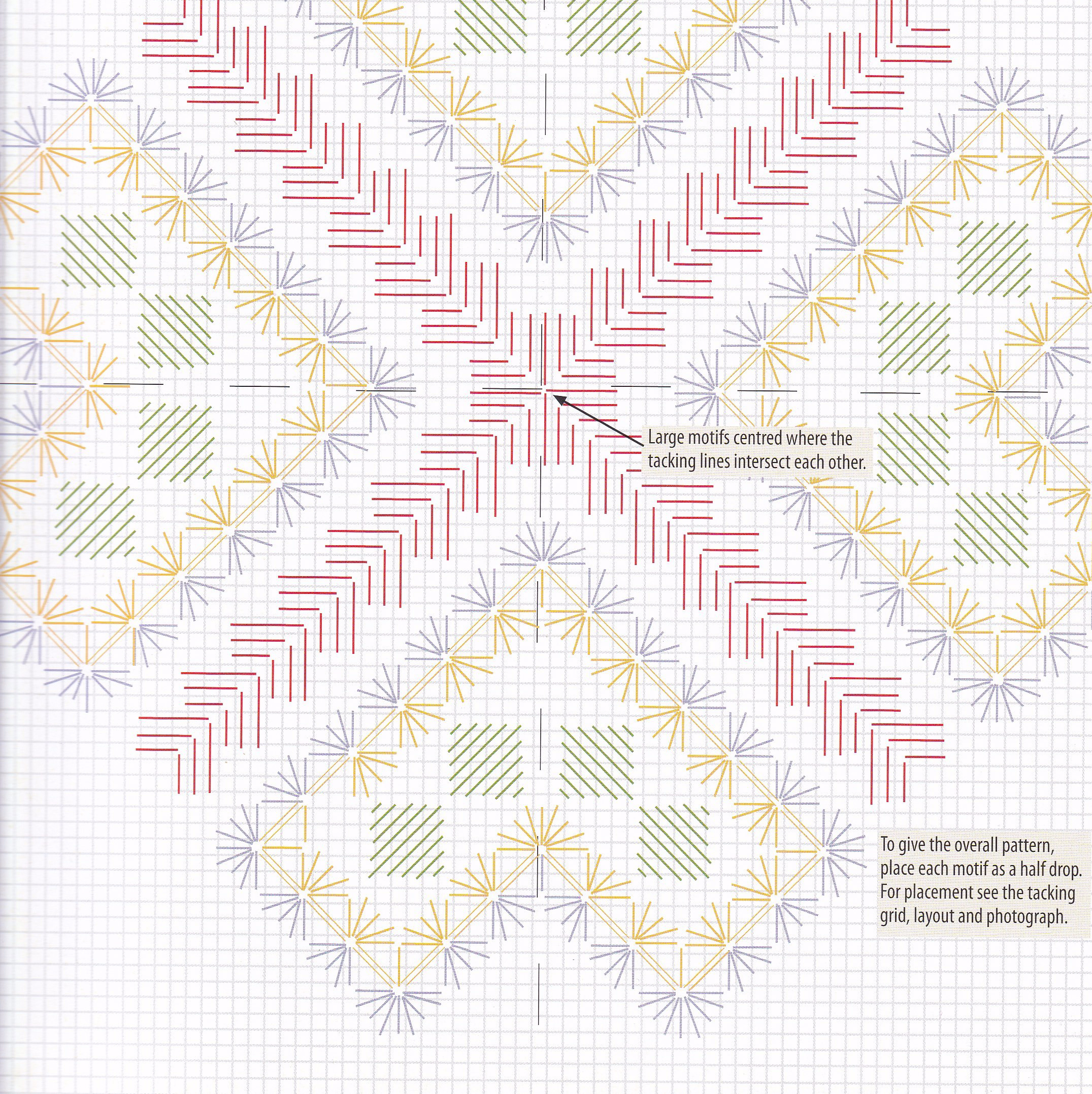
Why?
Apart from the fact that I sometimes find simply graphing a design a relaxing, mindful, satisfying activity, I learnt very early on the value of graphing.
In fact, I remember inventing designs as a little thing! Not something I do so much any more!
For me, the main value of graphing lies in learning the design before starting to embroider it. I would find it difficult, in the case of a simple design, and nigh on impossible in the case of a detailed or not zoomed in design, to embroider directly from a photo.
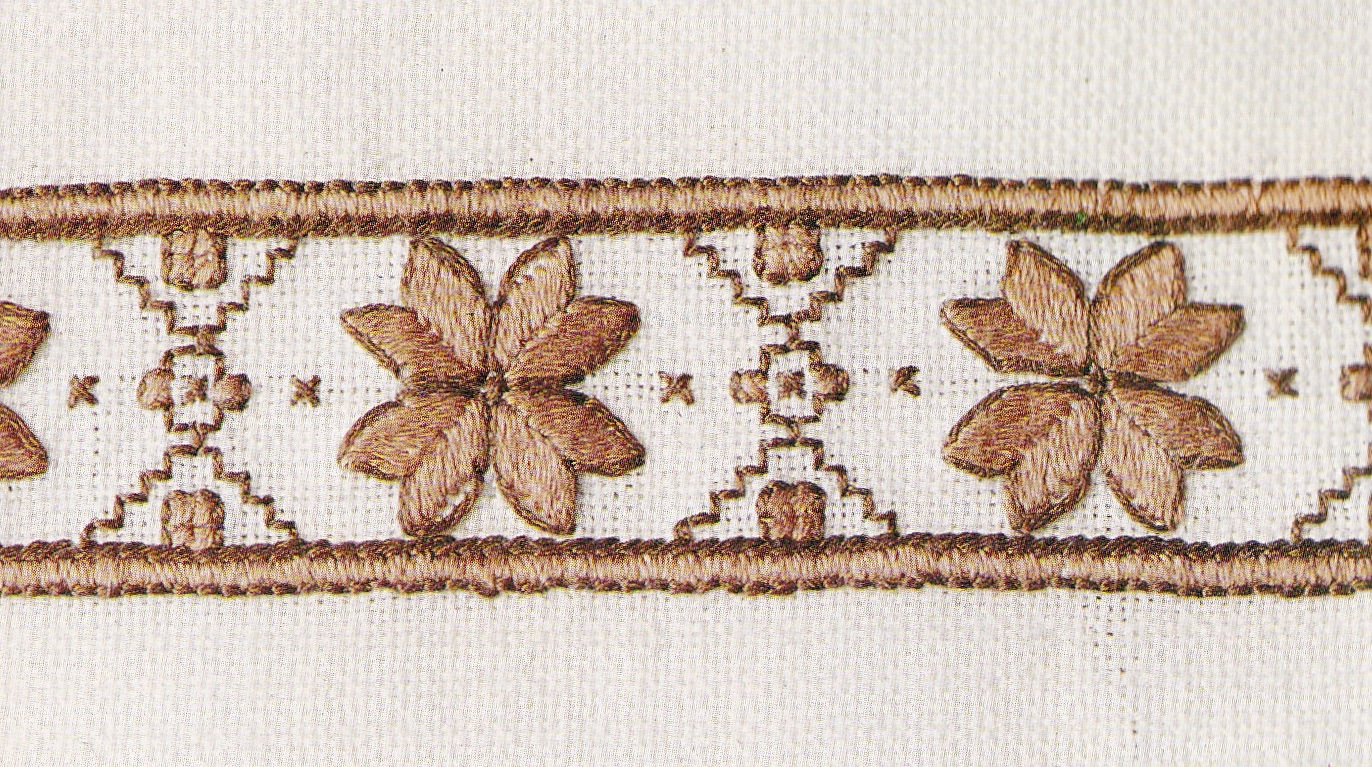
Even here, the relative size of separate motifs, their spacing, will affect the appearance of the embroidered pattern. Something to work out on graph before getting under way.
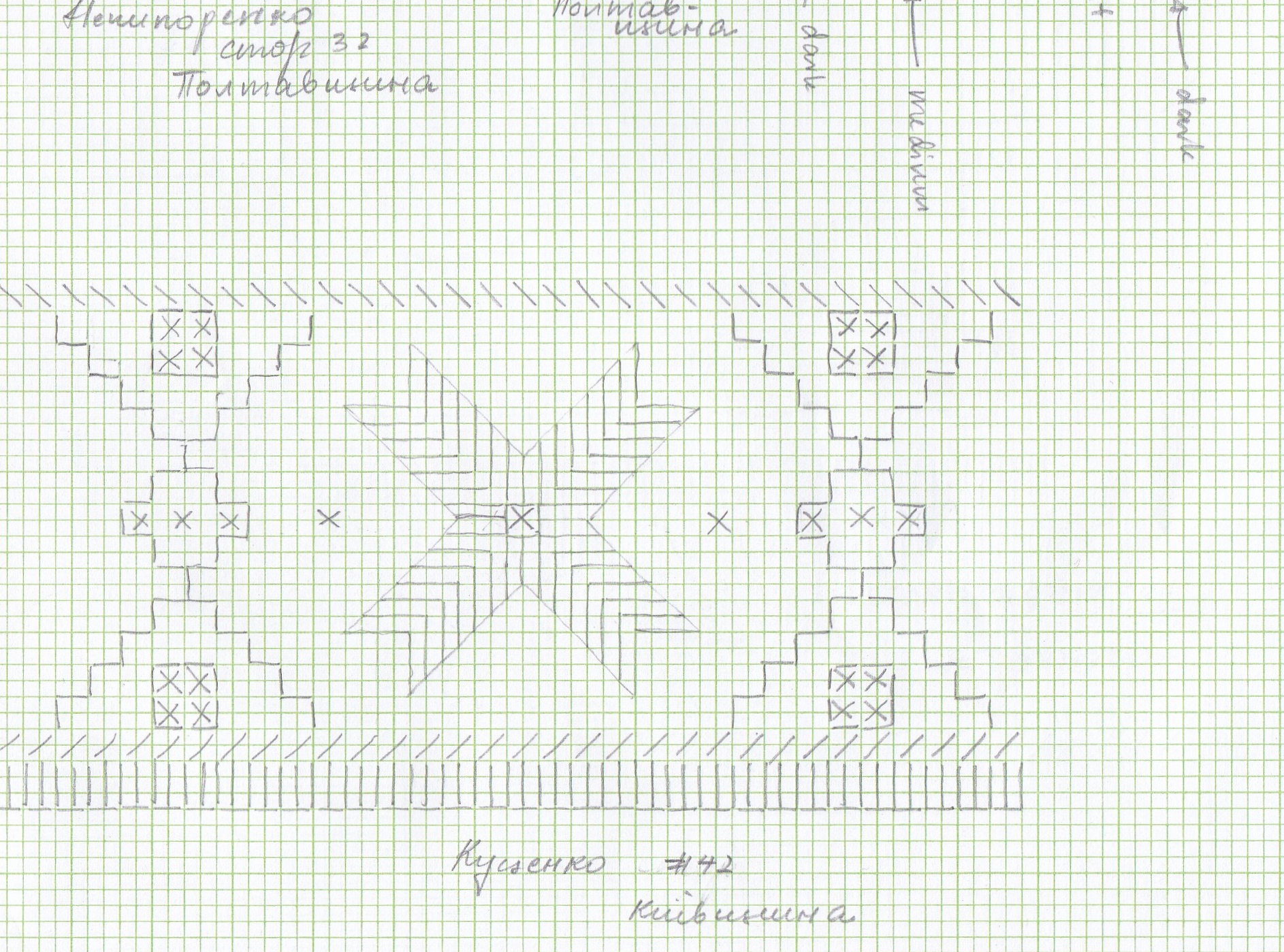
Here, the central star didn’t appeal to my eye and when embroidering it, I immediately changed its dimensions to appear more like the original design.

Designs presented in books as linear can be little devils when trying to get them to turn a right angle.
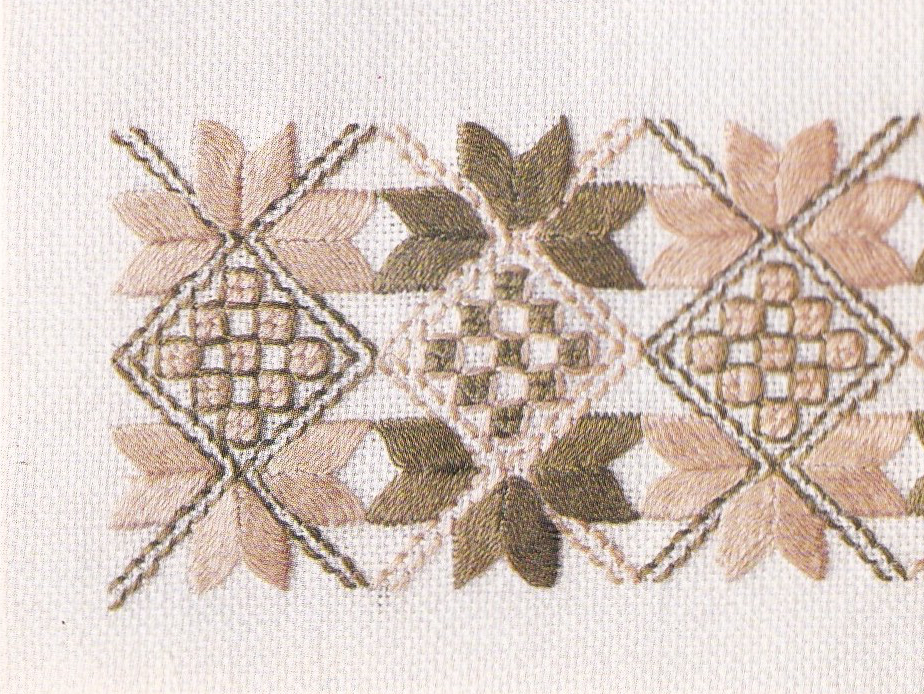
Who would have thought?
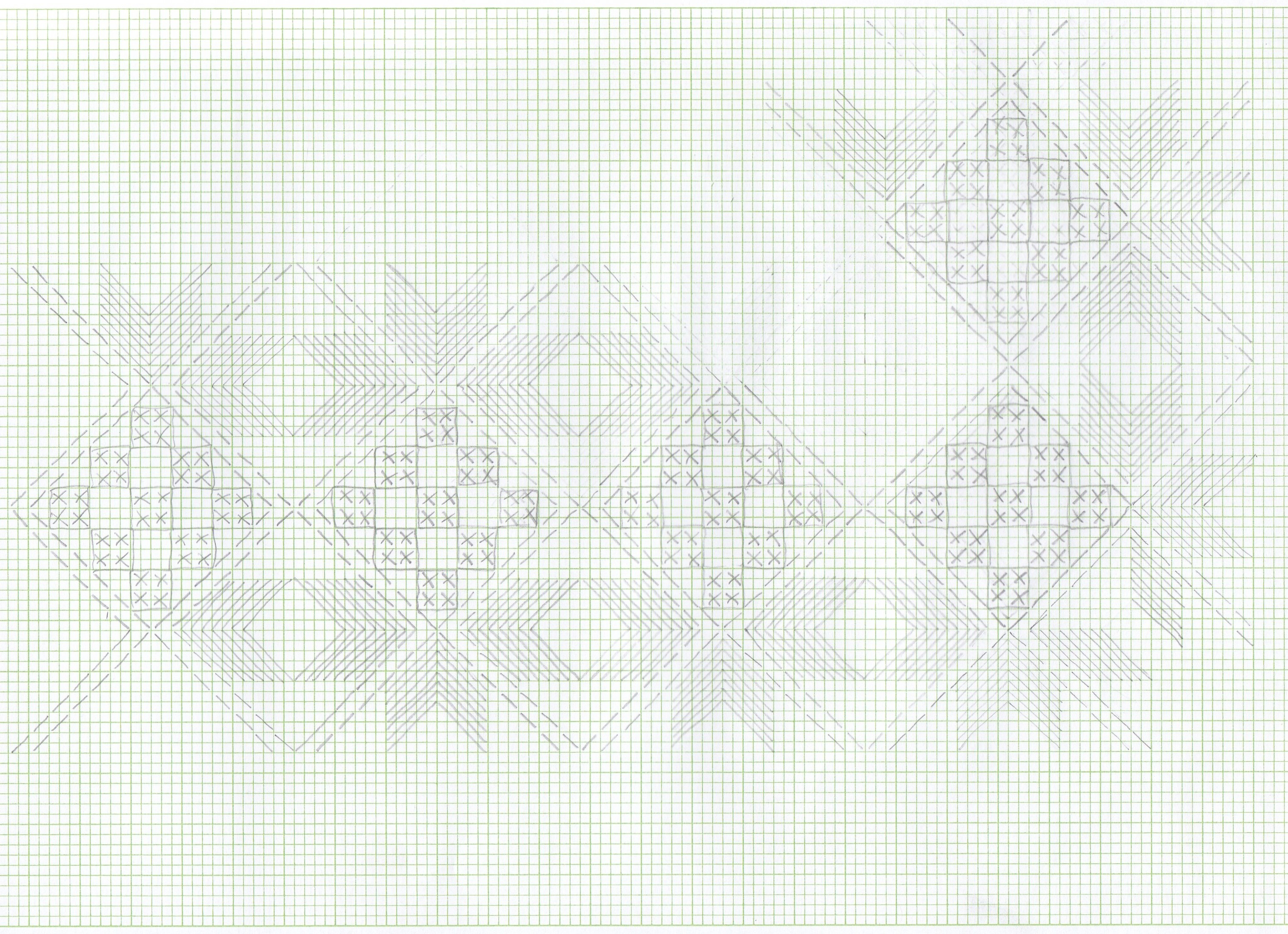
But after this much rubbing out and retrying, I’m not really happy with how it looks and I think the idea of using this for a servetka has well and truly died off.
Or I just came across this again… once enthusiastically copied from a webpage, defeated by designs from Rava Rusha! If I can’t get it right in drawing, I wont be doing it in needle and thread!

I think the other important factor which graphing helps is composition – how much fabric, what dimensions? I wont pretend that I very formally compose anything but I often find it helpful to have a design graphed, to count the thread number in a repeated motif and have sense of where I’m going with it before I get started on a more substantial project (than a bookmark anyway)!
Finally, graphing is like an archive of interest. I have some designs that I’m sure I graphed back when I was a teenager. And I still look at them and admire them.
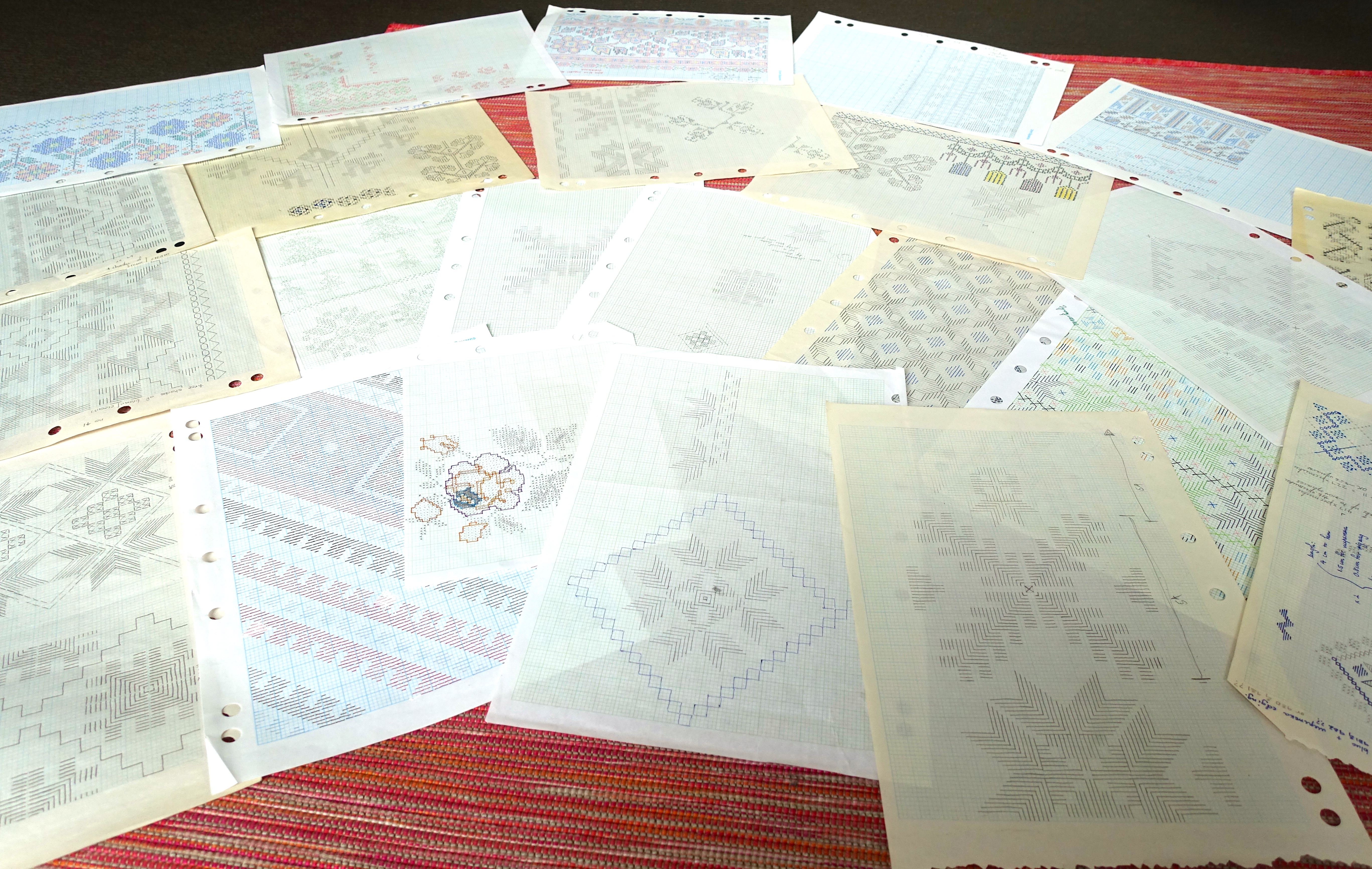
In summary? Graph away! It is embroidery’s friend!
~oOo~
 KX Beautiful Ukrainian Embroidery