I am pretty sure it was my Baba who taught me that there are to be no knots in one’s embroidery.
As a slight aside, and I will come back to no knots in Uki embroidery, this reminds me of a visit to the National Museum of Ukrainian Decorative Folk Art in Kyiv https://www.mundm.kiev.ua/INDEX_EN.HTM. This museum is housed within the grounds of the Kyiv-Pechersk Monastery. Photos are allowed. Of course, I stood out as a blatant foreigner and attracted the attention of an attendant, much friendlier than those who policed museums in Kyiv in my first visits to UA as a teen and in my early 20s. She struck up a conversation and heard my Ukrainian and by doing very little, I had earned myself a fairly comprehensive guided tour of several rooms of the museum, including that to Ukrainian national dress through the ages.
I learned from this lovely lady the care with which Ukrainian women have always dressed. She told me that one could tell by looking at a woman’s dress her age range, marital status, economic status, area of residence. Headwear was always worn, even if as simple as a ribbon for a young girl. Necklaces of beads and coins were important and parents tried hard to purchase as many beads and coins as they could for their daughters. Embroidered shirts covered the body from neck to wrist and ankle and embroidery was key at these edges to protect the body. Layers were added over the shirt with complex skirts, vests, jackets. Ukrainian women didn’t wear their clothes, the clothes were carried by the woman. How elegant! Pleats were carefully arranged whilst a woman stood on a stool so family members or friends could walk around her, checking the details. Sashes were “folded” and arranged, but not tied. Tie up a sash and you’ll tie your own fate.
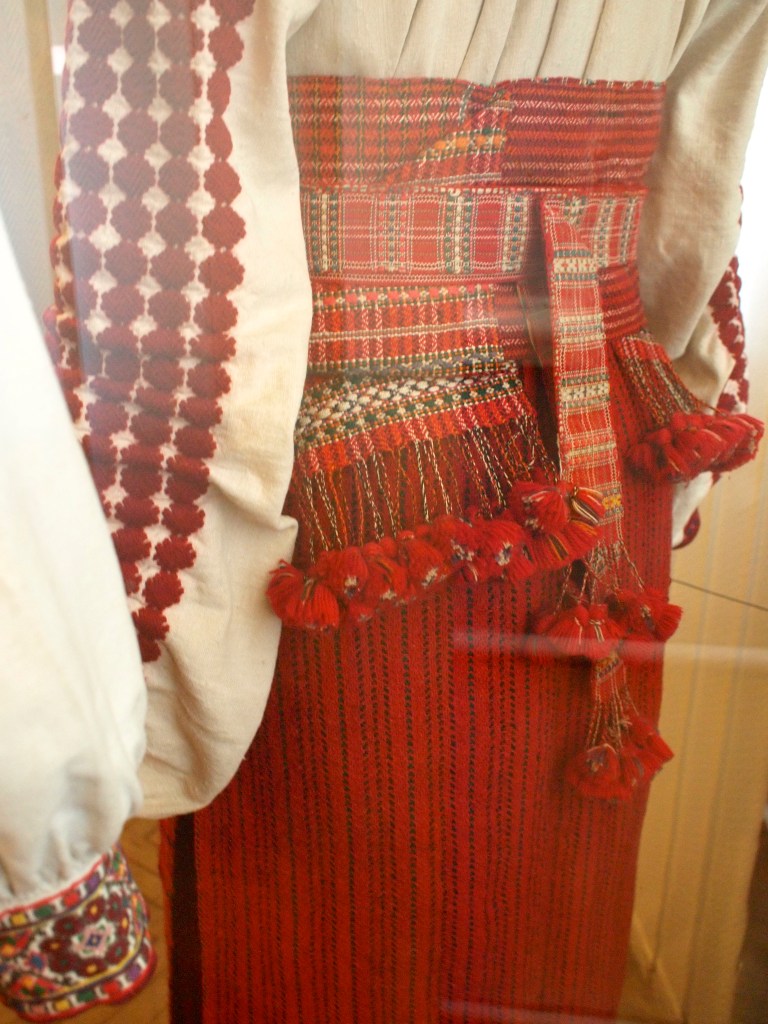
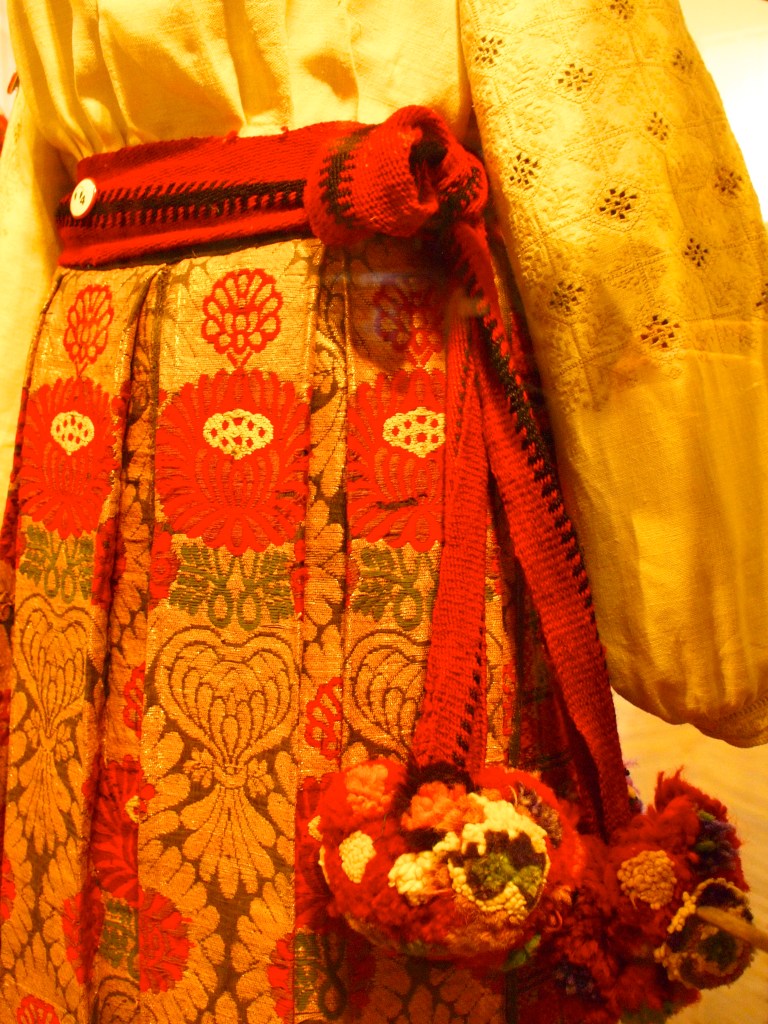
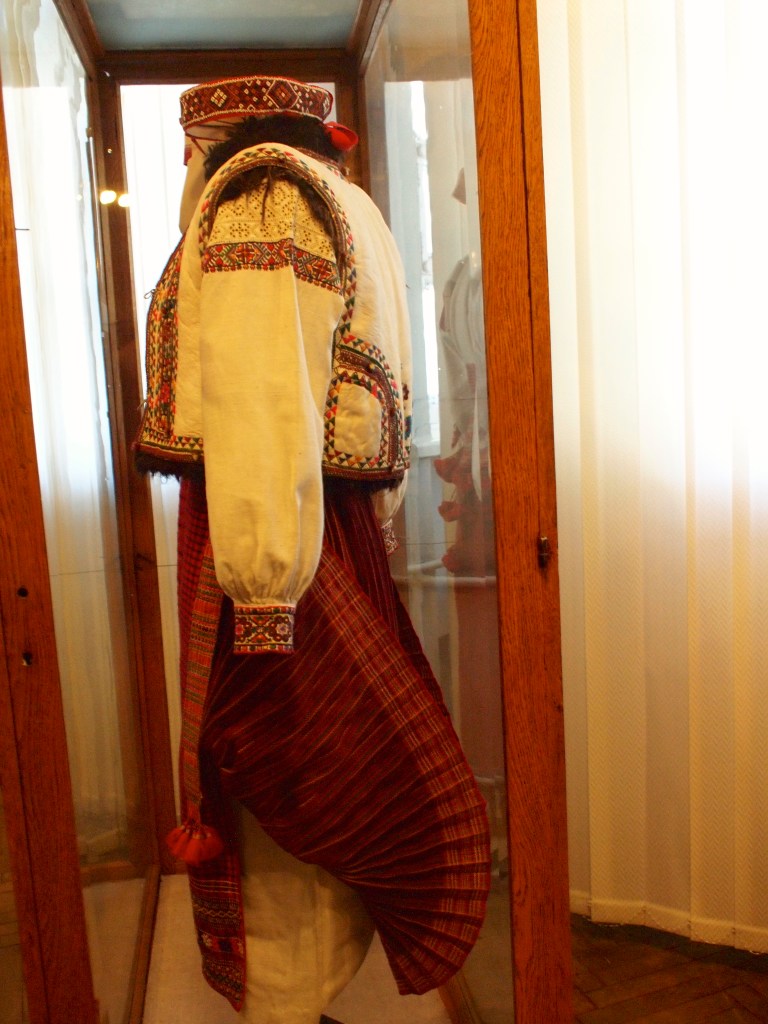
Perhaps this superstition extends to Ukrainian embroidery?
I have seen different methods of fixing threads in embroidery in books but thought I would share with you my preferred method.
A lesson done in blue.
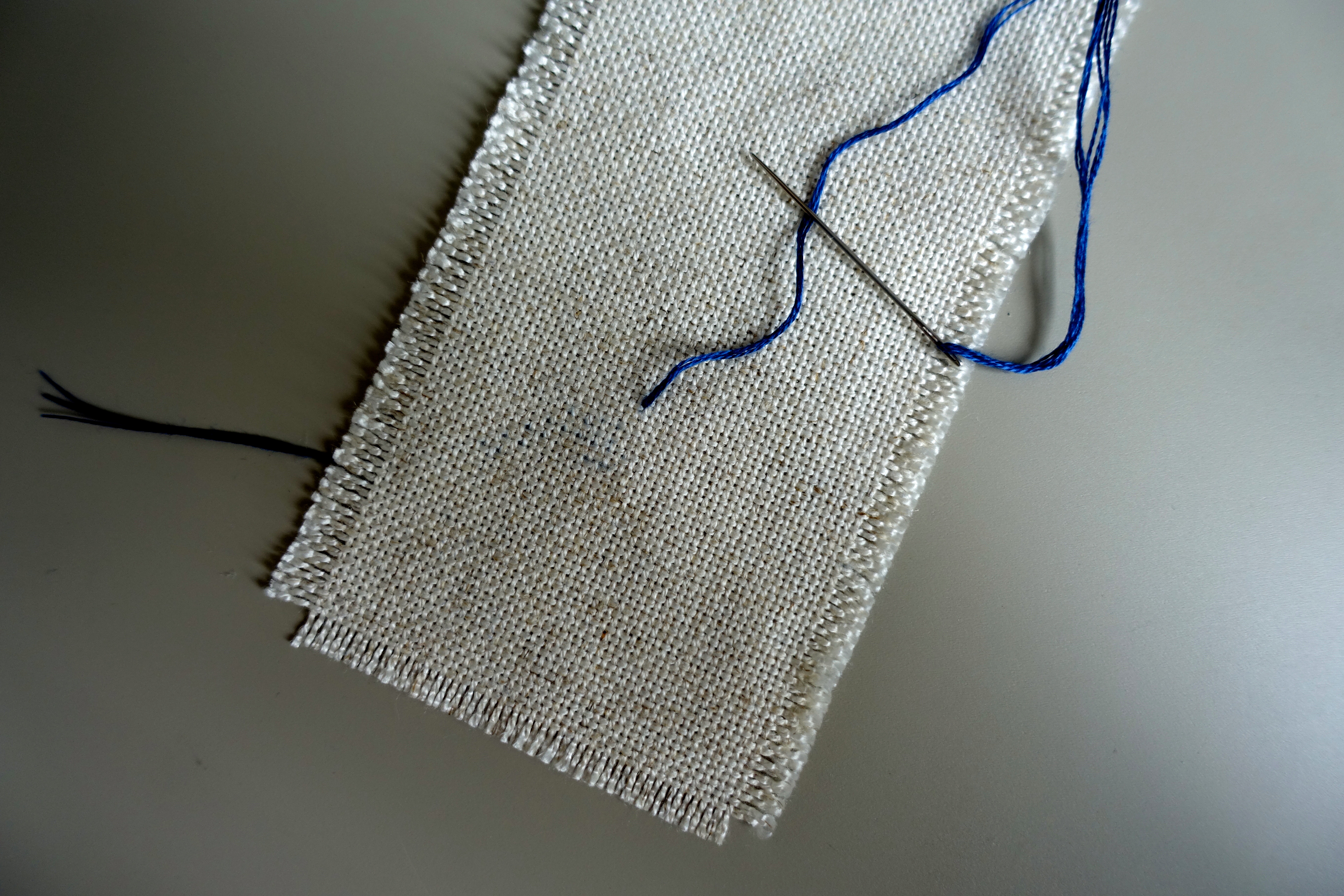
Here I am starting off. I’ve threaded my thread through where I want it and leave behind a tail of thread on the underside.
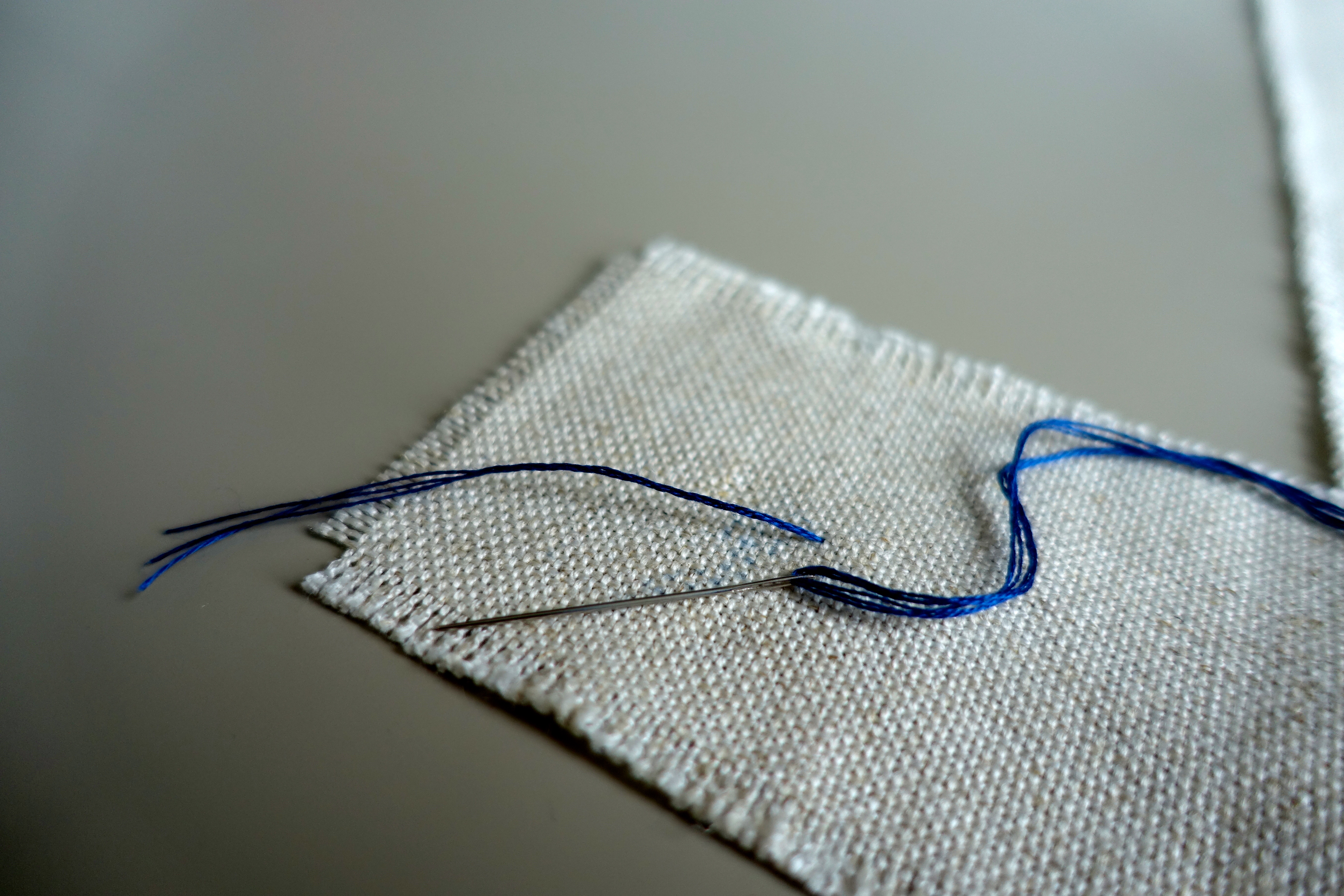
The tail of thread should be longer than the needle, like in this photo. Begin embroidering.
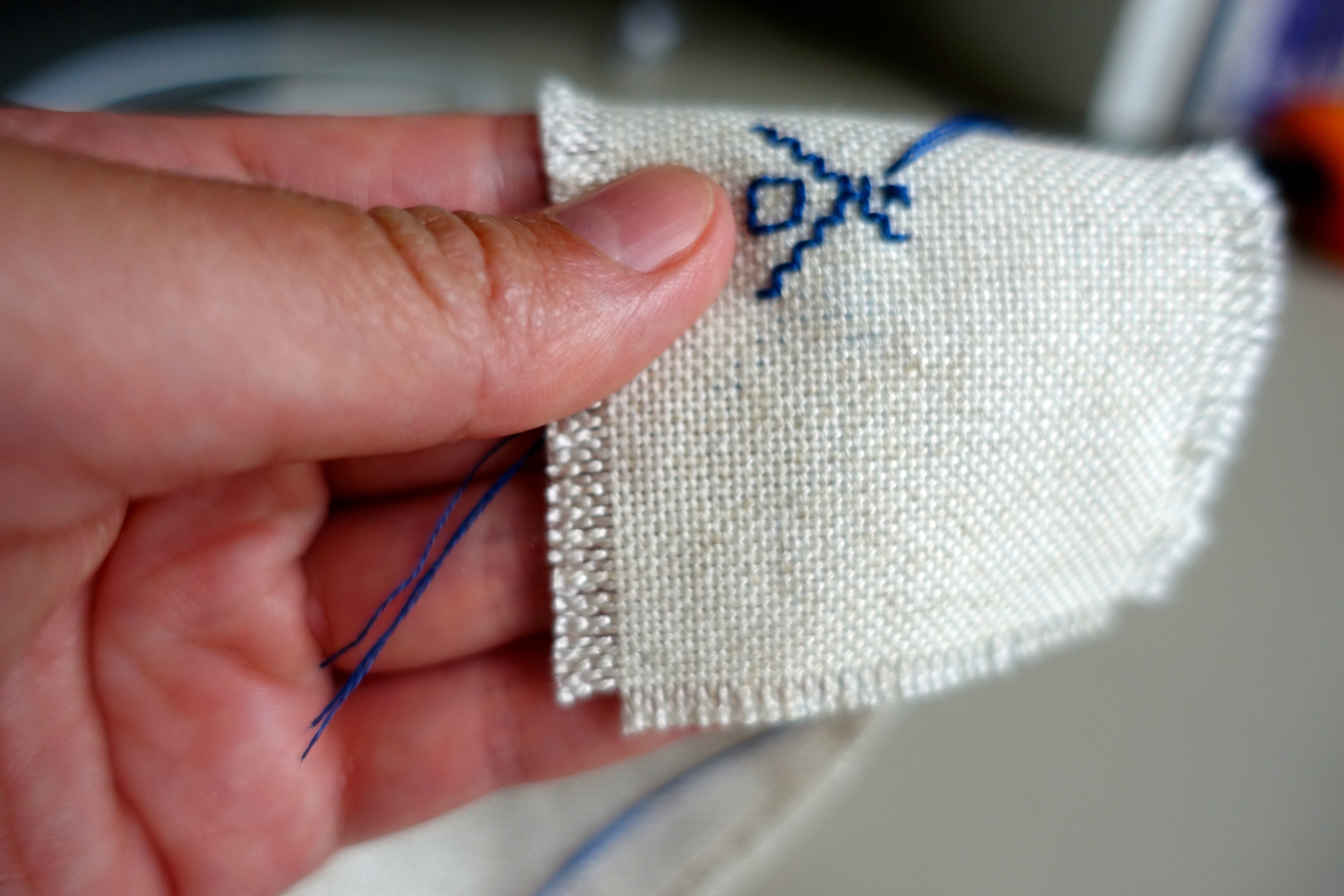
Be aware of where your thread-tails are. If they’re hanging around out the back, you may stitch them unawares to your underside and you will then have no tail to tuck under neatly. Done this many times, unpicked as a result! I tend to hold the thread tail in my holding hand as I embroider so that I keep it out of the way of my needle.
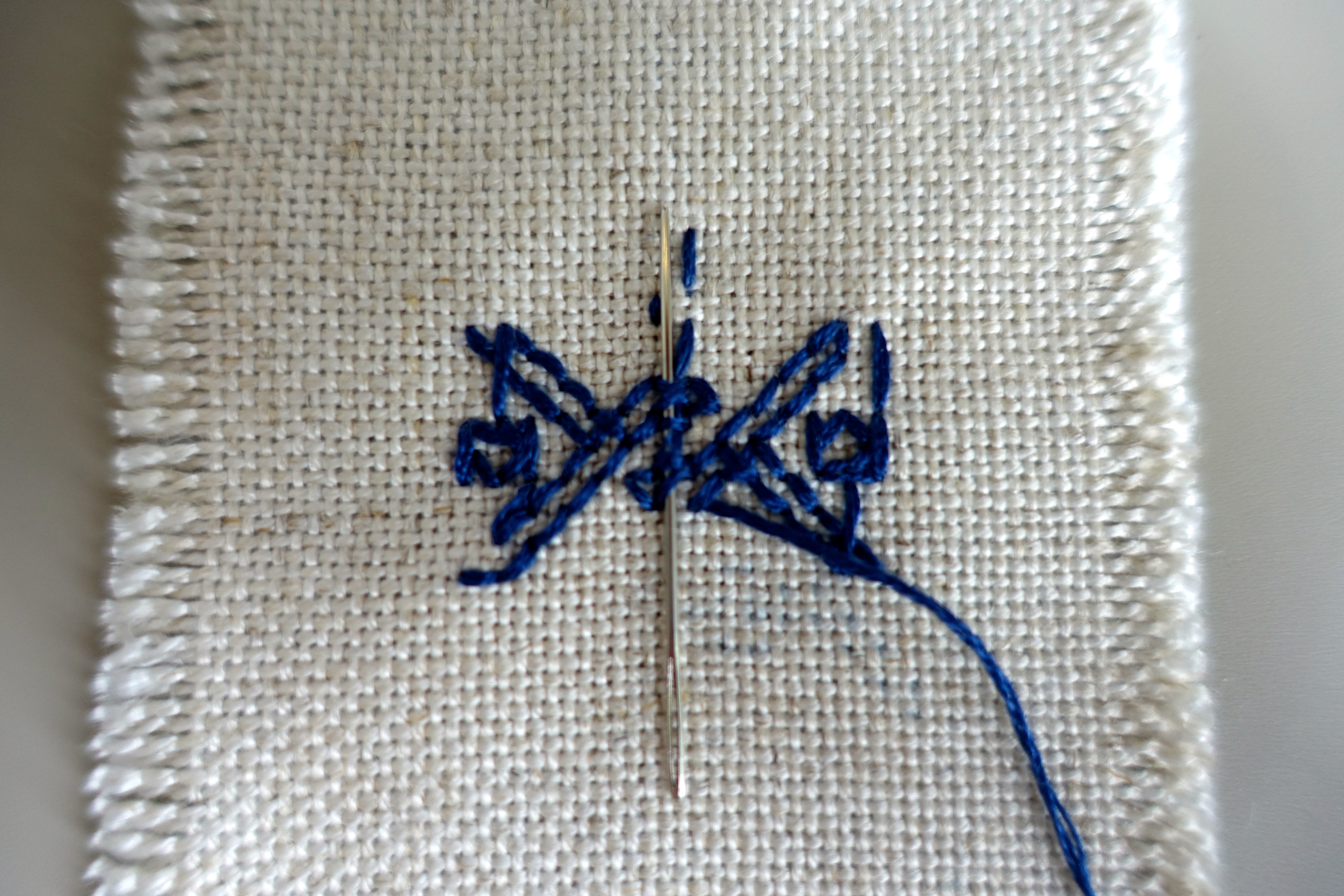
When there comes an opportunity to tuck under, eg the thread is finished and you’re removing it from the needle, or otherwise proactively when there’s enough embroidery there to tuck under, or in this case changing colours, choose 3-4 stitches in row and thread the needle under them.
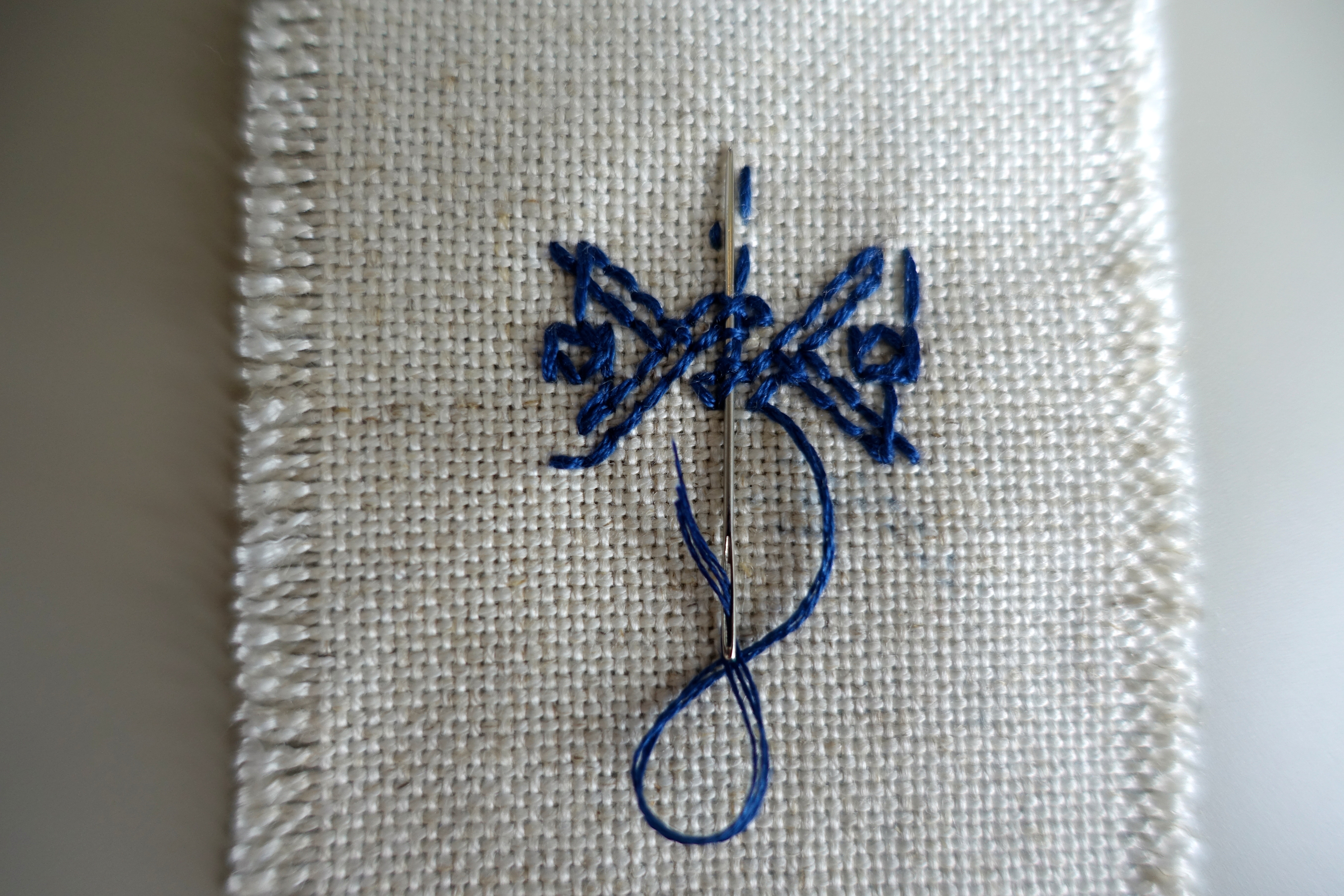
Thread the thread tail into the eye of the needle.
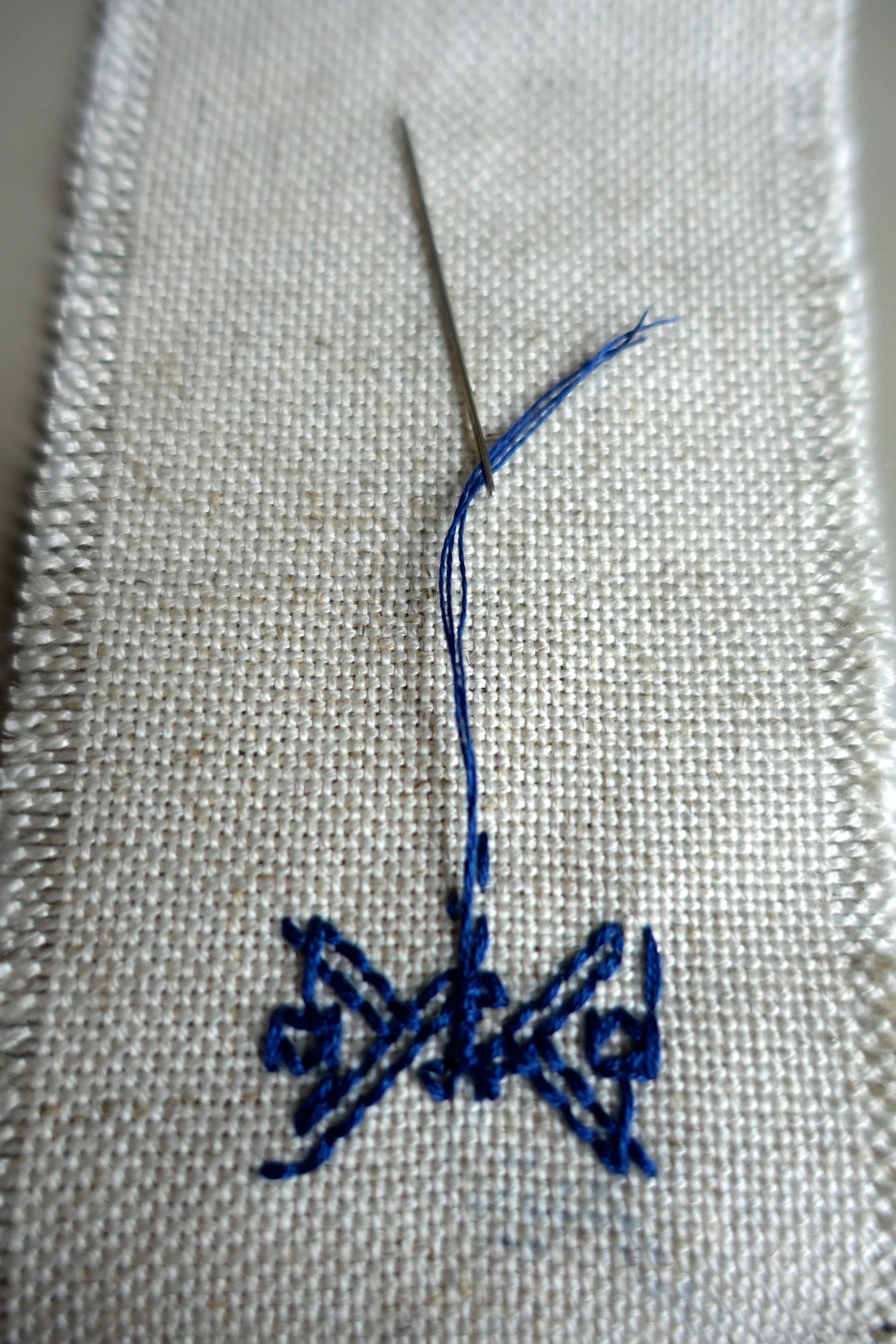
And pull it through.
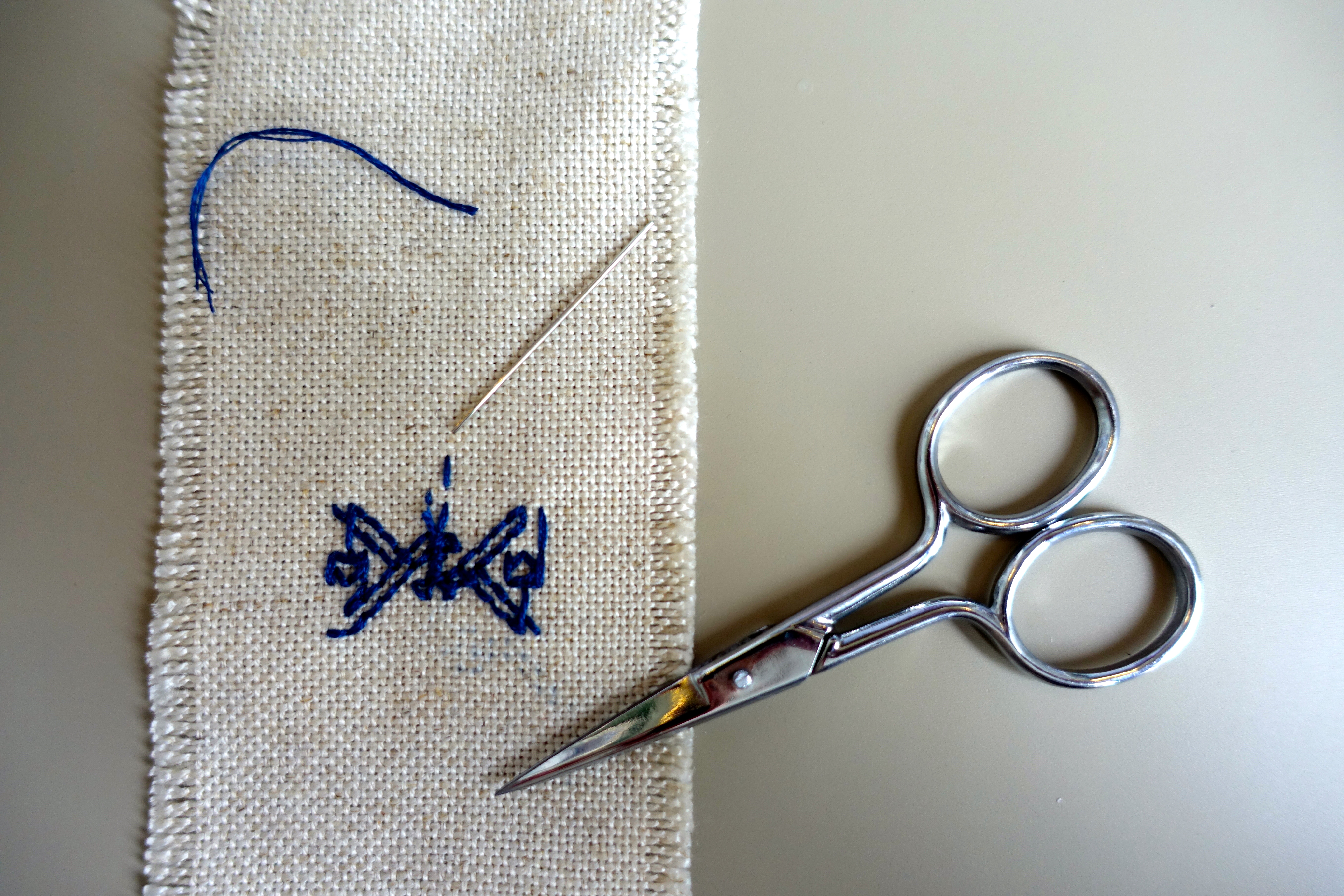
Then cut away the excess thread tail.
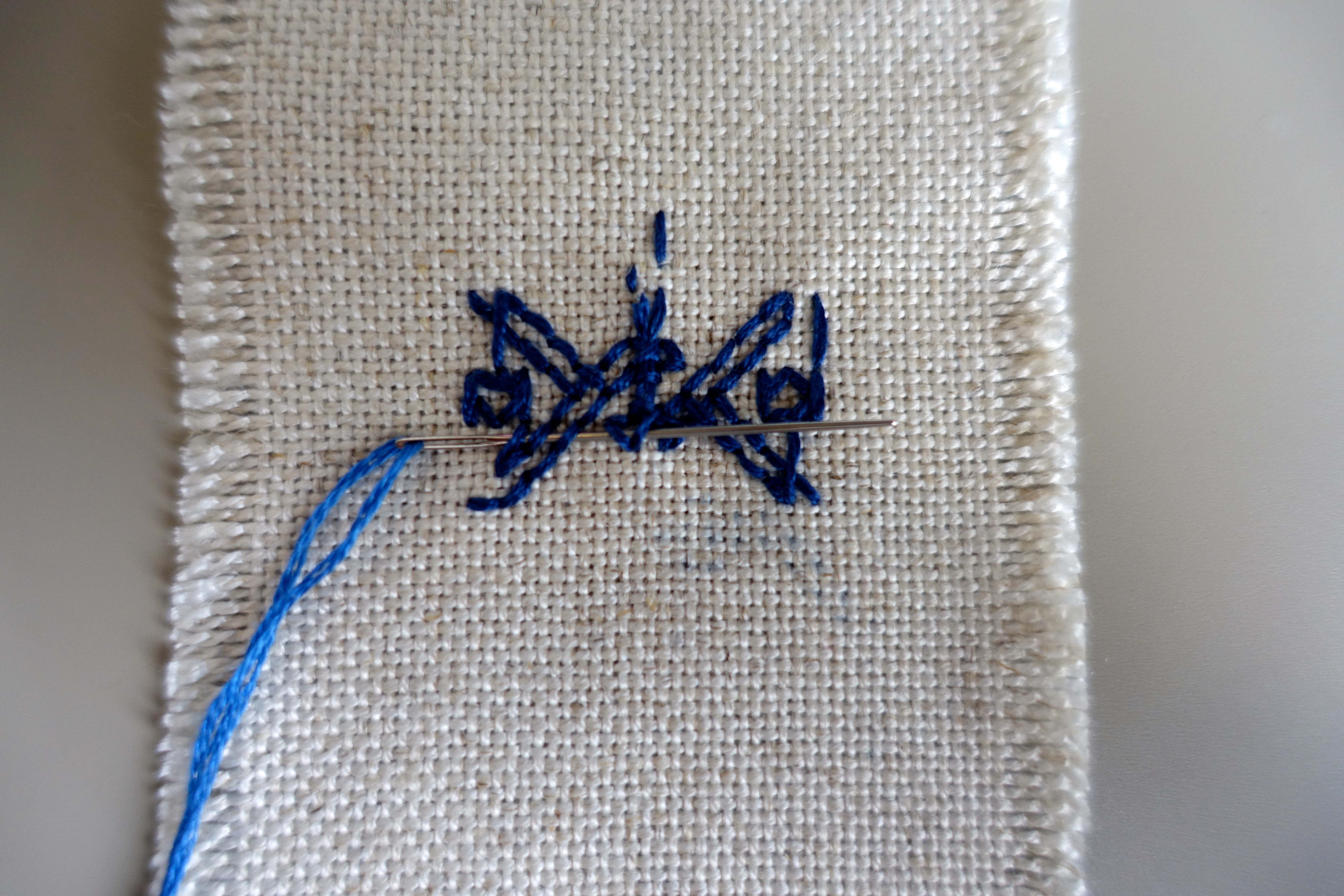
When starting a new colour or a new thread, you now have some stitches under which to fasten it.
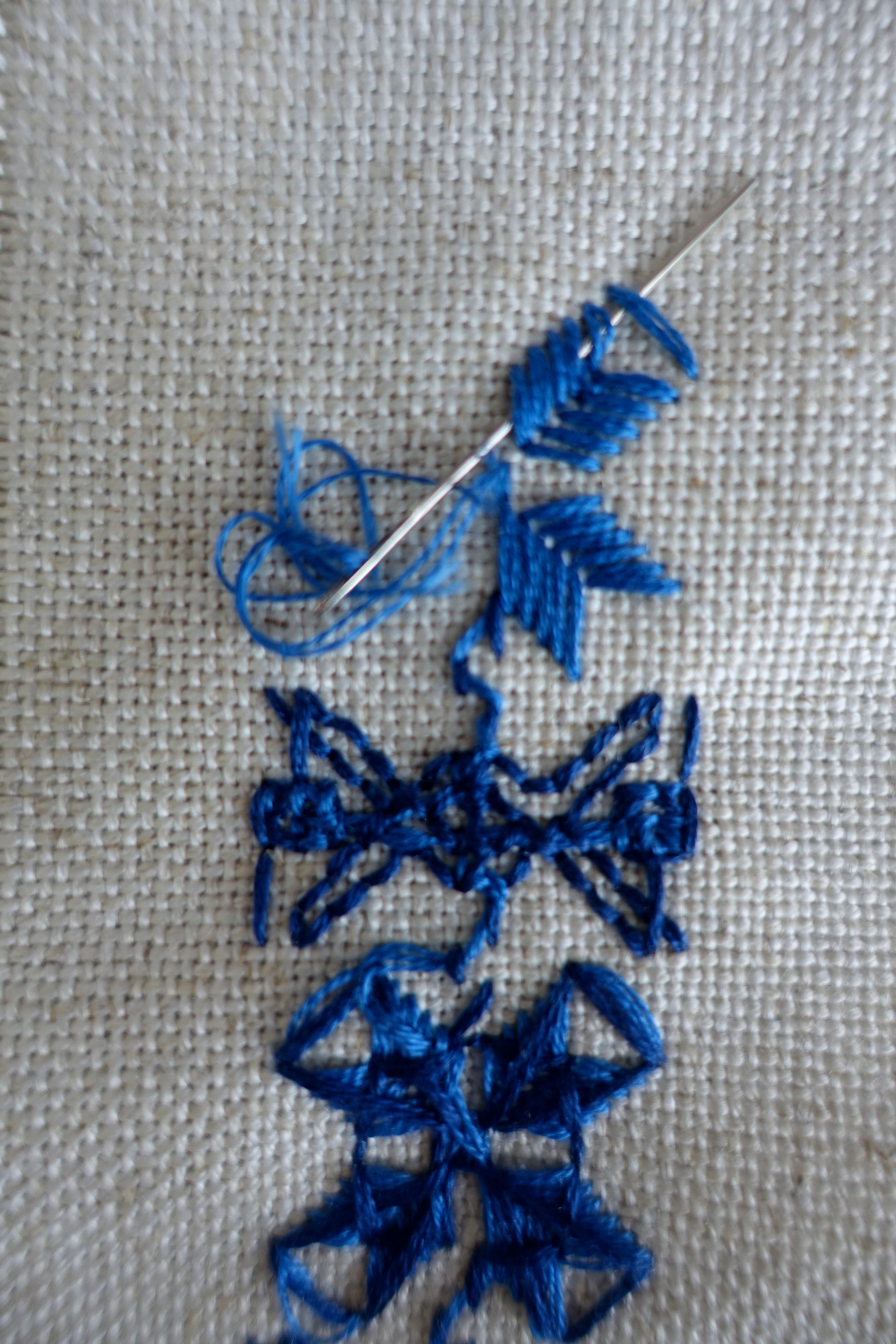
When a thread runs out, you can tuck it under a nearby part of the design.
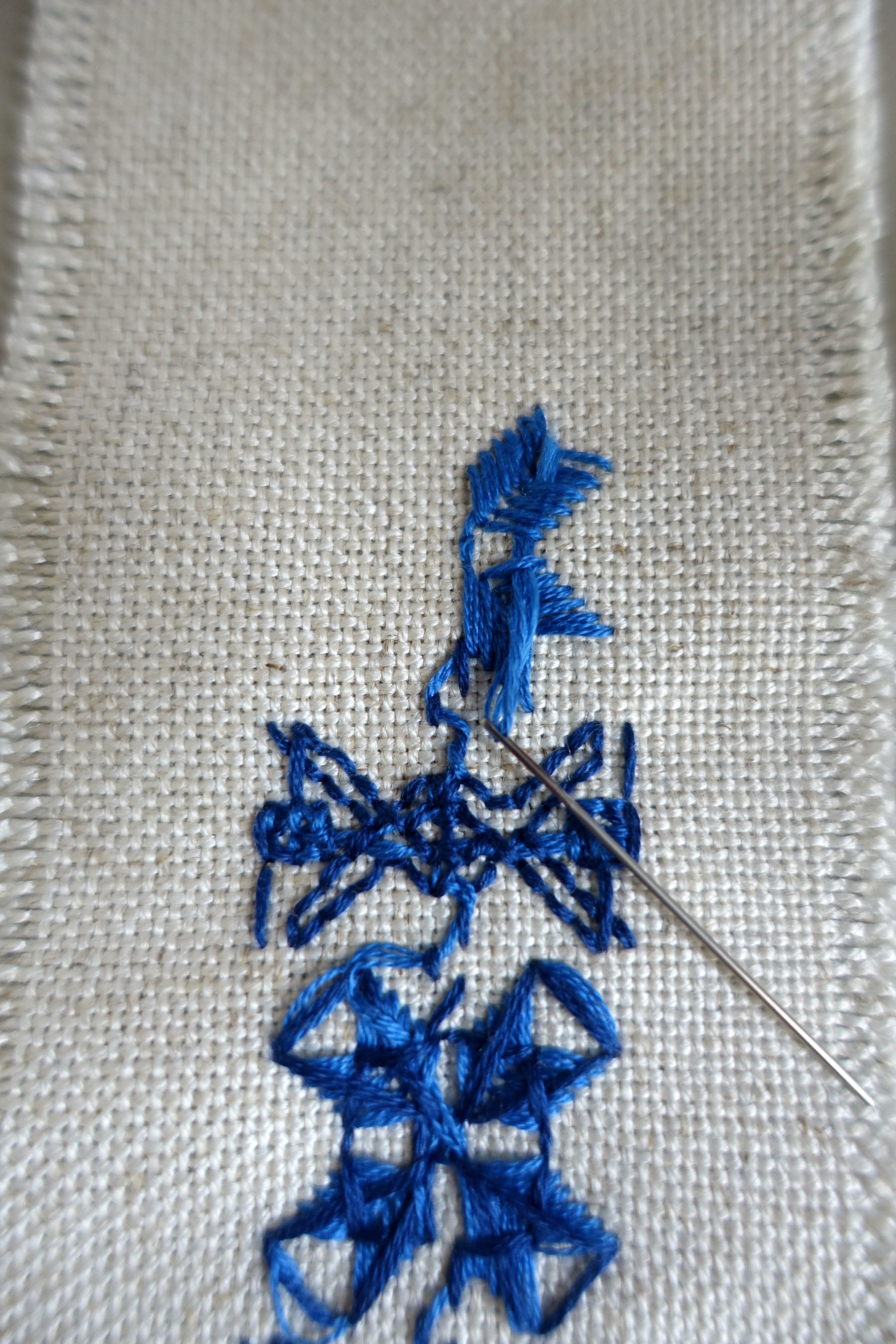
If I’m working on cross stitch or back stitch and the stitches on the reverse side are short, I’m happy to fasten a thread end under 3-4 stitches. Because in this case I’m using satin stitch and the stitches on the reverse are longer and the tuck will be a little looser, I thread the thread end through two parts to ensure it is fastened.
Cut, re-thread and you’re away.
And there you have a simple no-knots way to fasten thread ends at the beginning of a project or at the end of a thread.
~oOo~
 KX Beautiful Ukrainian Embroidery