Cross Stitch From Scratch ~a how to post~

I had a really chilled break recently, visiting some very old friends in Grafton.  During that time, two special little people became interested in my most recent monster of a servetka project and wanted to cross stitch with me.  So I taught them how to cross stitch just the way my Baba taught me.  The day after arriving home, I was sent a photo of a bookmark completed.  It was so lovely to teach these two sweet enthusiasts and I’ve been inspired by them to post on how to cross stitch.

These posts on learning to cross stitch are dedicated to Georgia and Nick.

A lesson in red and gold.
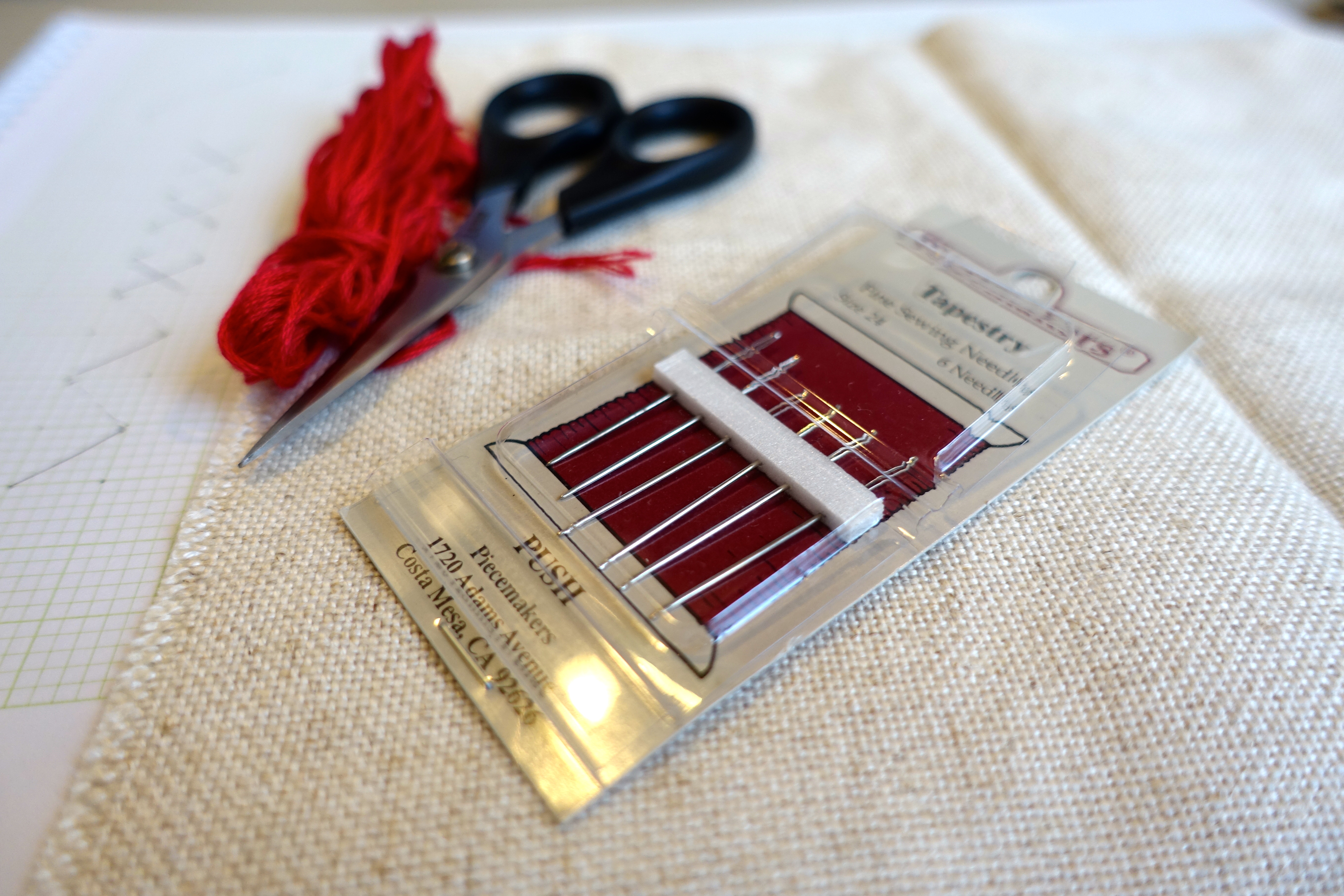
DSC02416An off cut of Floba fabric, some cherry red cotton and some gold

Before I get going with photos and how tos, you might like to have a look at NO KNOTS! NO KNOTS! ~a how to post~, because part of what I’ll do here is a no knots technique to tucking thread ends, and The flip side, because the other part of what I’ll be discussing here is how to cross stitch and keep the flip side super tidy.

Apart from a tidy flip side and no knots, another “rule” I picked up somewhere along the way with regards to cross stitch is that all of the stitches be oriented the same way.  What I mean by this is that if your initial stitch goes bottom left to top right of the cross and the overlying stitch goes the other way, this needs to be uniform for the whole piece, the whole design.  Part of what I will be covering here, is how to achieve this without too much of a headache.

That has everything to do with whether you’re a lefty or a righty.

I’m right-handed and the pictures below in red thread pertain to righties.  The gold thread will show what lefties might do.

Embroidery is supposed to be fun and rhythmic and it is supposed to flow.  Making awkward angles with your hand or wrist to get your needle to certain places interrupts the rhythm and flow of embroidery.

Let me demonstrate with some photos.

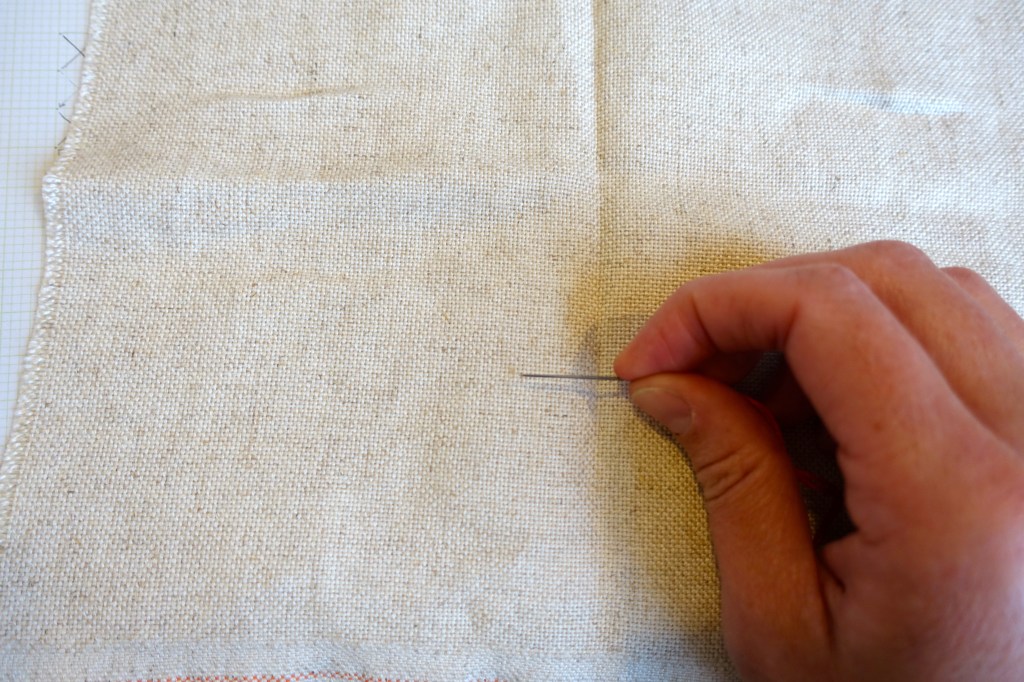
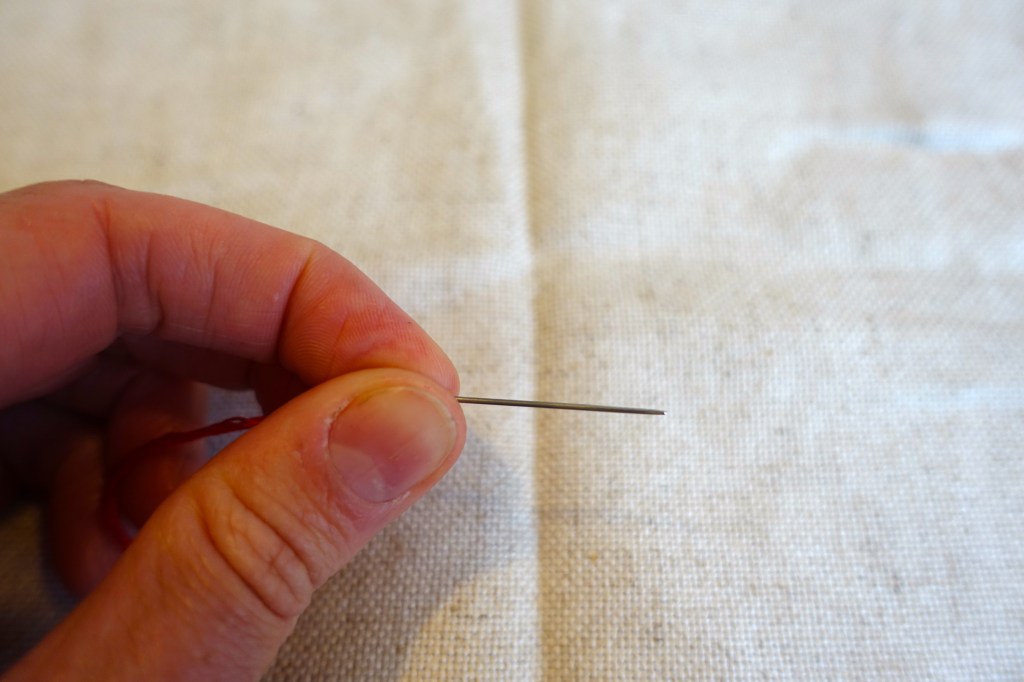
If you’re right handed, you can easily push your needle through fabric oriented upwards, downwards or to the left:
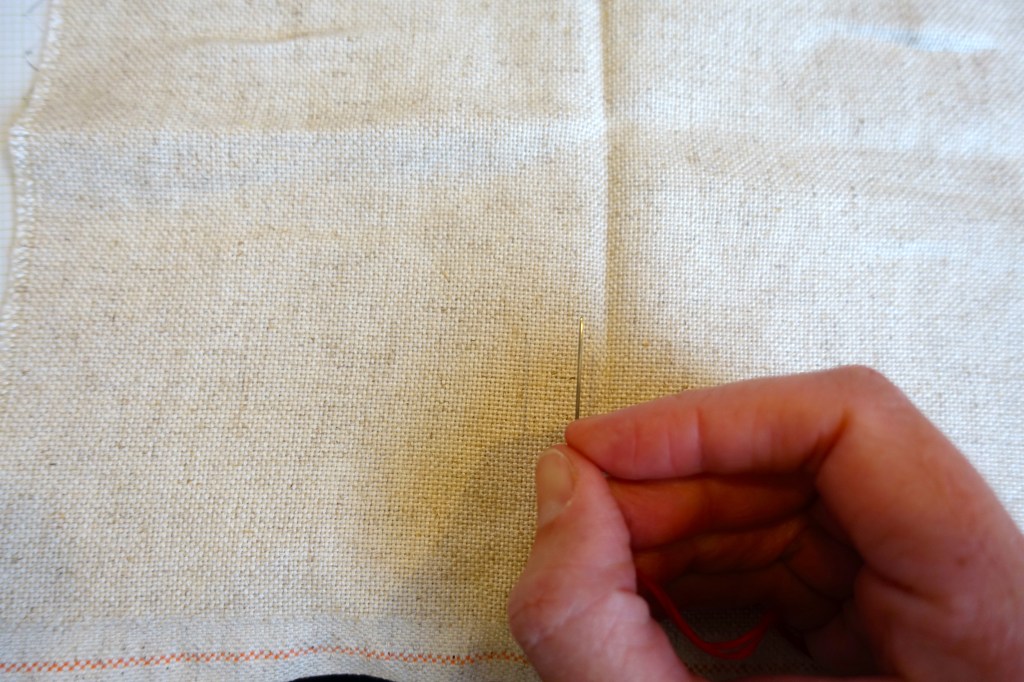
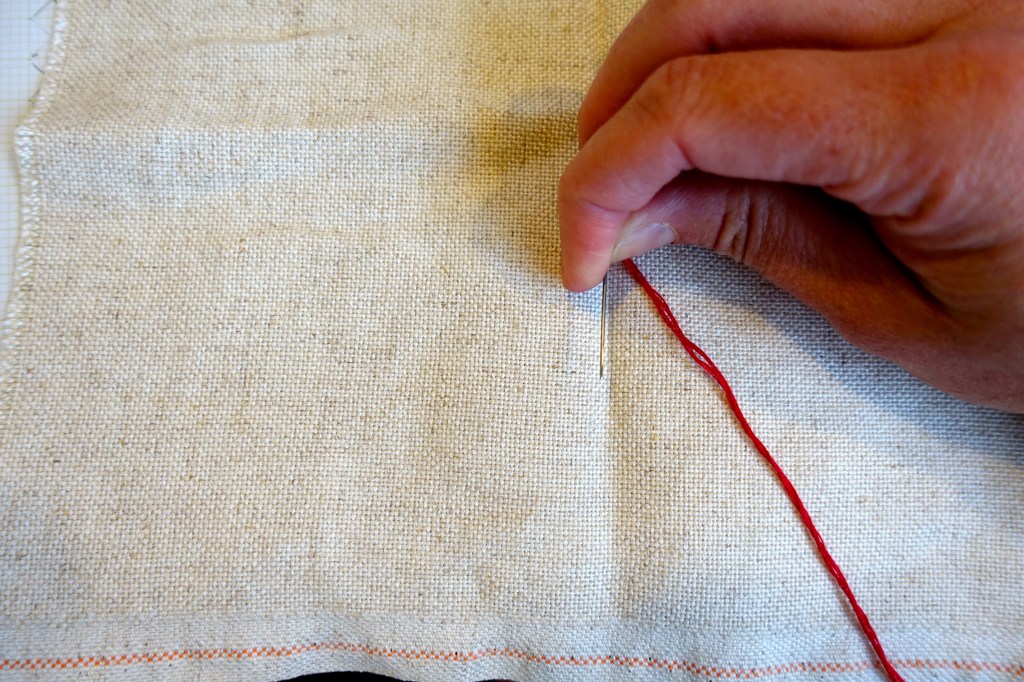
However, it would be very awkward as a righty to try to push the needle through fabric towards the right.  Imagine my wrist in this photo:
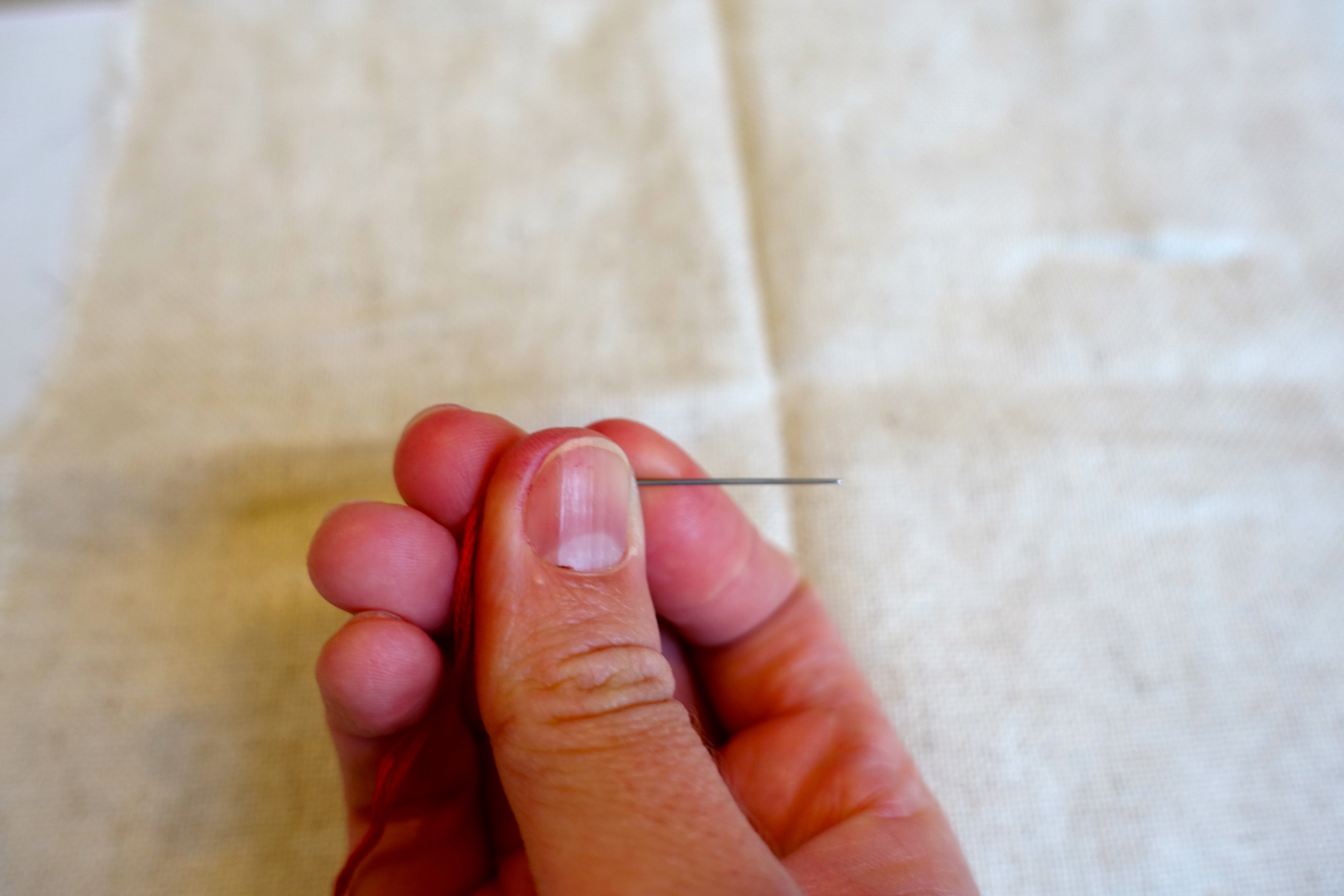
DSC02422

This looks and feels awkward.

On the other hand, if you’re a lefty, you can easily push your needle through fabric oriented upwards, downwards or to the right:
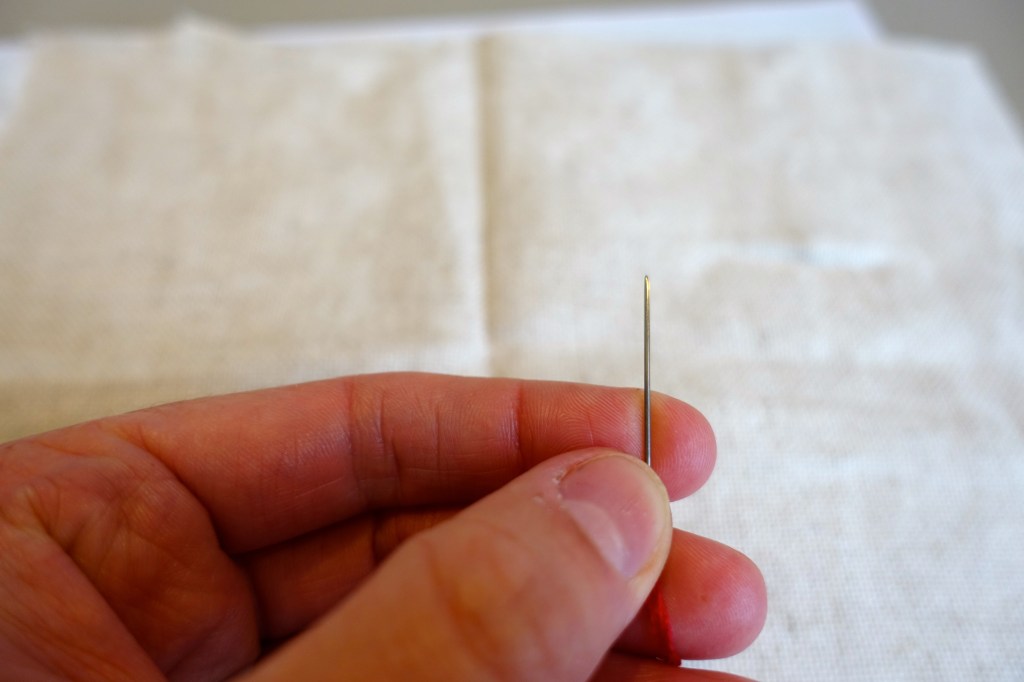
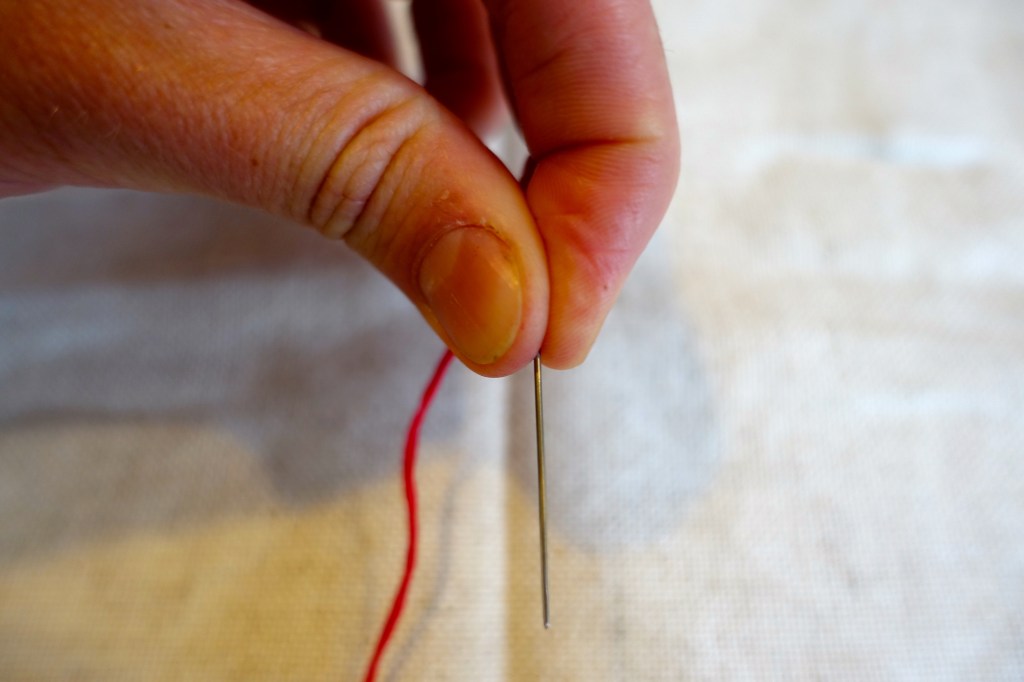
However, you can imagine it would be very awkward for a lefty to try to push the needle through fabric towards the left.

So, we’ll be learning to cross stitch so that we have a tidy flip side, no knots, the threads forming the crosses oriented in the same direction and in such a way that we don’t need to make awkward angles with our hands and wrists.

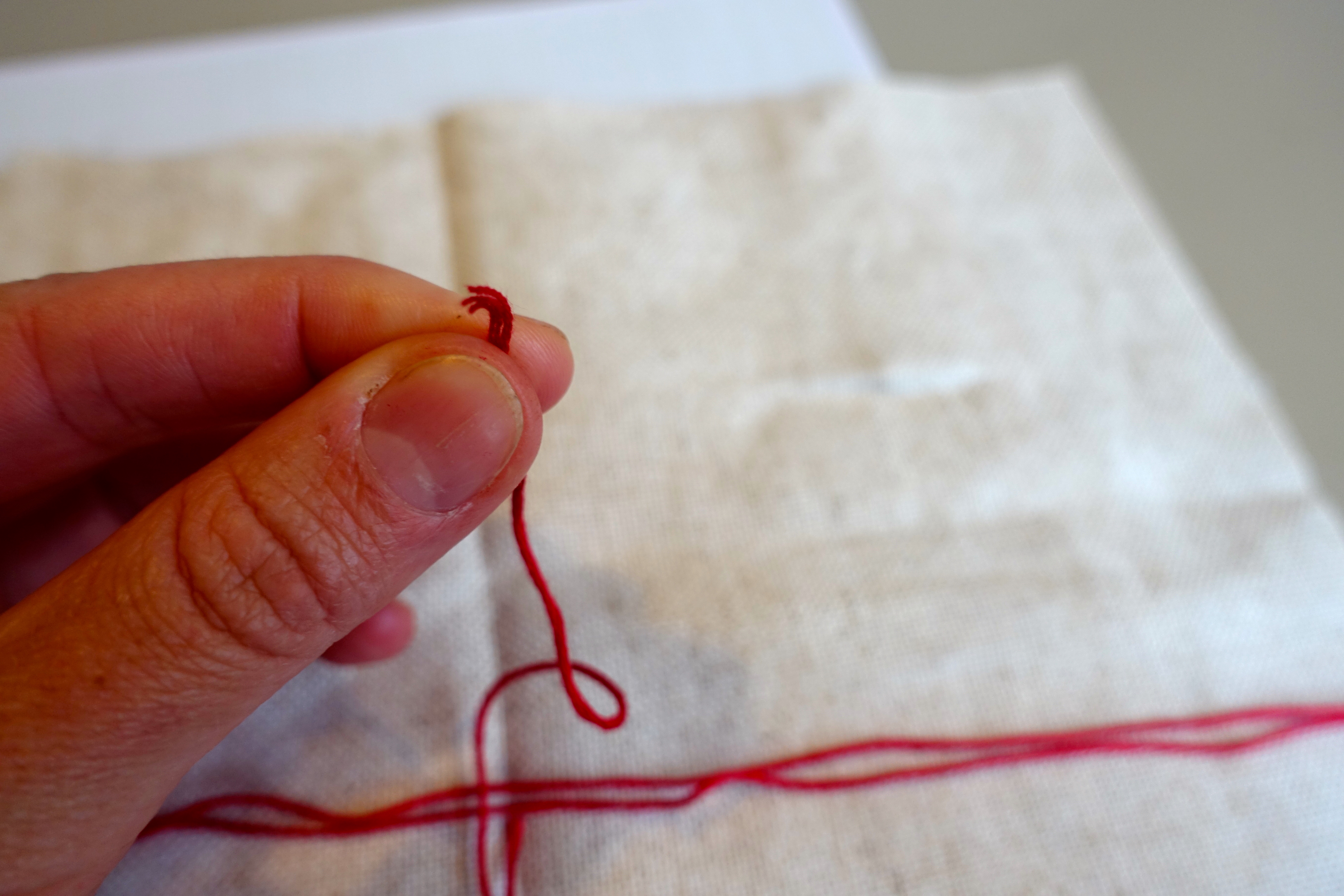
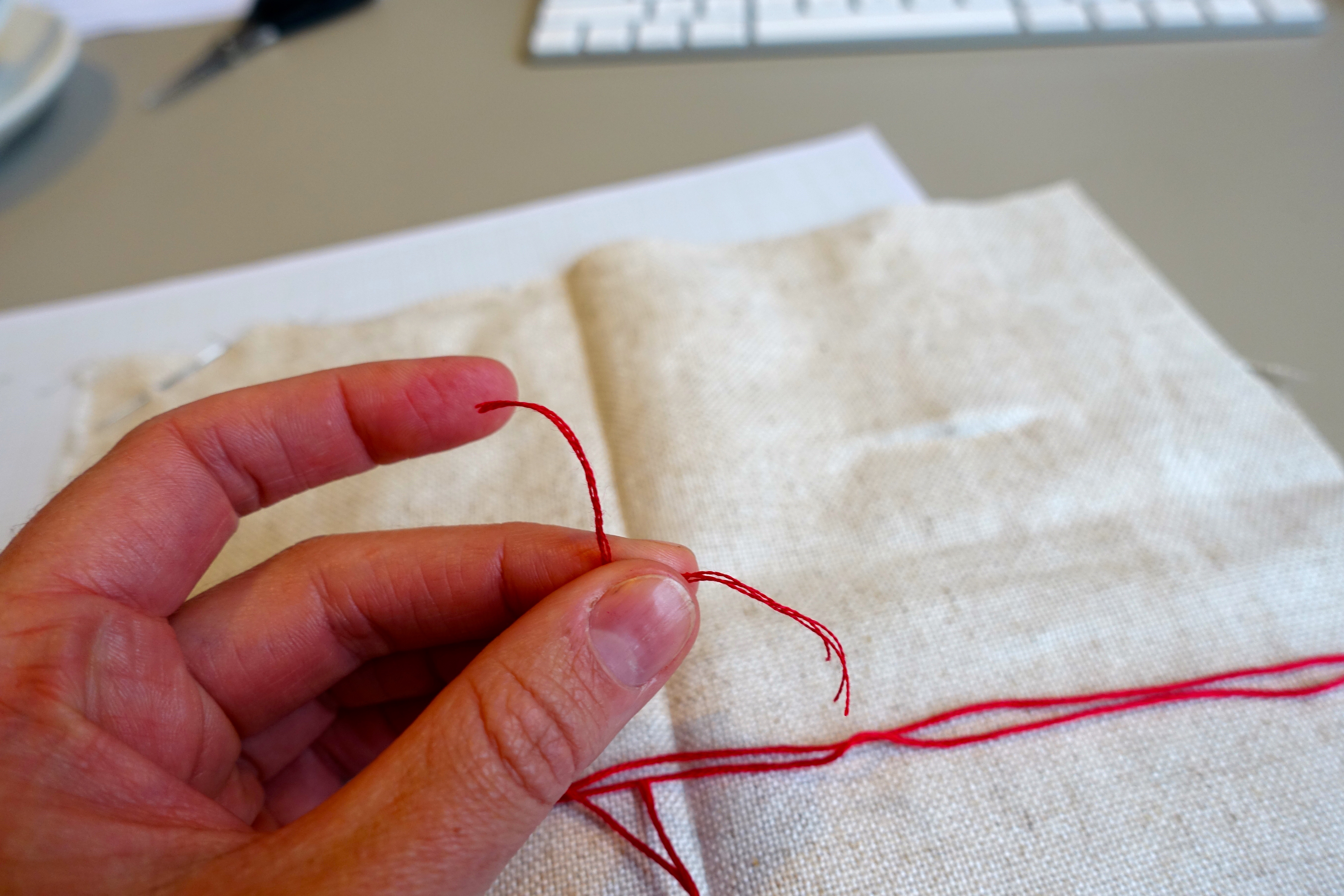
Before we start stitching, a quick note about splitting stranded cotton.  I’ve not yet carried on too much about “coverage” (but it’s coming).  Coverage refers to the thickness of the embroidery, which is a result of the thickness of the embroidery thread in relationship to to fineness of the fabric.  For a 25 count fabric, a very comfortable way to use DMC stranded cotton is to use three strands at a time (of six strands).
DSC02417

6 strands of DMC stranded embroidery cotton.
DSC02418

It is separated into two lots of 3 strands and 3 strands used at a time.

The first step is to cross stitch in a direct line, either vertically or horizontally.  Always form a stretch of half crosses and then complete them by coming back the same way.  Unless a cross is on its own, it never gets stitched completely – neighbouring crosses are stitched in a row of halves and then a returing row of halves.

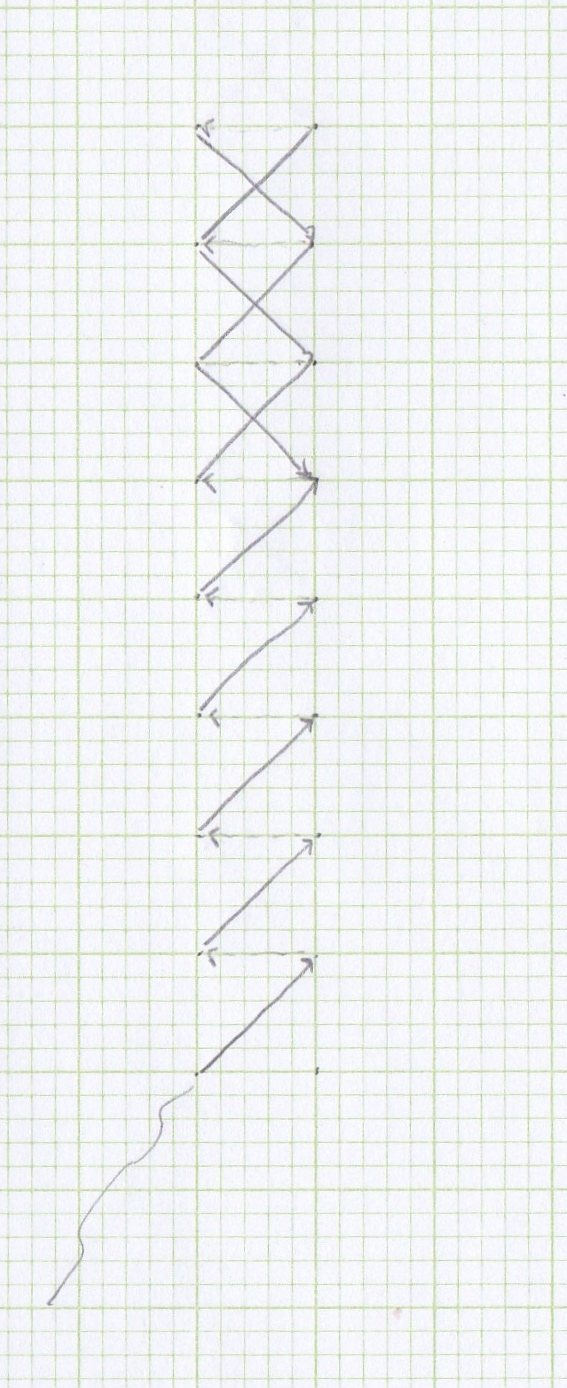
For a righty, making a row of vertical crosses looks like this:
IMG_20190927_0001

There is a tail end of thread, which we will tuck under the back side of stitches when we have some stitches available.  The half crosses are formed from bottom left to top right (solid line) and the needle makes a horizontal movement to the left on the flip side (dotted line) to come through in the bottom left of the next cross.  To change direction, come back the other way and complete the next half of each cross, the needle still passes horizontally to the left under the fabric, but rather than emerging at what would be the bottom left of the next cross up, it is now in the top left of the same cross and the next stitch brings the thread down to the bottom right.  And so on.

So, it would look like this:
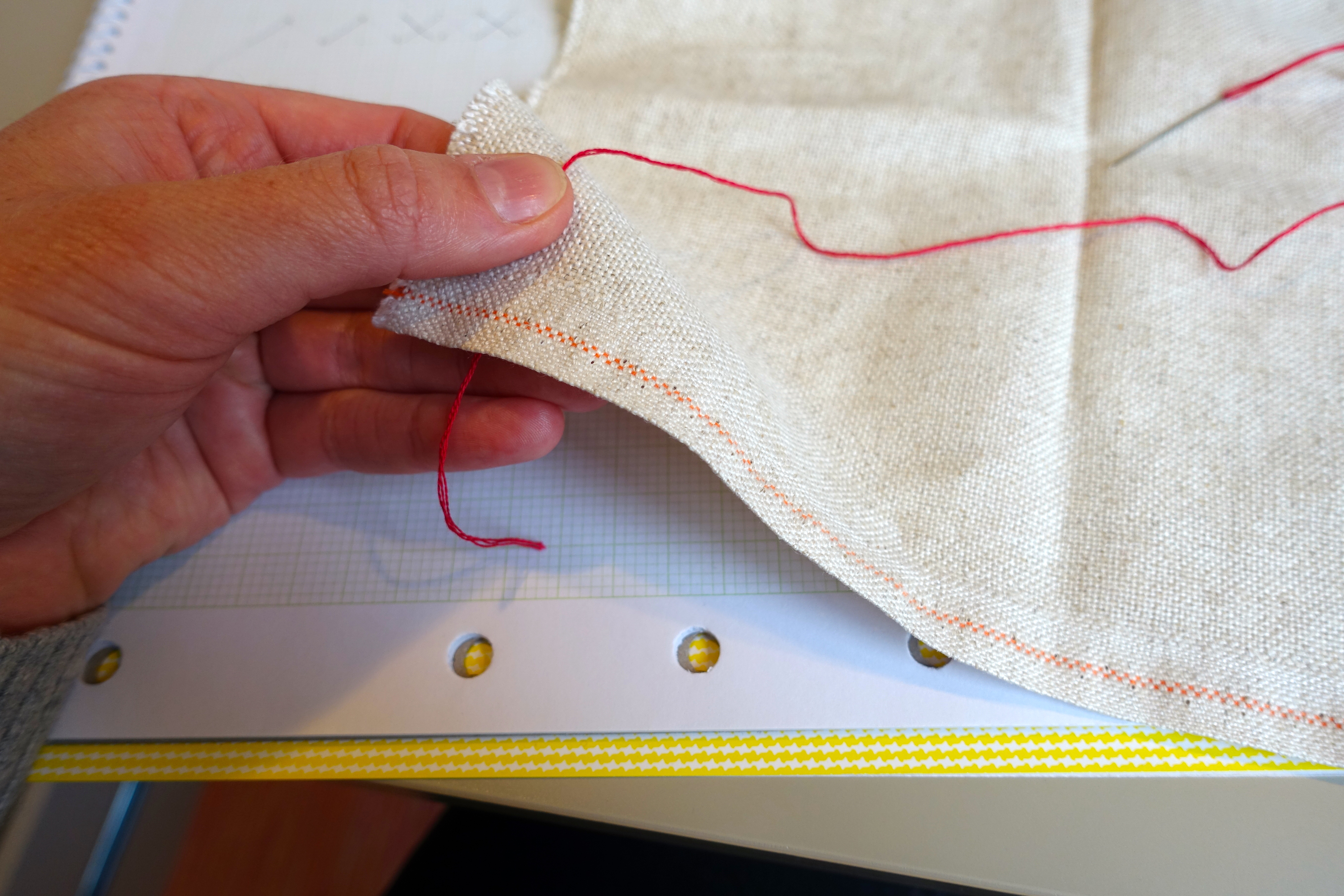
DSC02427

Here there are 3 strands of cotton threaded and at a starting point in the fabric.  Note my thread tale that I’m holding to the side with fingers fo my left hand, for tucking under later when I have some stitches available.
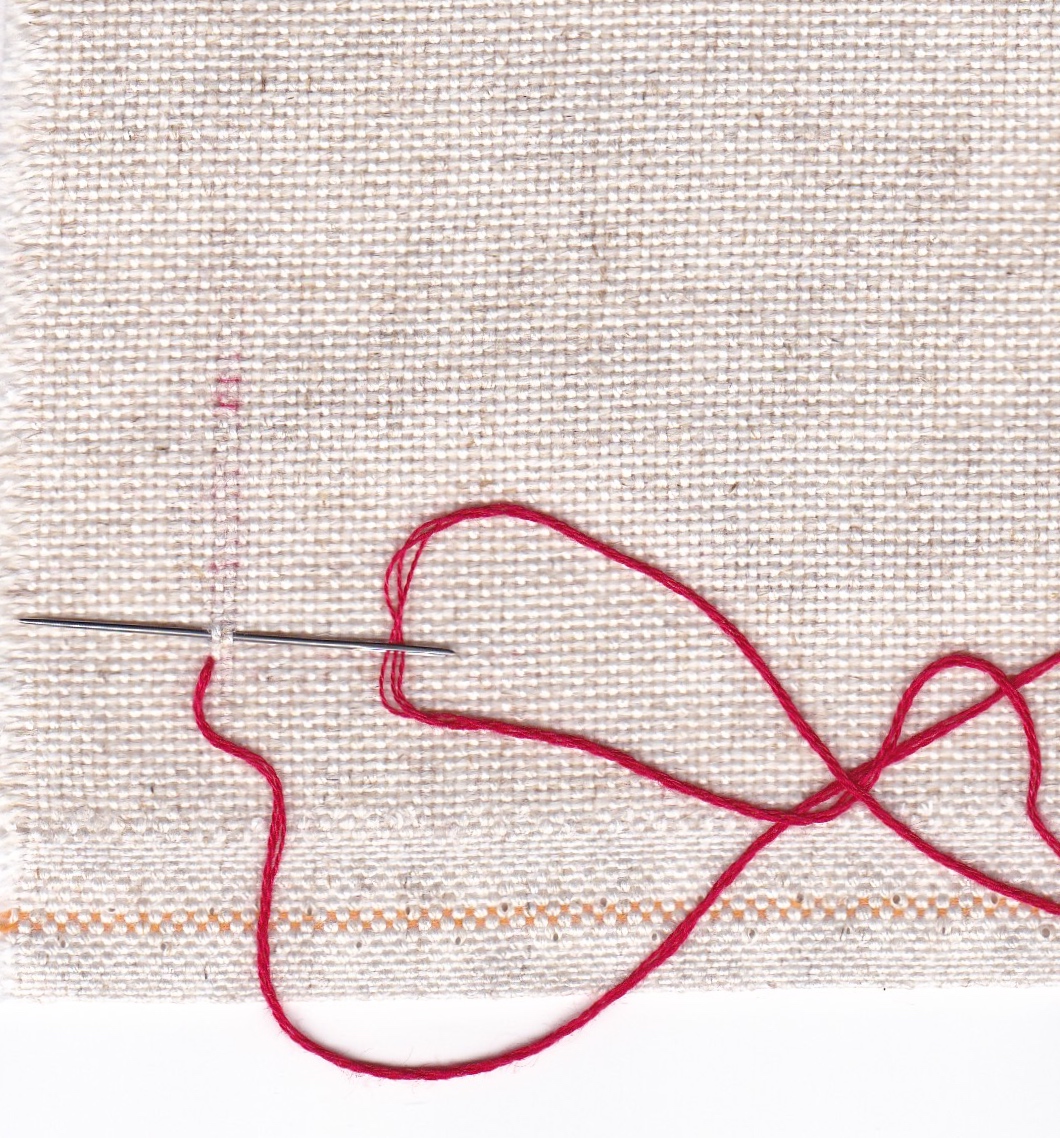
IMG_20190927_0003

First stitch – capturing 2 threads of the fabric with each stitch, I put my needle into what would be the top right of the cross and then pass it horizontally under the fabric to for the bottom left of the next cross.

IMG_20190927_0005

By repeating this over, I have a row of half crosses on the front side and a row of horizontal stitches on the flip side, as in the above photo.  Here you can tuck your thread end under the existing first 3 or 4 stitches and trim it as in NO KNOTS! NO KNOTS! ~a how to post~.
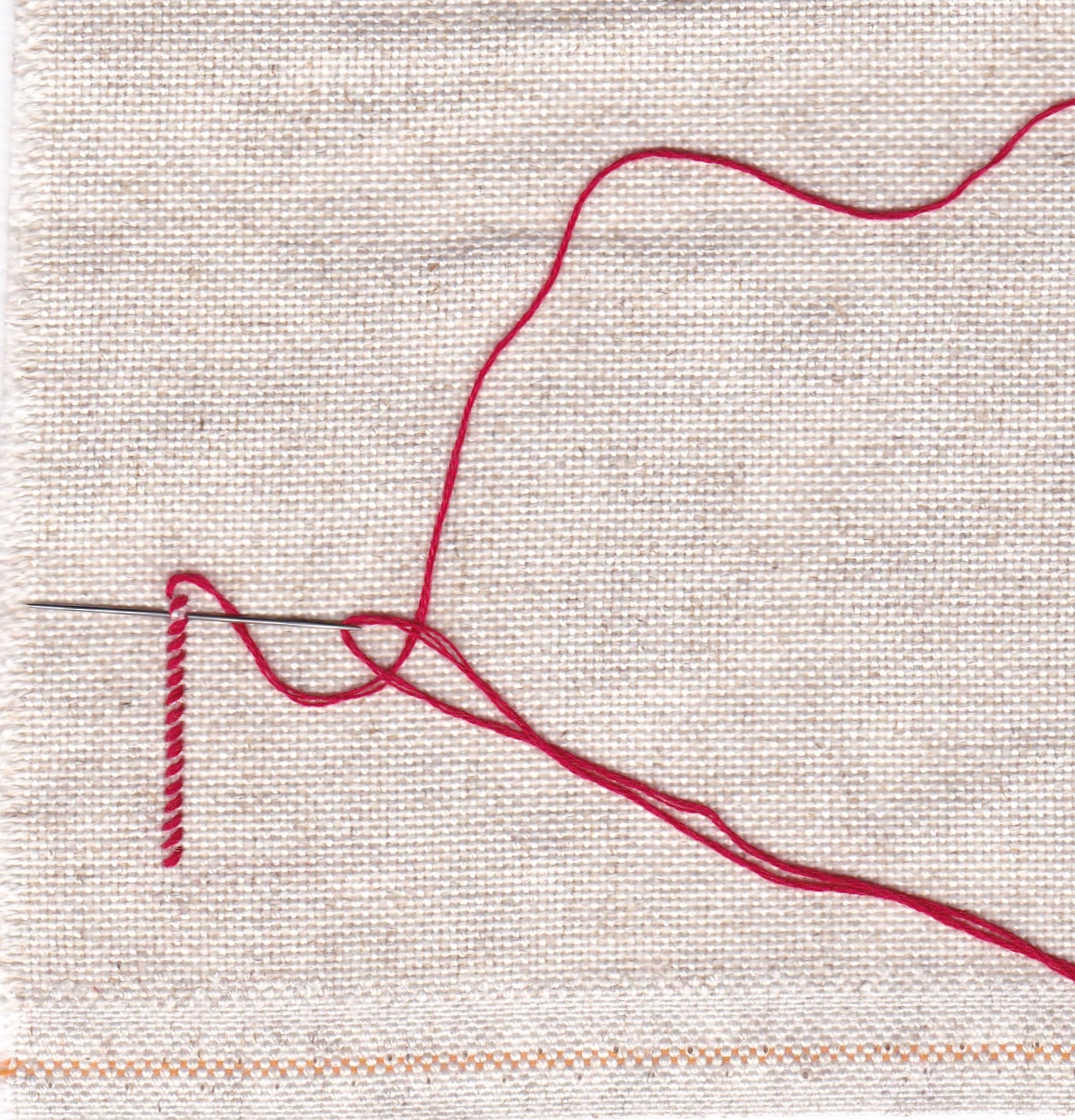
IMG_20190927_0006

Here is my vertical row of half crosses all oriented in the same direction.  I’m in the process of turning around at the top to come back the other way.  Notice my thread is now exiting the fabric in what is the top left of the existing cross.
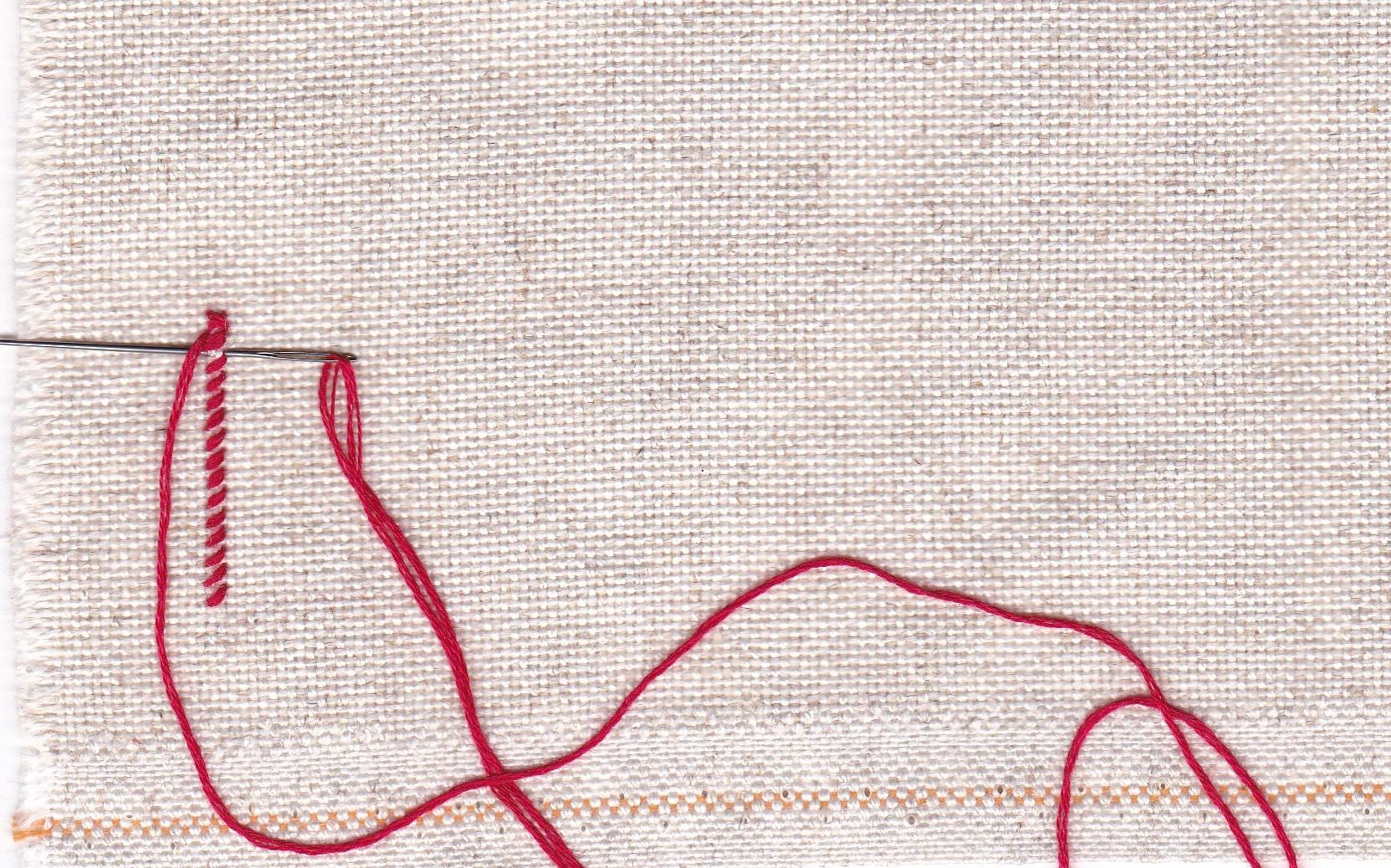
IMG_20190927_0007

When I pull through my needle, the next stitch will form the second half of the cross stitch and I’ll be away, coming back down the row.  My needle is still making horizontal stitches on the flip side in a left-ward direction.
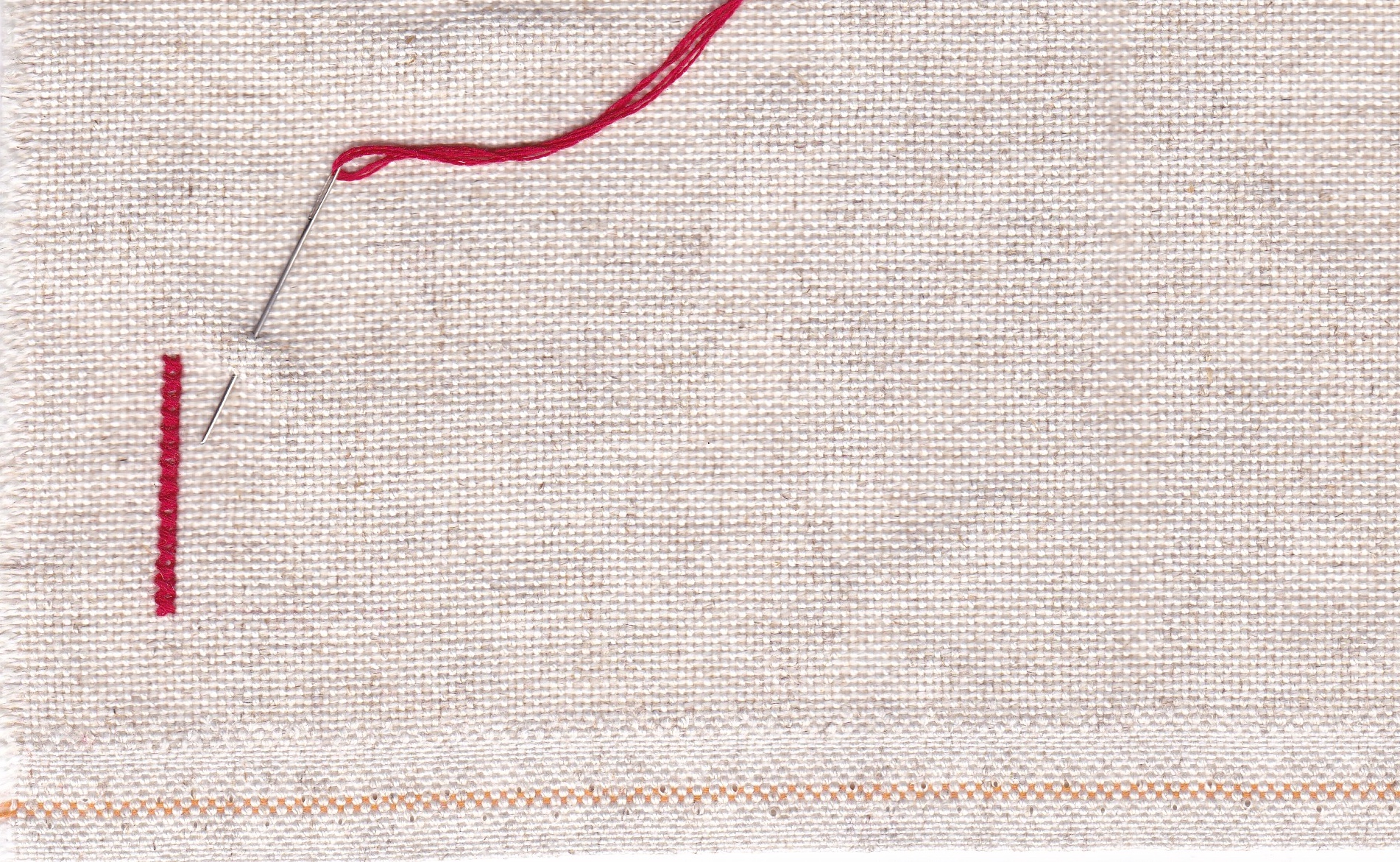
IMG_20190927_0008

Here is a completed vertical row of crosses.

Stitching crosses in a horizontal direction for a righty goes from the left to the right.
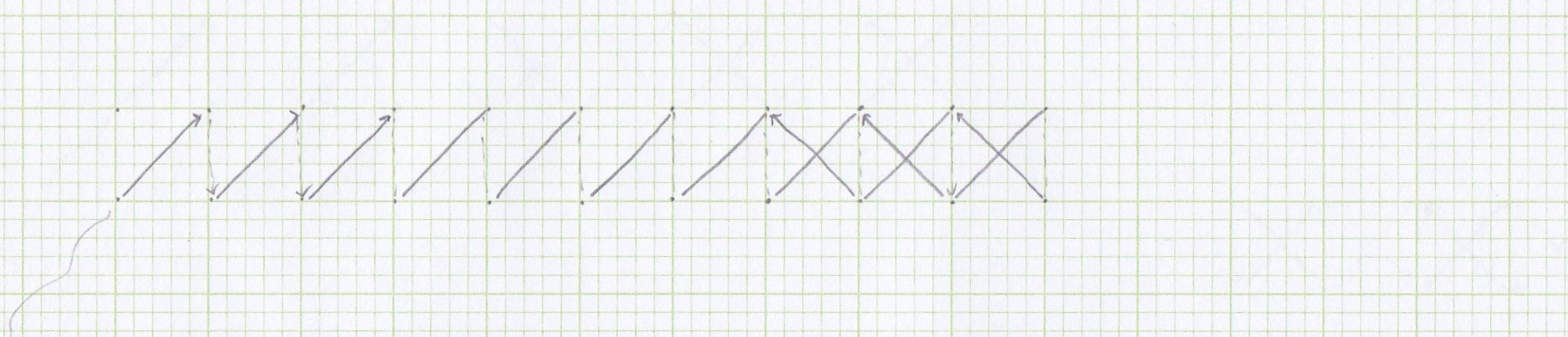
IMG_20190927_0001

Remember that the first half cross needs to be oriented in the same direction as when we went vertically, so begins in its bottom left and goes towards its top right.  The needle makes vertical downward stitches on the flip side.

IMG_20190927_0009

My first stitch with the needle pushing through the fabric in the downwards direction.
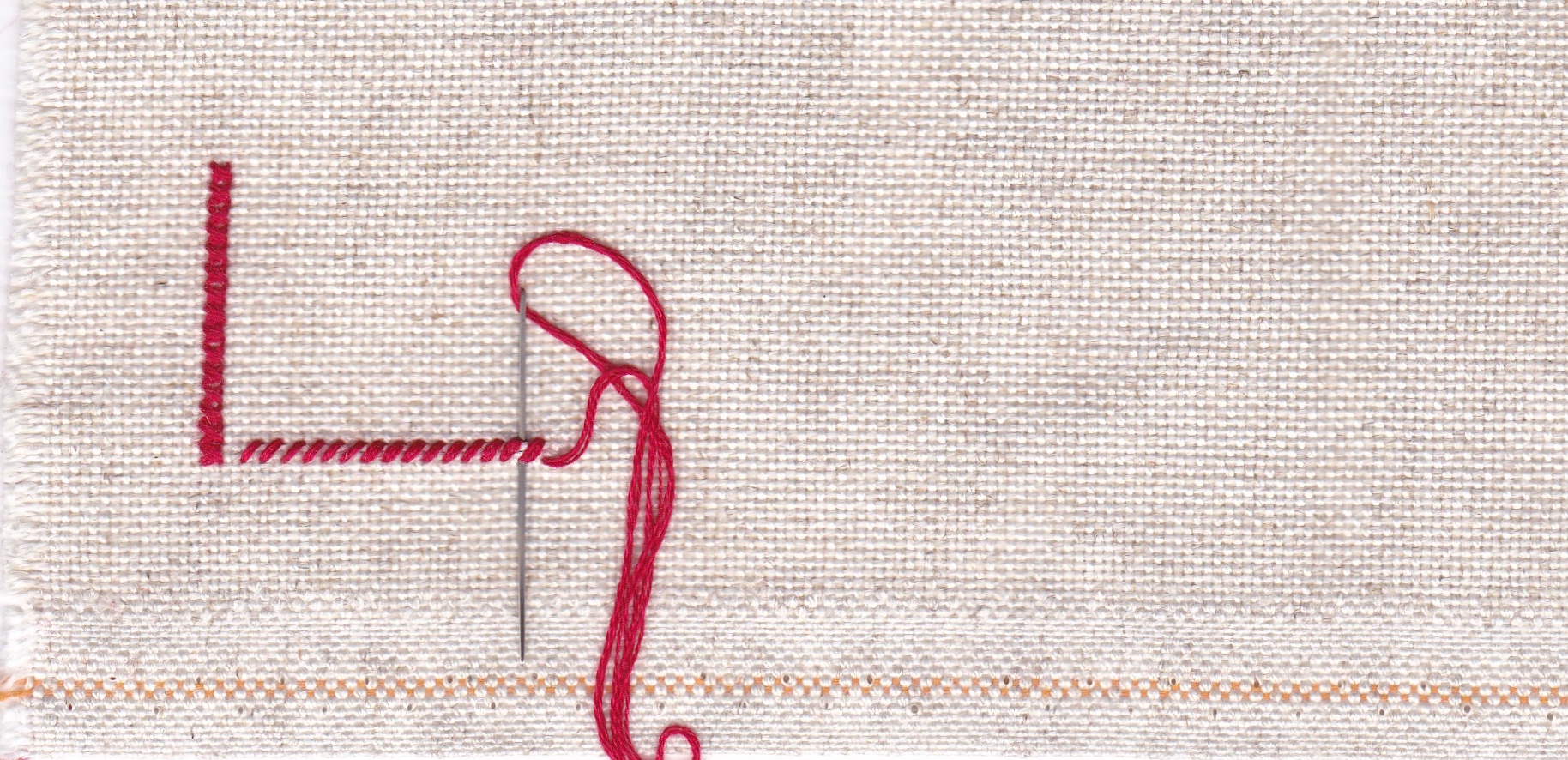
IMG_20190927_0010

Here is a horizontal row of half crosses completed and I’m changing direction, much like at the top of the vertical row.  You can see the needle still making stitches by pushing through the fabric in a downward direction.

IMG_20190927_0011

We have arrived back at the end of the row with a completed row of horizontal cross stitches for a righty.

Now for the lefties out there.

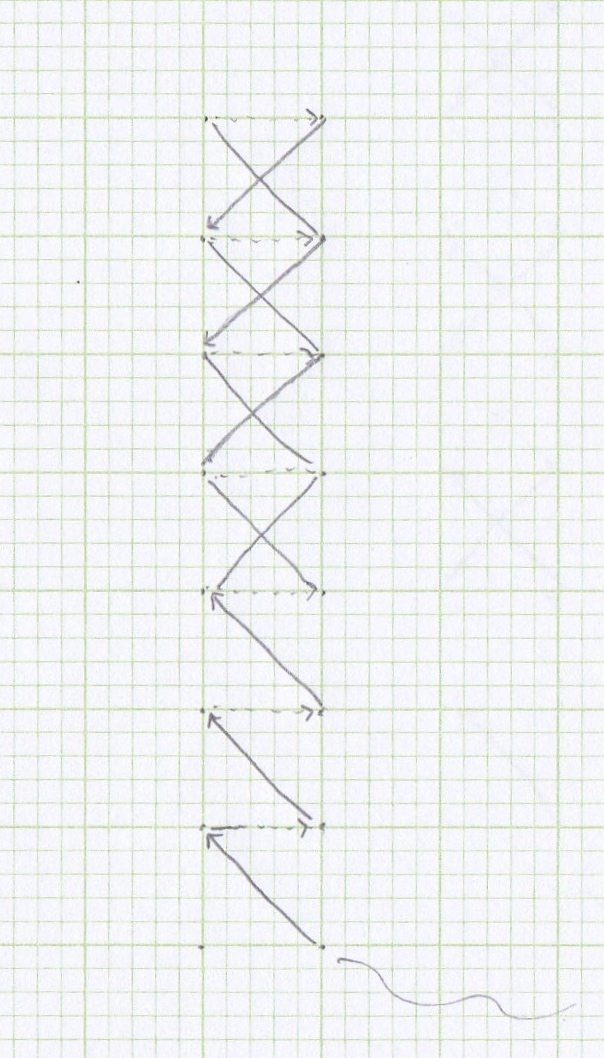
A vertical row of stitches would look like the following:
IMG_20190927_0001

The thread begins in the bottom right and makes its way to the top left of the half cross (solid line) with the needle being pushed through the fabric in a rightwards direction to form a horizontal stitch on the flip side (dotted line).
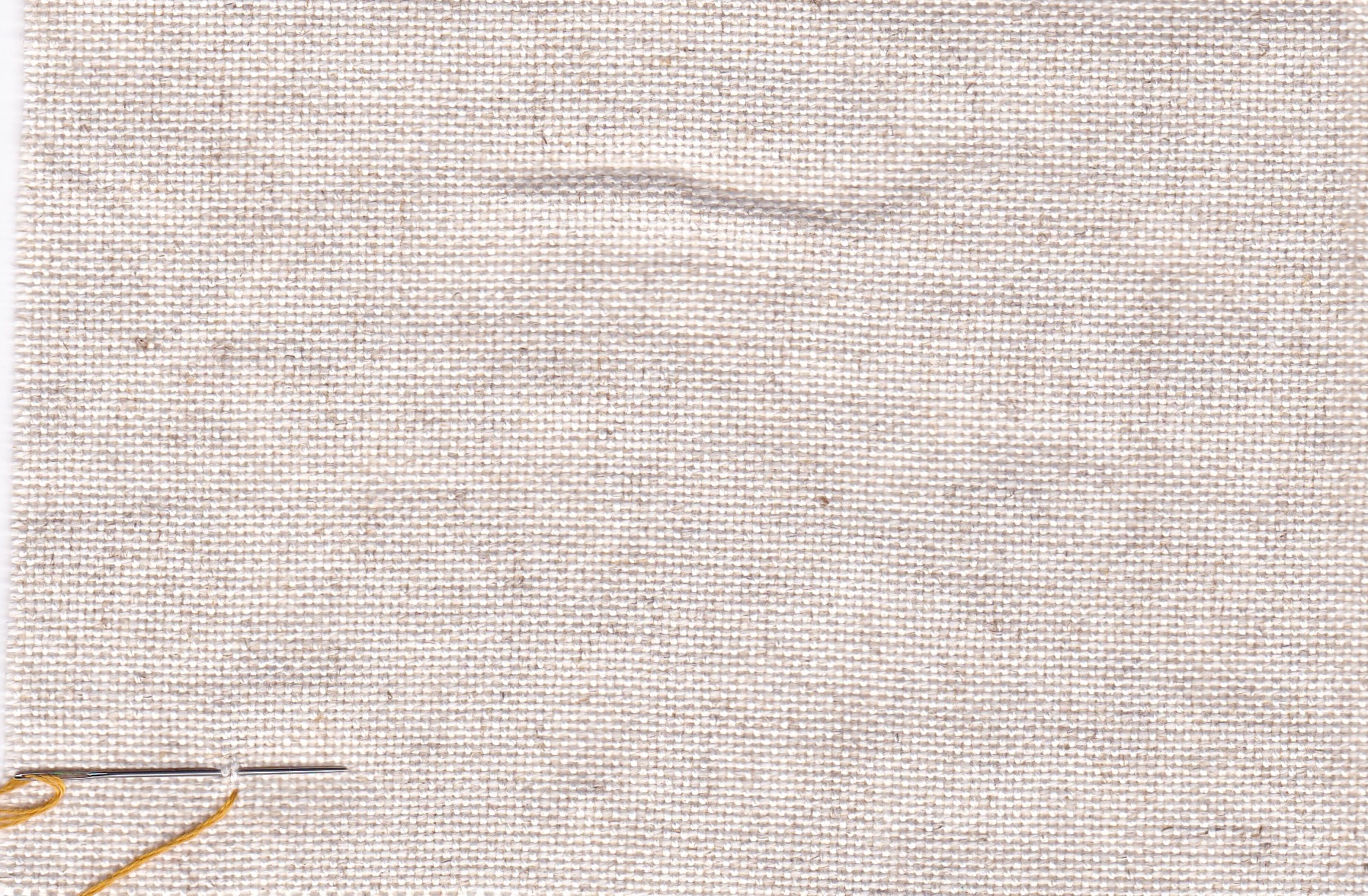
IMG_20190927_0012The initial stitch is being made here.

IMG_20190927_0013

Here we are at the top of a completed row of half stitches and have changed direction to come back down.  I’m about to complete the very top cross and my needle is still going through the fabric in a rightwards direction.

IMG_20190927_0014

Nearing the end, all the crosses are becoming completed.

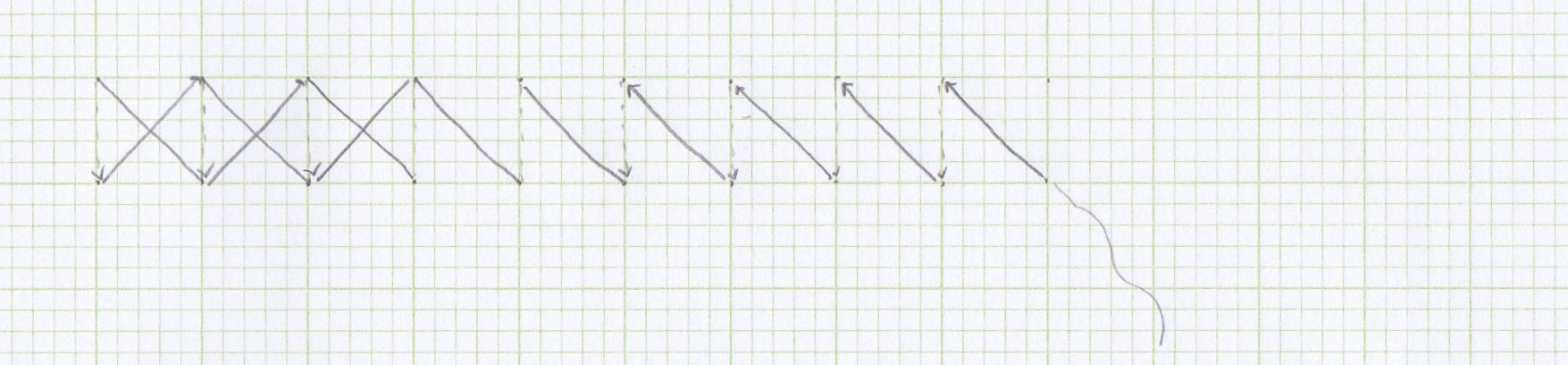
To embroider a horizontal row of crosses, the row begins from the right and moves left, with the needle again making a downward movement through the fabric and forming vertical stitches on the flip side.
IMG_20190927_0001

In needle and thread, it appears like this:

IMG_20190927_0015

You can imagine that the flip side is a series of parallel vertical stitches.

IMG_20190927_0016

Turn to come the other way and you’re on your way to completing a vertical row of stitches.

The next thing to do is to repeat and repeat again until this feels more flowing and natural and your pull, the tension you give to each stitch, becomes more uniform.

The next post will be on stitching horizontally or vertically for every second cross.  Looking forward to the end of that post where there will be a little pattern that can and has been used to practice these two techniques and make a bookmark.

See you soon!

~oOo~
No Knots! No Knots! ~a how to post~

I am pretty sure it was my Baba who taught me that there are to be no knots in one’s embroidery.

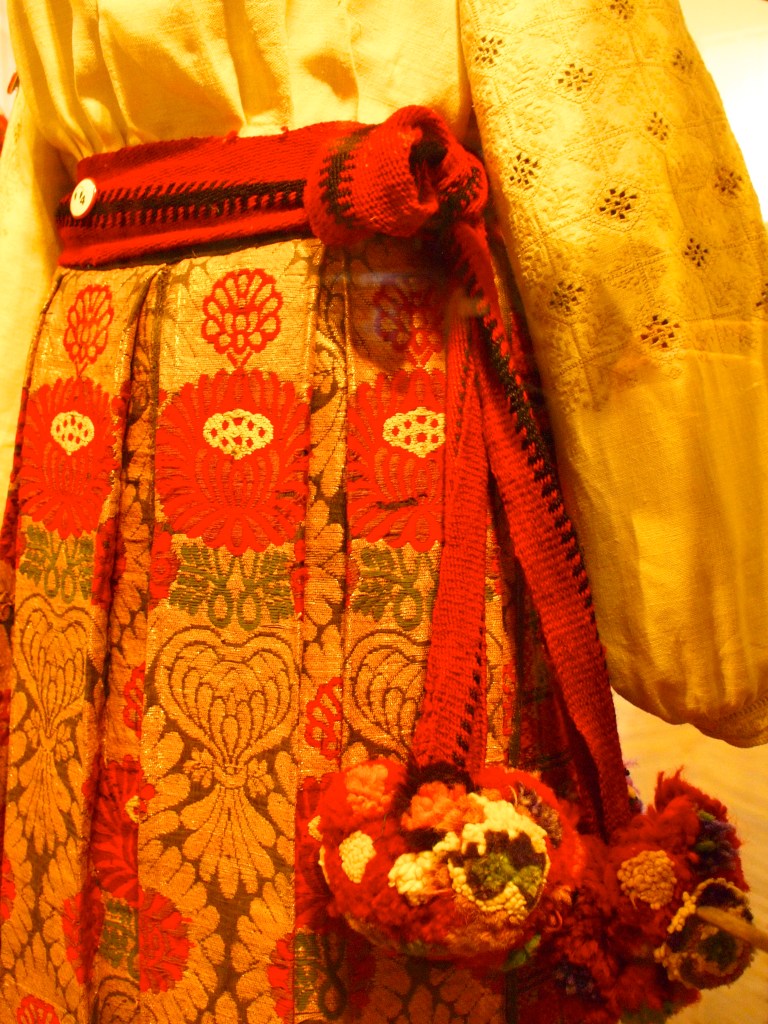
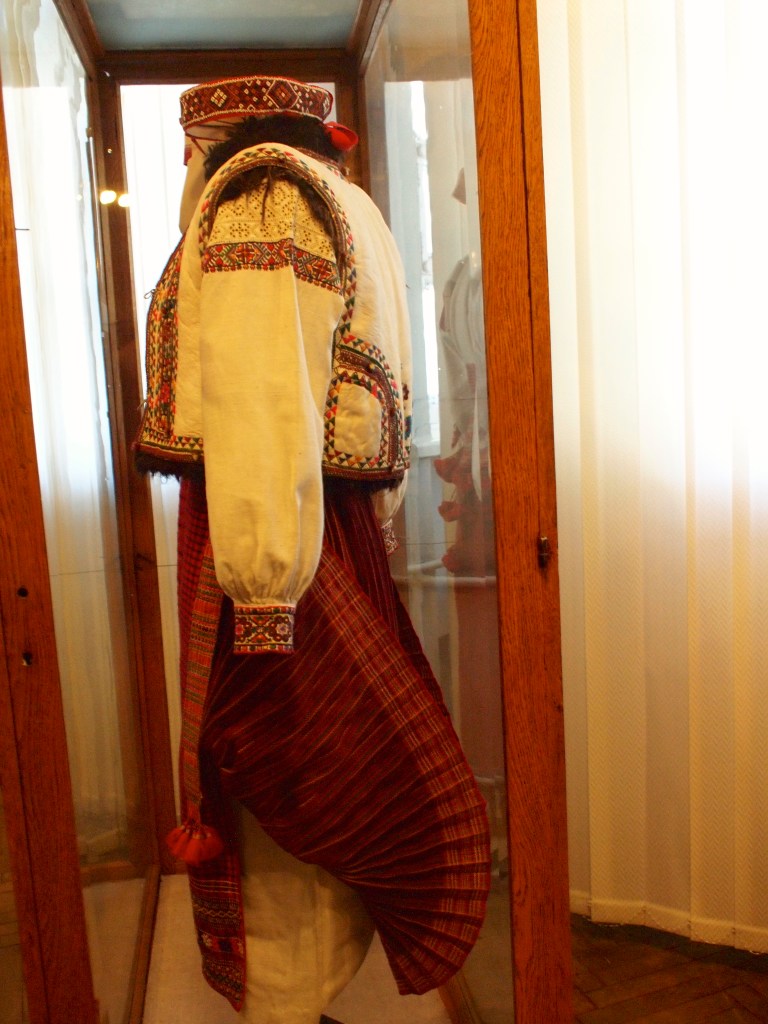
As a slight aside, and I will come back to no knots in Uki embroidery, this reminds me of a visit to the National Museum of Ukrainian Decorative Folk Art in Kyiv https://www.mundm.kiev.ua/INDEX_EN.HTM.  This museum is housed within the grounds of the Kyiv-Pechersk Monastery.  Photos are allowed.  Of course, I stood out as a blatant foreigner and attracted the attention of an attendant, much friendlier than those who policed museums in Kyiv in my first visits to UA as a teen and in my early 20s.  She struck up a conversation and heard my Ukrainian and by doing very little, I had earned myself a fairly comprehensive guided tour of several rooms of the museum, including that to Ukrainian national dress through the ages.

I learned from this lovely lady the care with which Ukrainian women have always dressed.  She told me that one could tell by looking at a woman’s dress her age range, marital status, economic status, area of residence.  Headwear was always worn, even if as simple as a ribbon for a young girl.  Necklaces of beads and coins were important and parents tried hard to purchase as many beads and coins as they could for their daughters.  Embroidered shirts covered the body from neck to wrist and ankle and embroidery was key at these edges to protect the body.  Layers were added over the shirt with complex skirts, vests, jackets.  Ukrainian women didn’t wear their clothes, the clothes were carried by the woman.  How elegant!  Pleats were carefully arranged whilst a woman stood on a stool so family members or friends could walk around her, checking the details.  Sashes were “folded” and arranged, but not tied.  Tie up a sash and you’ll tie your own fate.

Perhaps this superstition extends to Ukrainian embroidery?

I have seen different methods of fixing threads in embroidery in books but thought I would share with you my preferred method.

A lesson done in blue.

dsc01578

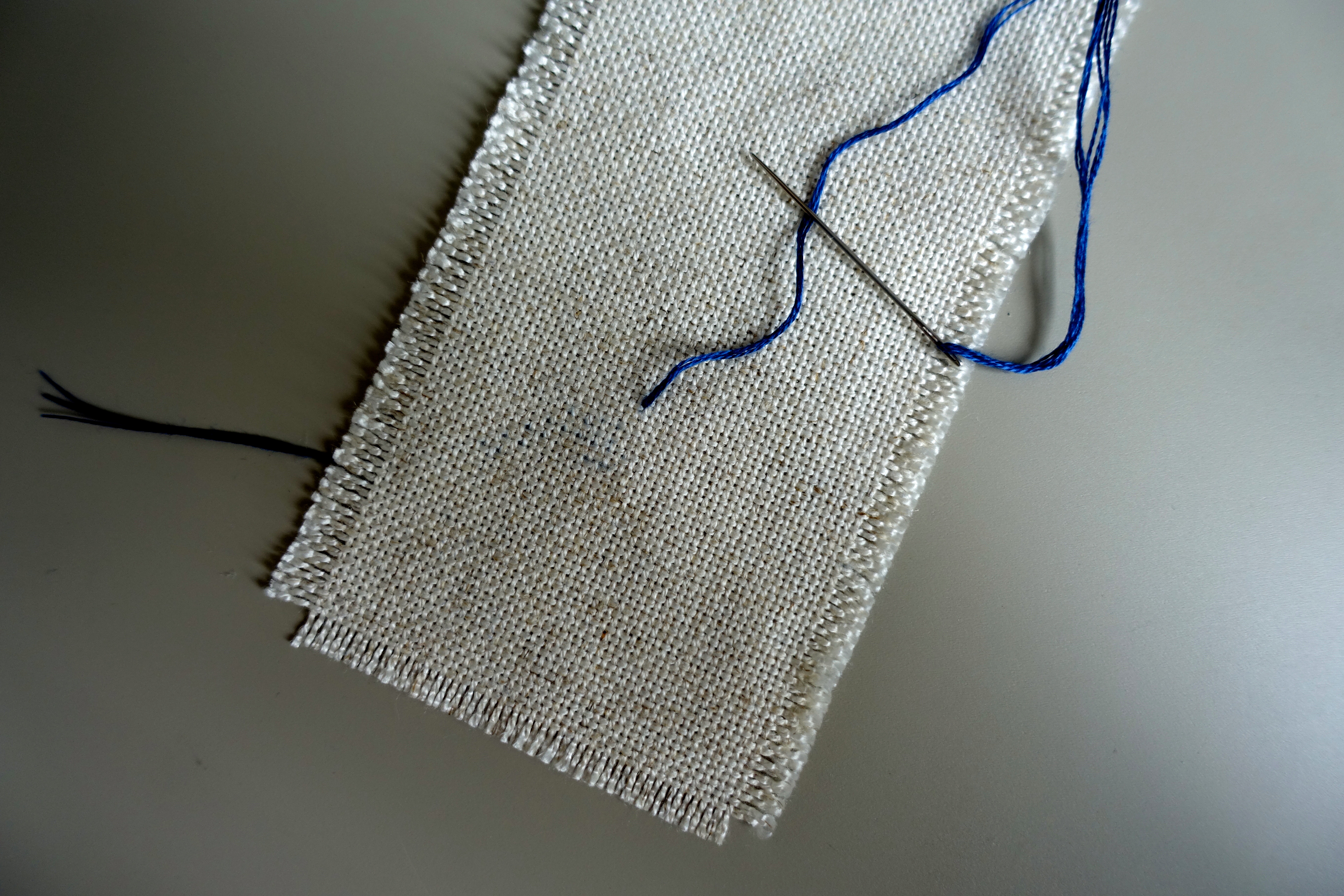
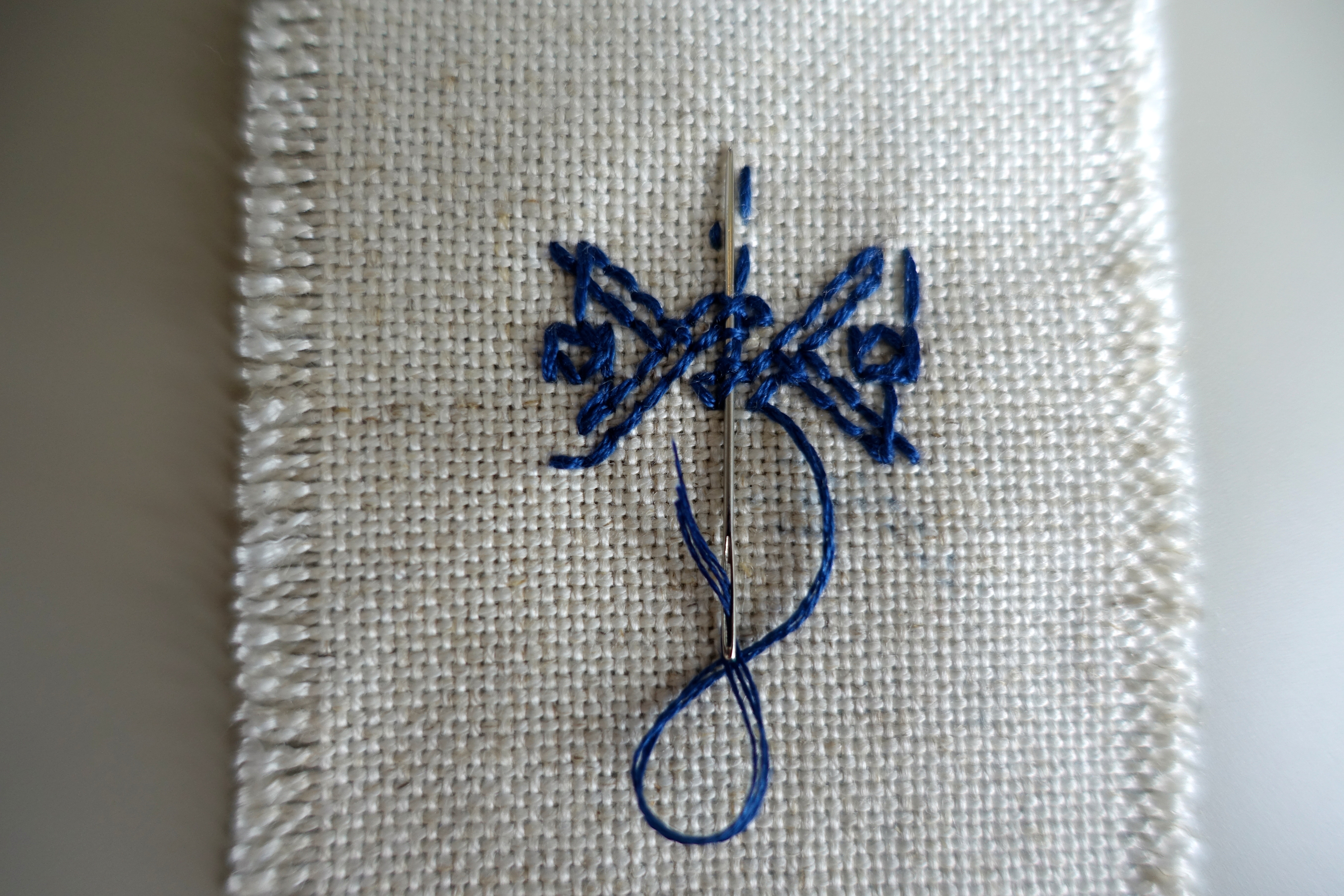
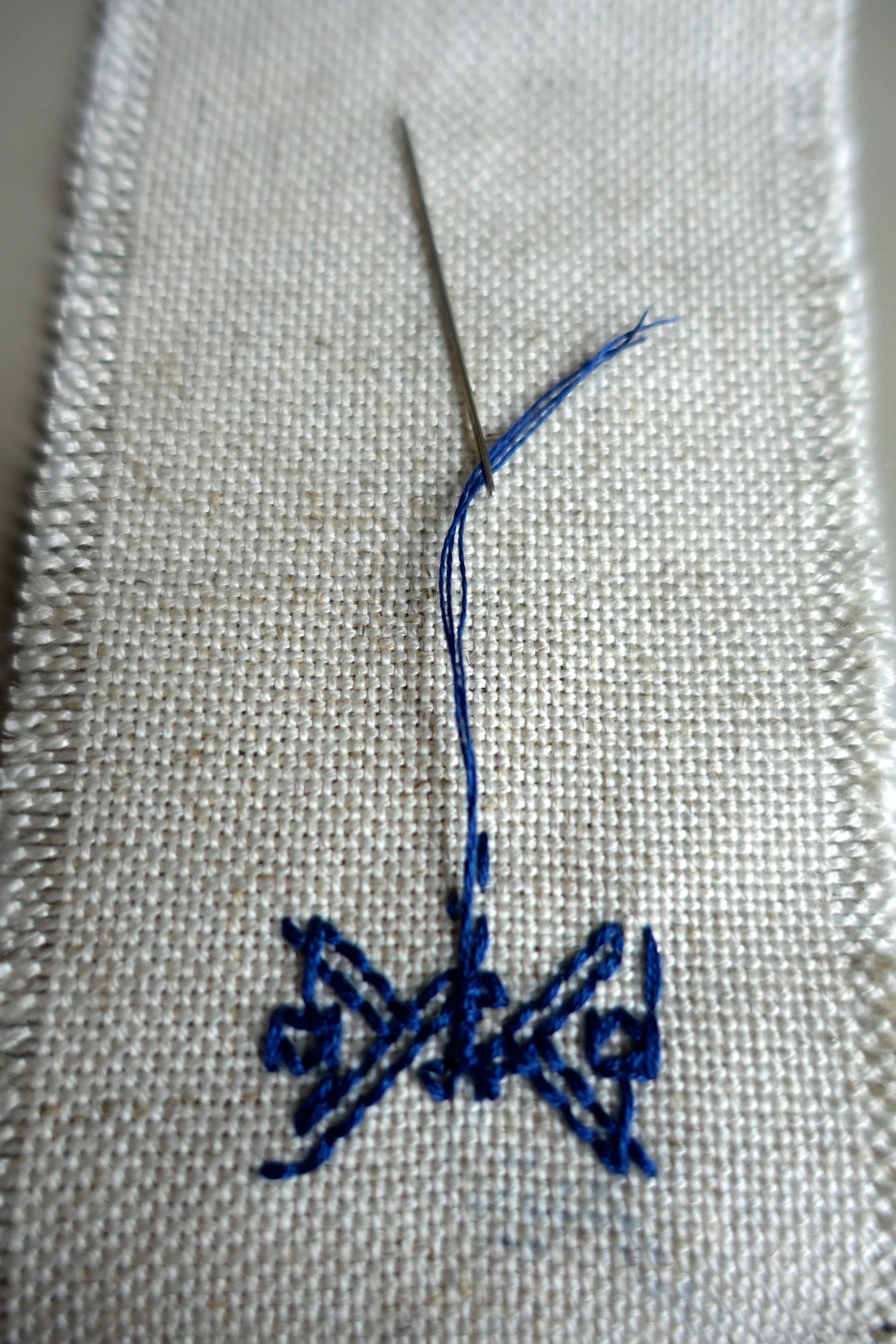
Here I am starting off.  I’ve threaded my thread through where I want it and leave behind a tail of thread on the underside.

dsc01579

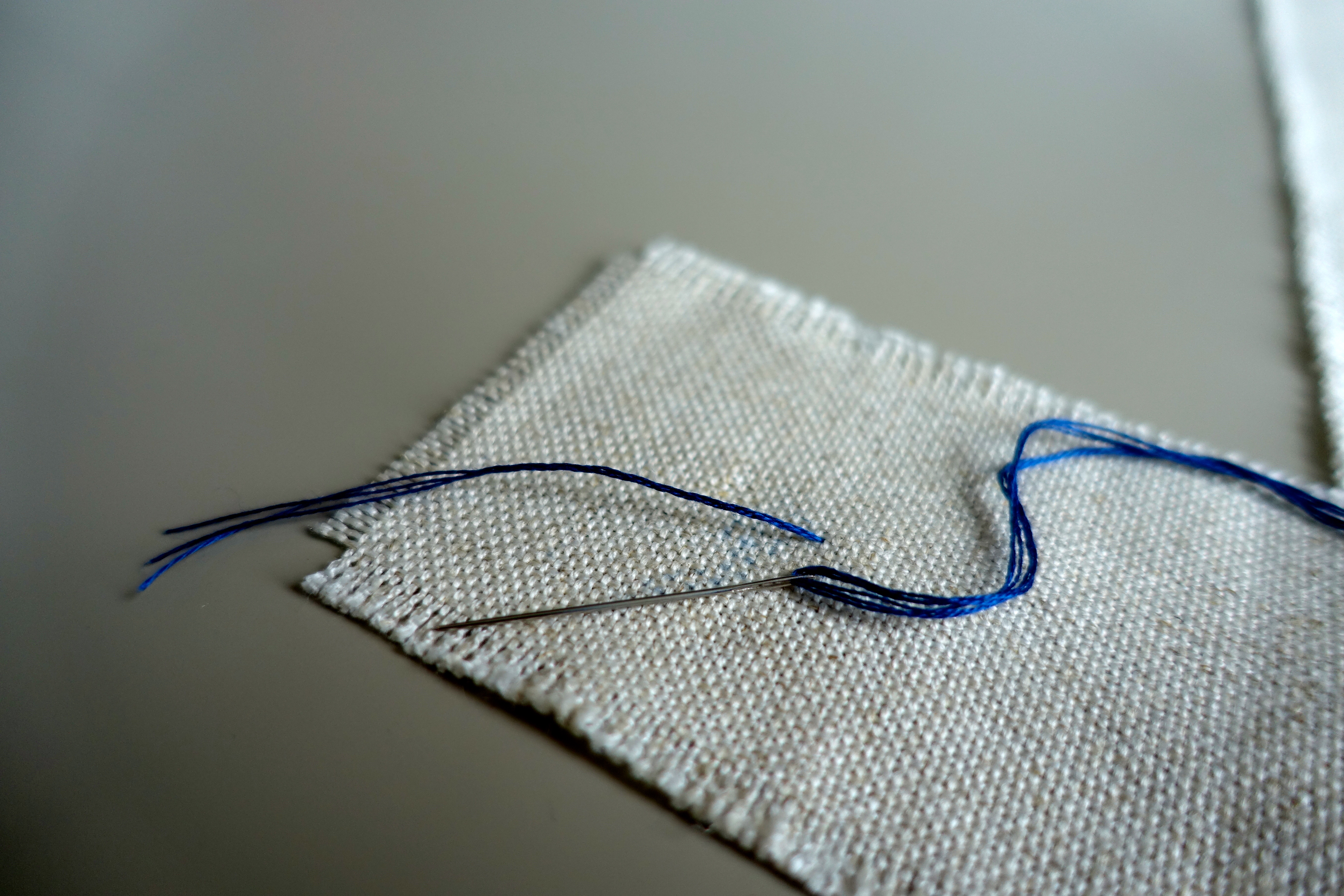
The tail of thread should be longer than the needle, like in this photo.  Begin embroidering.

DSC01580.JPG

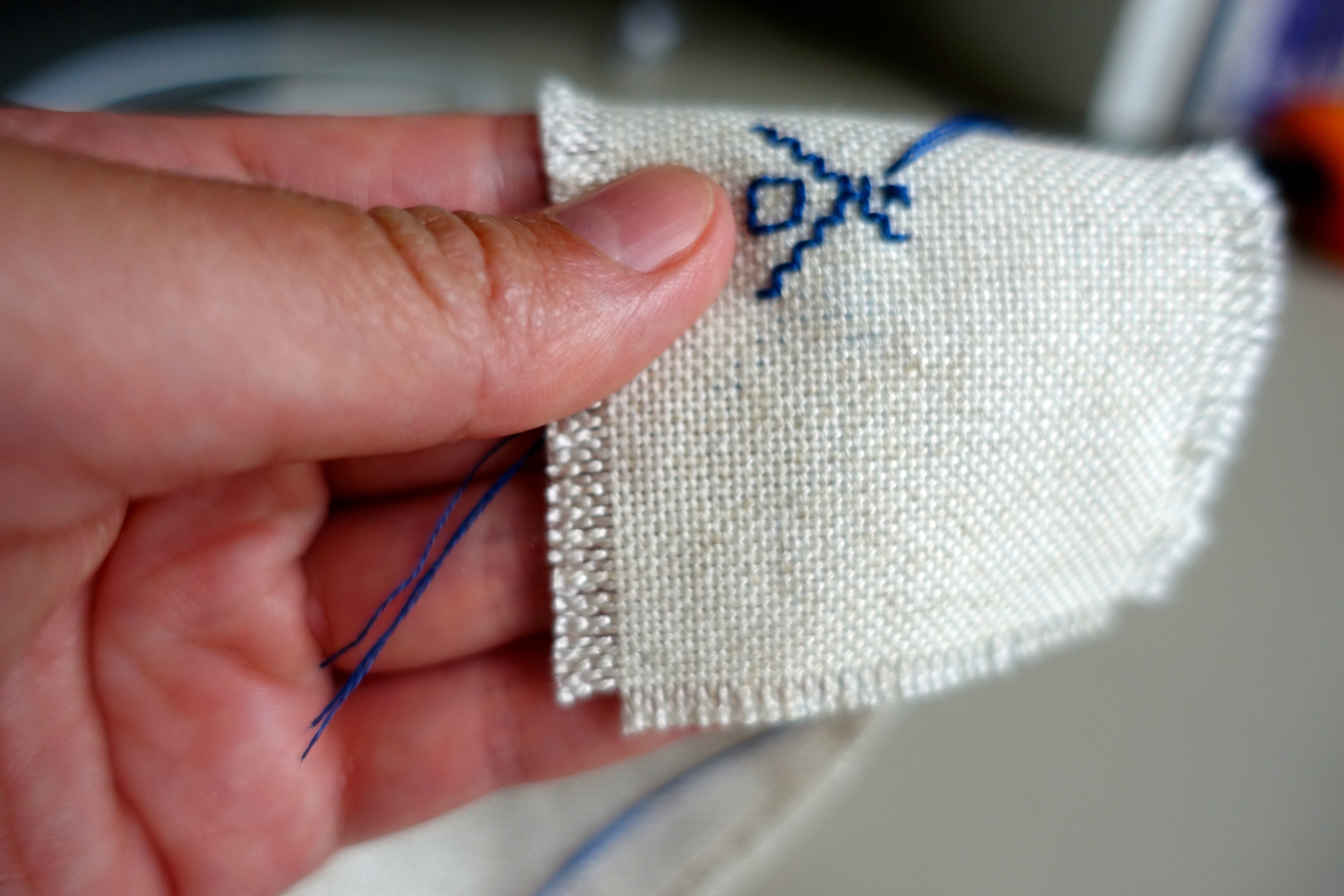
Be aware of where your thread-tails are.  If they’re hanging around out the back, you may stitch them unawares to your underside and you will then have no tail to tuck under neatly.  Done this many times, unpicked as a result!  I tend to hold the thread tail in my holding hand as I embroider so that I keep it out of the way of my needle.

dsc01581

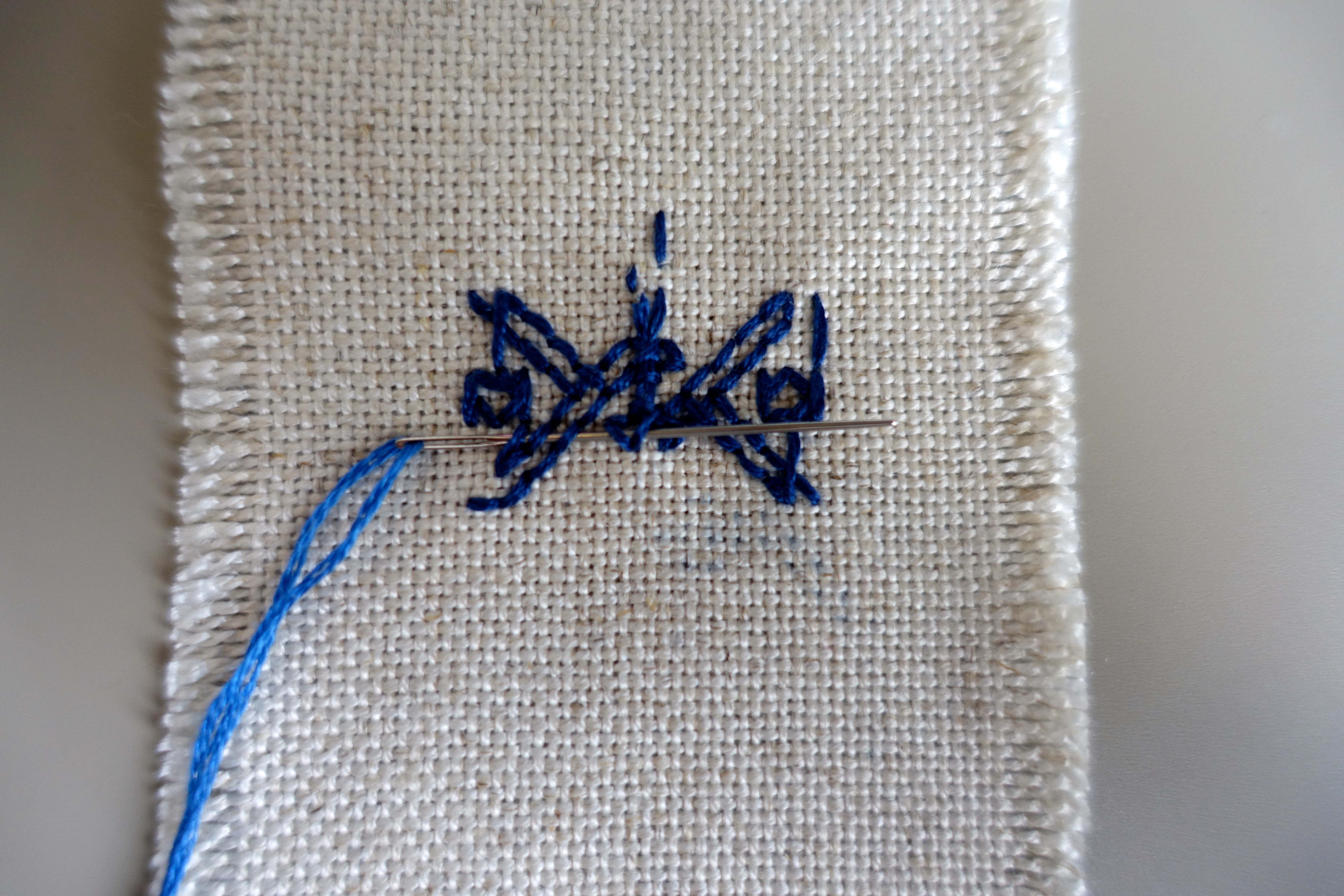
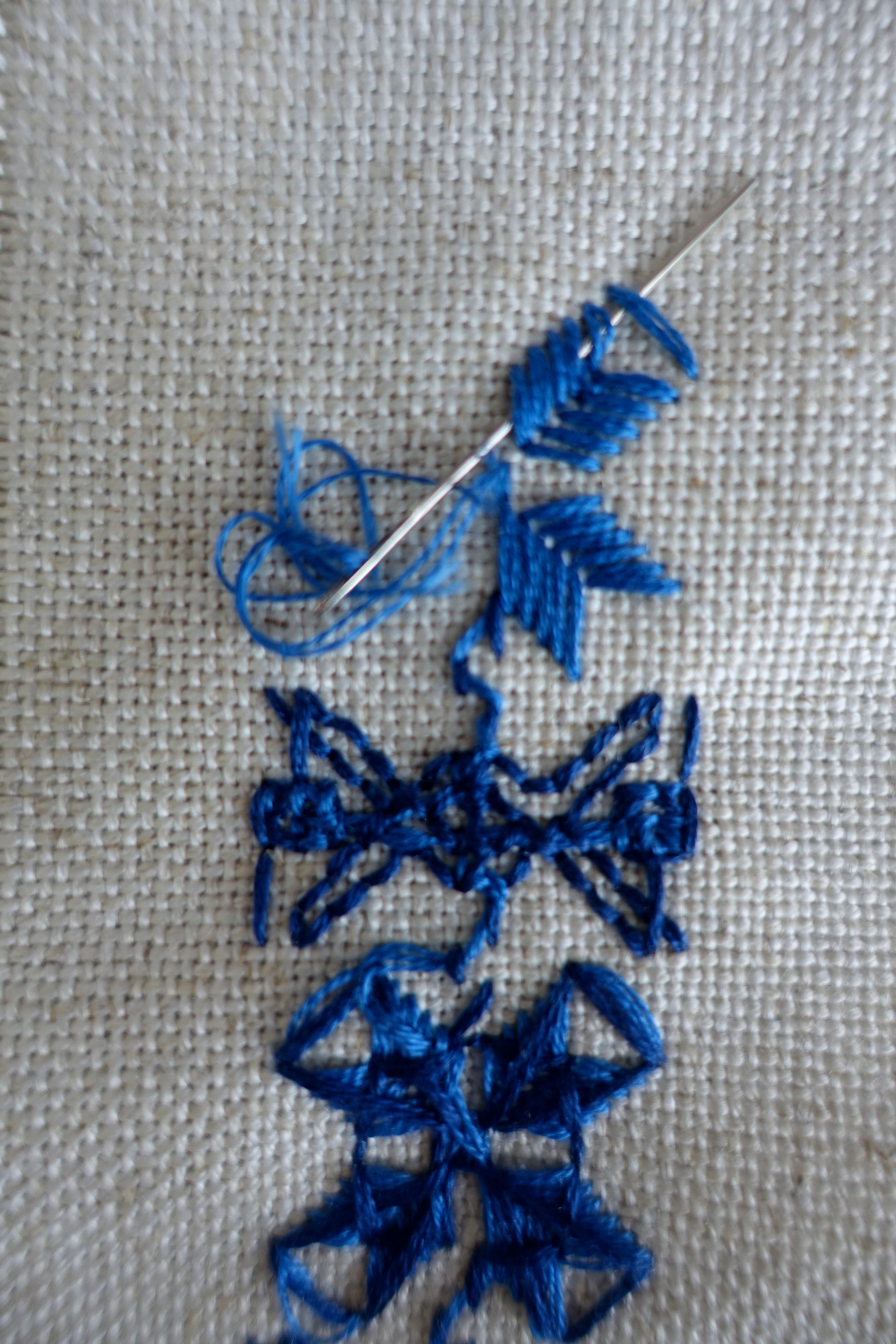
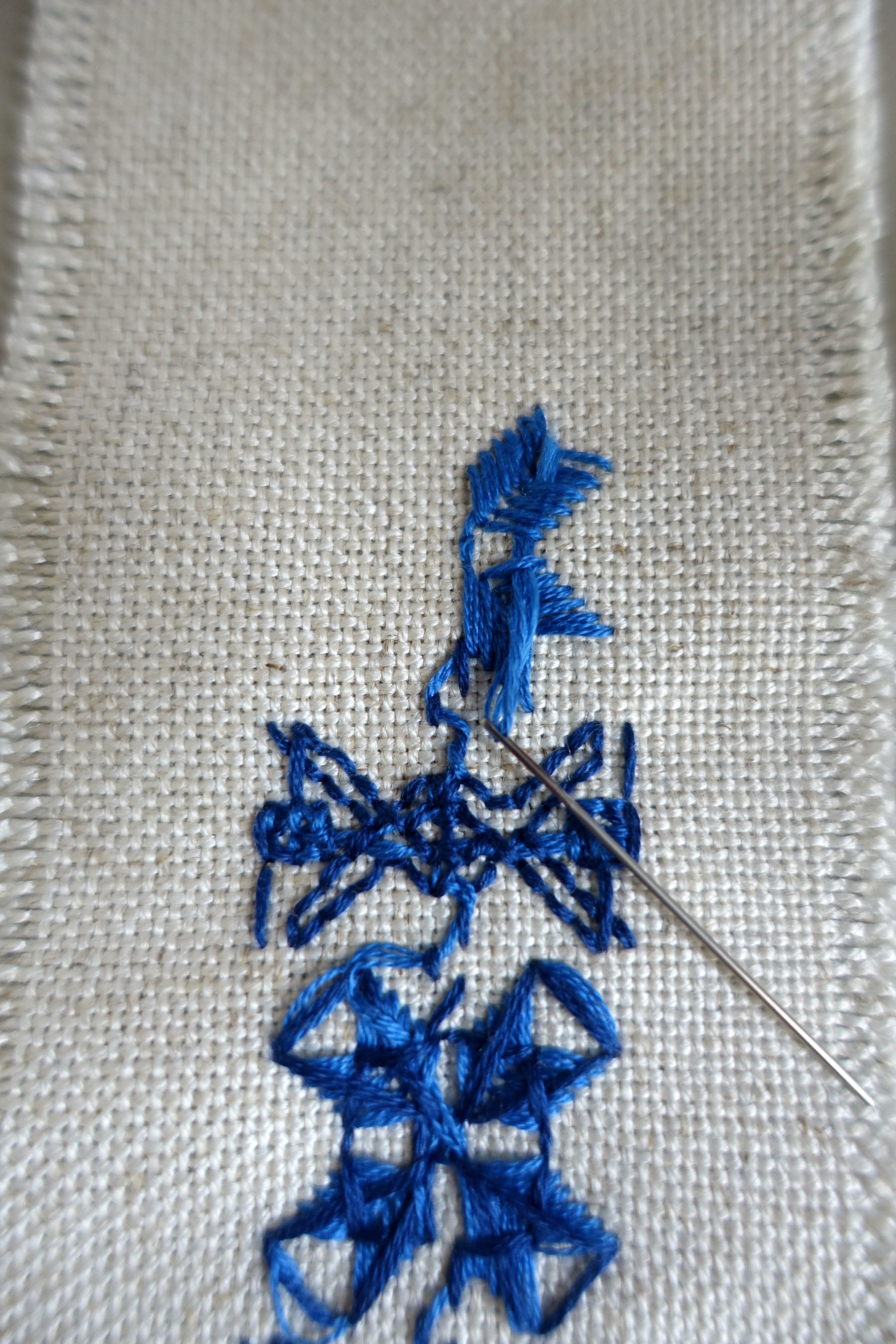
When there comes an opportunity to tuck under, eg the thread is finished and you’re removing it from the needle, or otherwise proactively when there’s enough embroidery there to tuck under, or in this case changing colours, choose 3-4 stitches in row and thread the needle under them.

dsc01582

Thread the thread tail into the eye of the needle.

dsc01583

And pull it through.

DSC01584.JPG

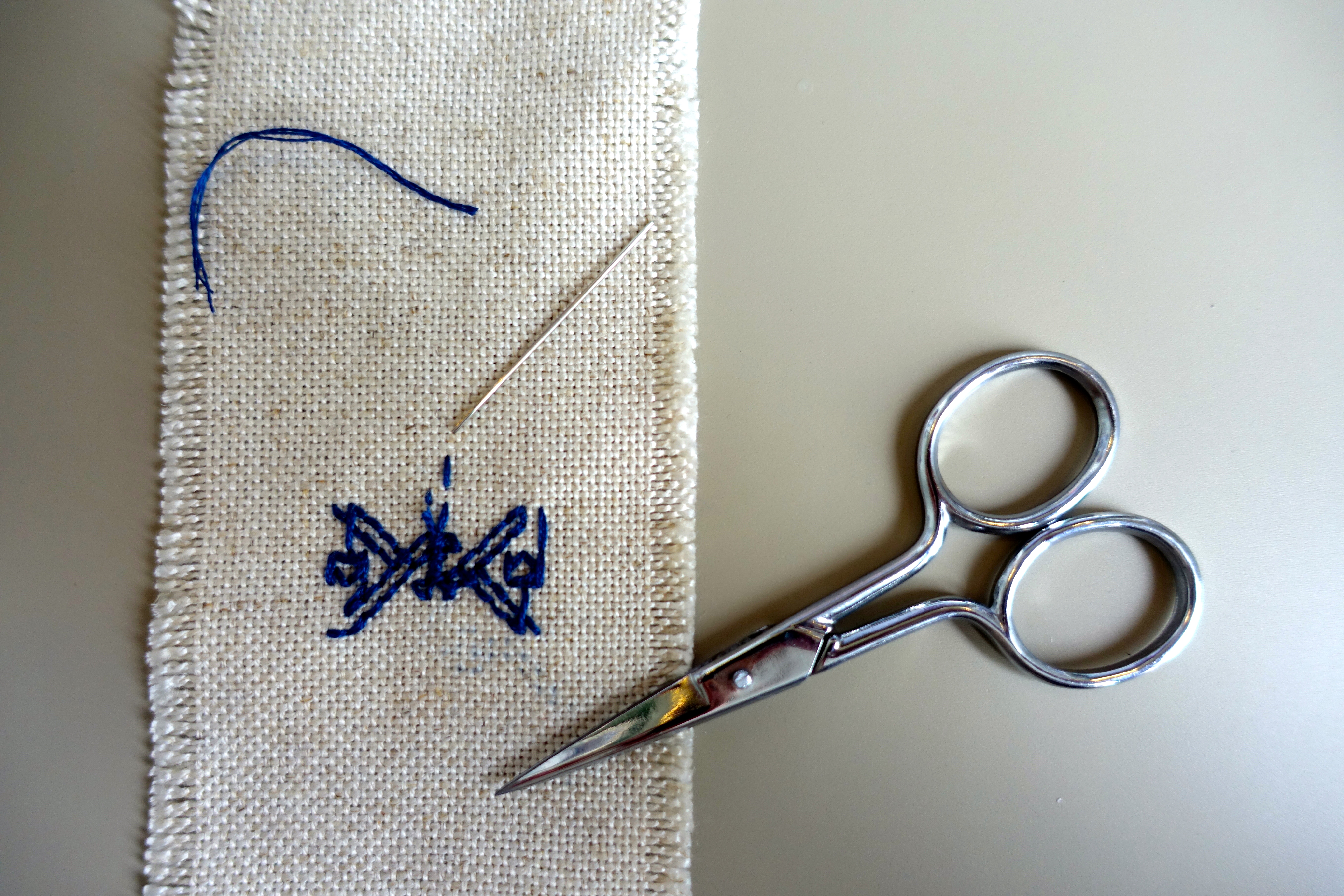
Then cut away the excess thread tail.

dsc01585

When starting a new colour or a new thread, you now have some stitches under which to fasten it.

dsc01586

When a thread runs out, you can tuck it under a nearby part of the design.

dsc01588

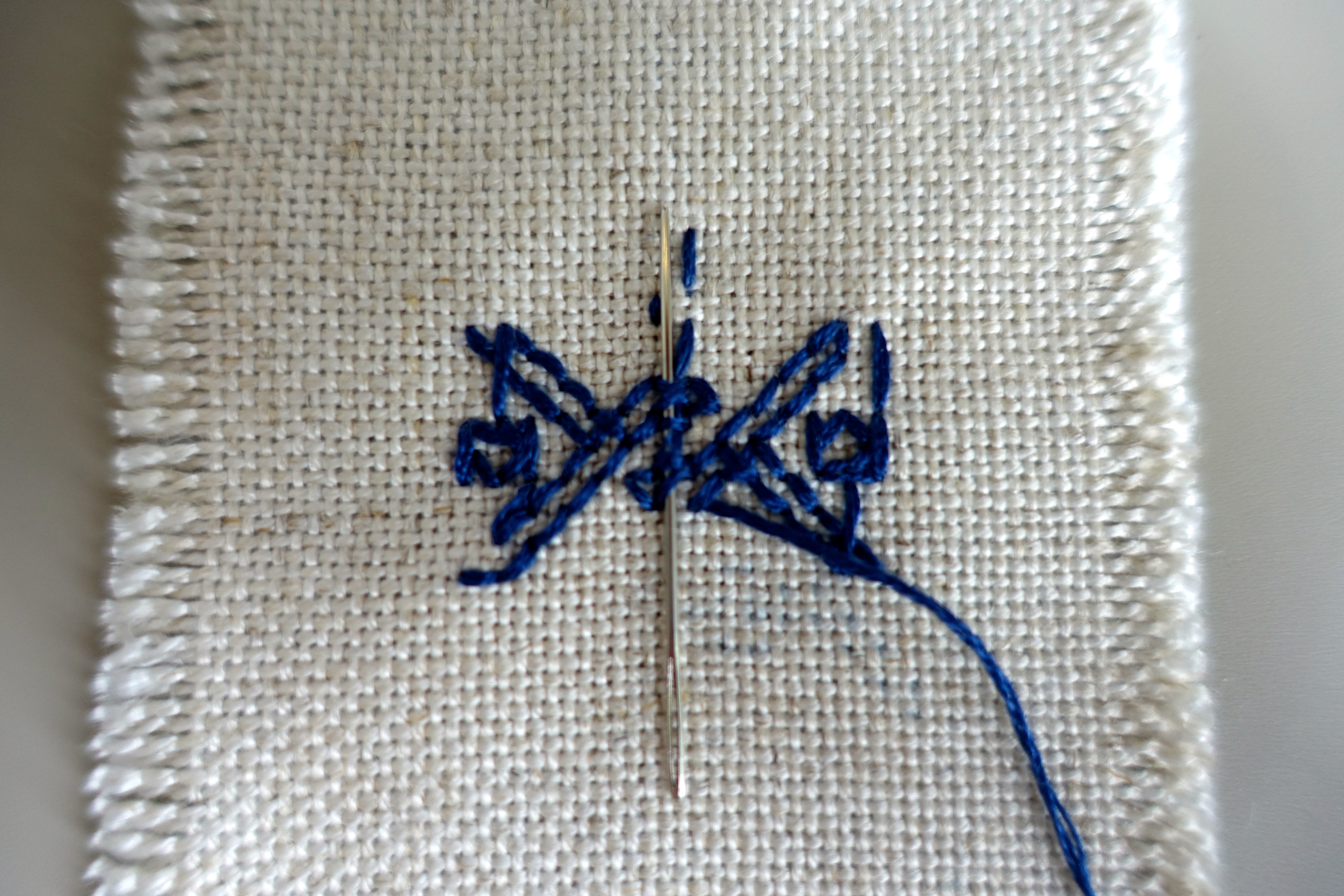
If I’m working on cross stitch or back stitch and the stitches on the reverse side are short, I’m happy to fasten a thread end under 3-4 stitches.  Because in this case I’m using satin stitch and the stitches on the reverse are longer and the tuck will be a little looser, I thread the thread end through two parts to ensure it is fastened.

Cut, re-thread and you’re away.

And there you have a simple no-knots way to fasten thread ends at the beginning of a project or at the end of a thread.

~oOo~

My Paska Recipe

Paska, made with love… this is the recipe my Mama used, I think its actually a babka recipe from the green book.  I put a whole day aside for this – what you see documented started at 8am and was finally finished at 9pm.  There is some time for other things over the day (like doing some pysanky,) but don’t count on getting this recipe done in half a day and don’t expect to pay a lot of attention to anything else!!  This paska is a baby – it wants you all!  I will say that this is a double recipe.  Mama used to do triple! which I’ve never been game to do.

paska 1

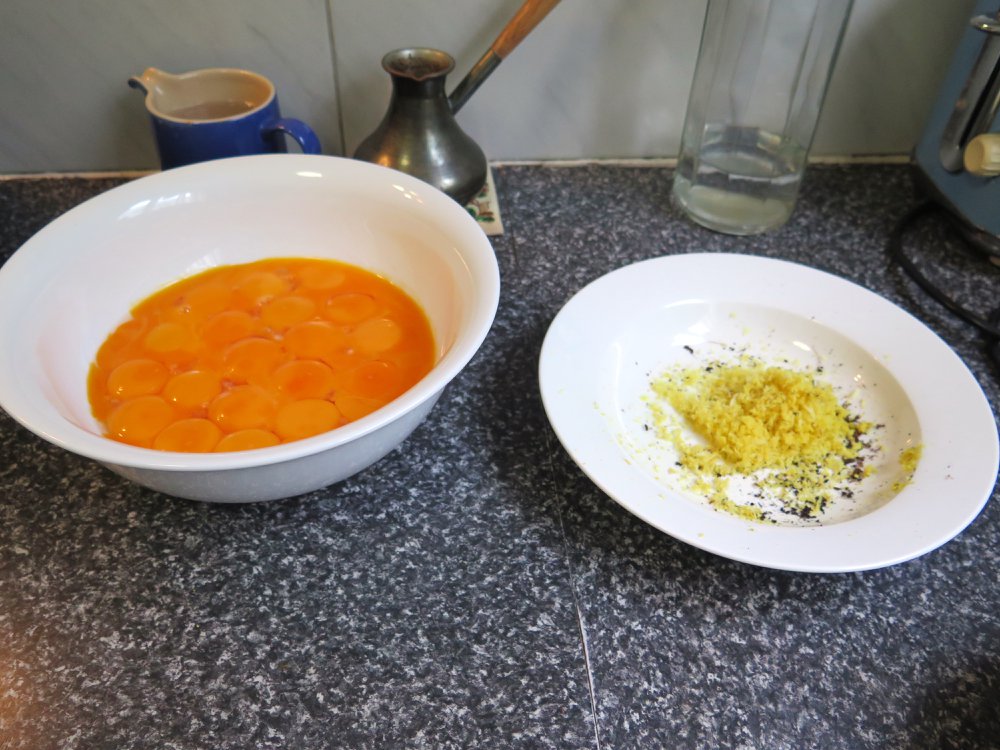
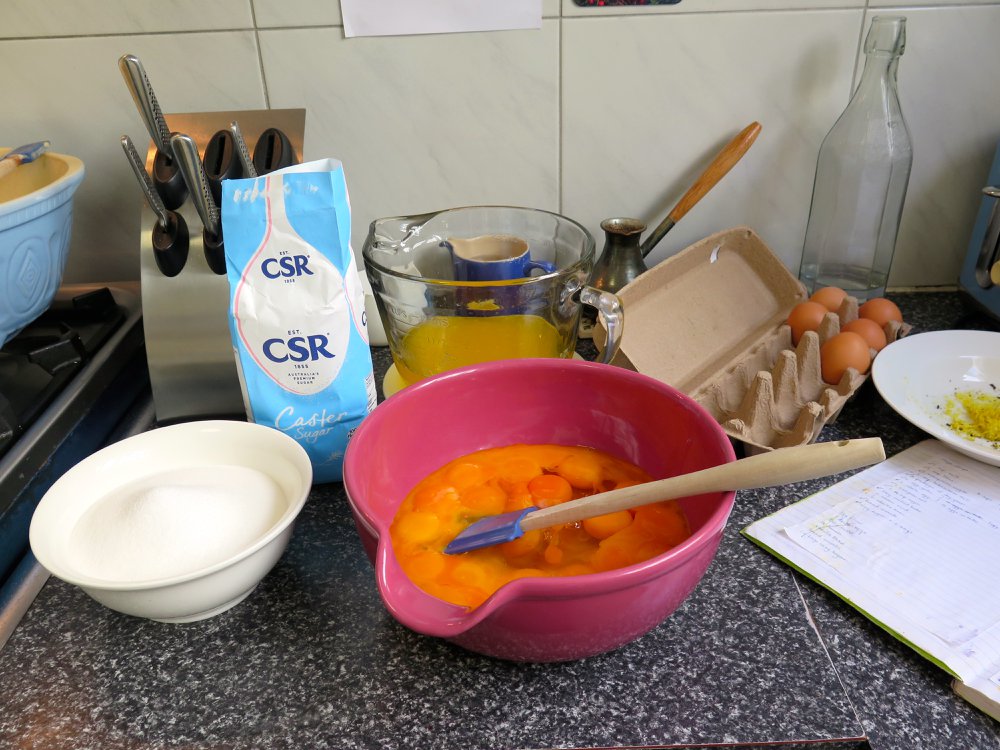
On the left are 24 egg yolks and 4 whole eggs.  On the right, we begin with sweat – a vanilla bean grated, and the rind of two lemons.

paska 2

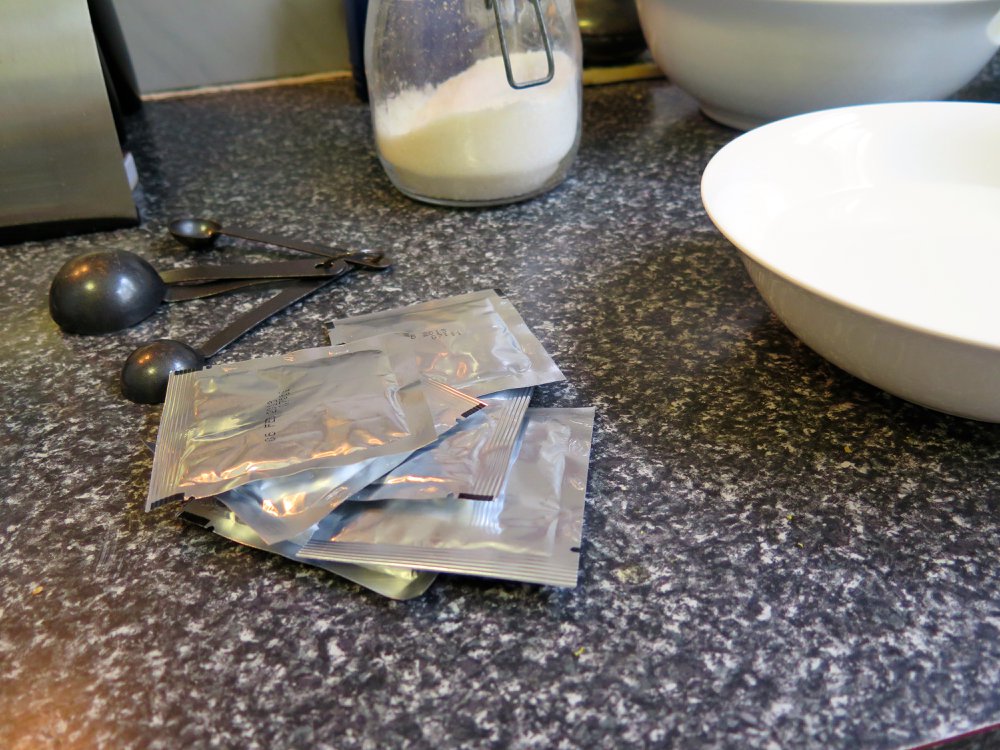
1 cup of lukewarm water with a 1 tablespoon of sugar dissolved.  This recipe uses 6 packets of dry yeast sprinkled over the top until all is spongy.  Use a wide, shallow bowl so all the yeast can easily get wet and eat sugar  Golden rule of paska – be nice to your yeast.  I had to re-do mine today because i noticed it dropping, probably from simply moving the bowl from one spot to the other on the stove top – tears!

paska 3

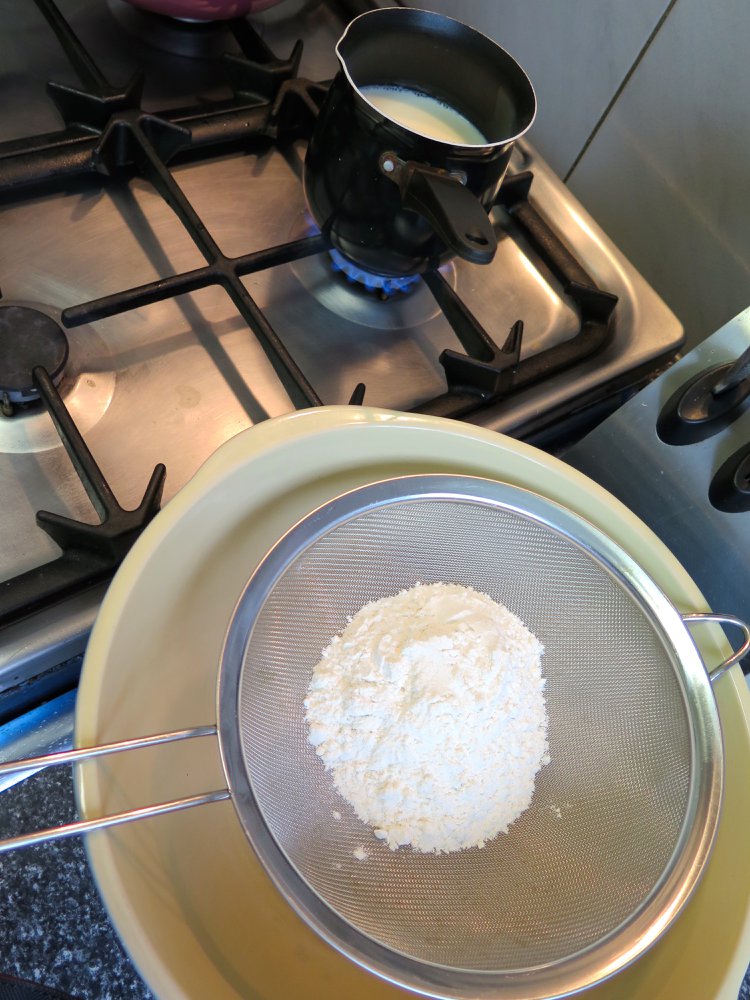
2 cups of milk are being brought to boil and 2/3 cup of plain flour sifted into a large bowl.  This will later have the yeast stirred in.  I want to move my yeast around as little as possible, so as early as I can in the recipe I get it into the large bowl that will eventually contain all the dough.  So the mix of milk and flour – put it in your largest bowl.

paska 4

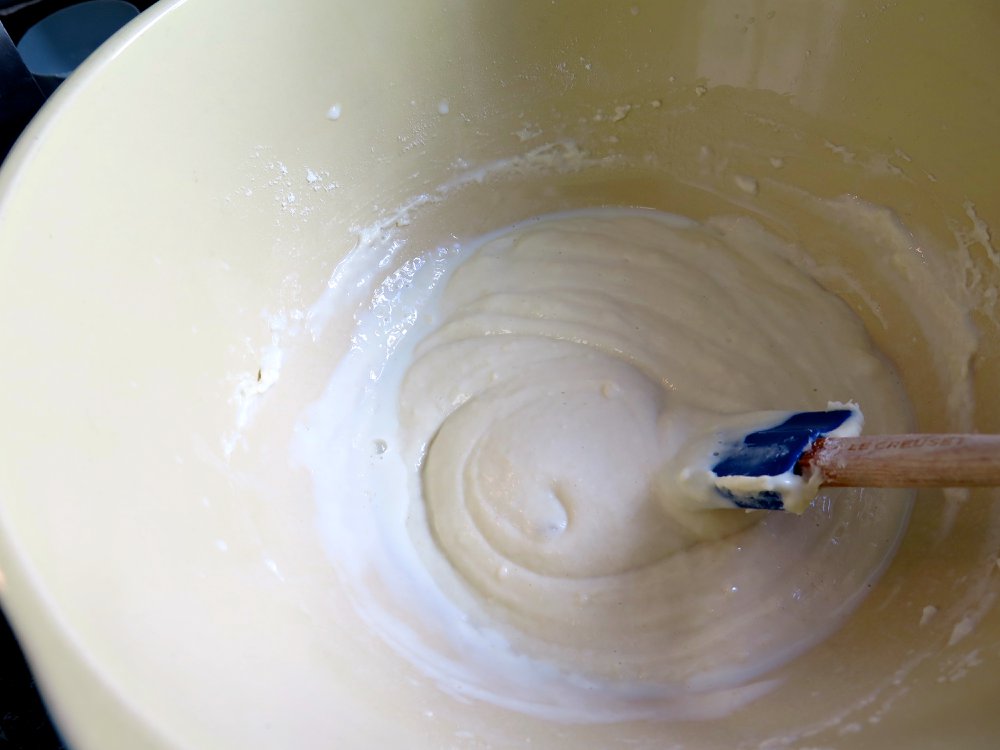
Mixing the boiling milk with the flour.  A bit like tempering eggs, this needs to be done SLOWLY.  Making sure this has no lumps means taking the time to add hot milk a tiny bit at a time.

paska 5

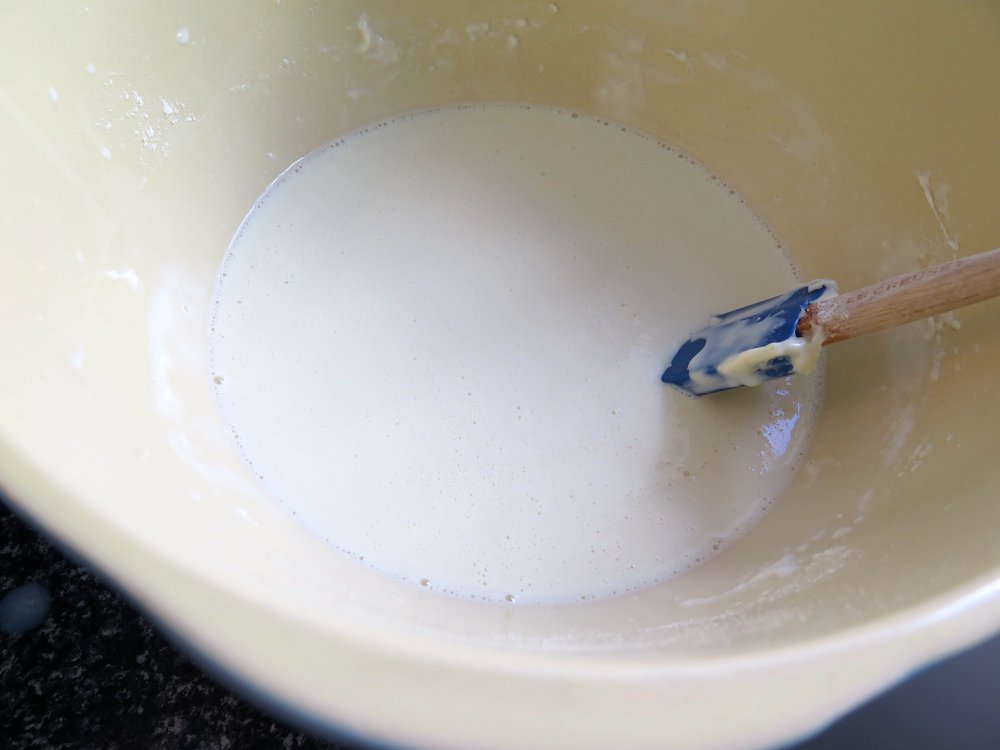
No lumps!  Note that you want this to be lukewarm before adding the yeast.  If its hot, the yeast will cook and not rise any more!  I find that by the time I finish doing this nice and slowly it is just fine, but in case you get through it faster let it cool to lukewarm before the next step – adding the yeast to this paste.

paska 6

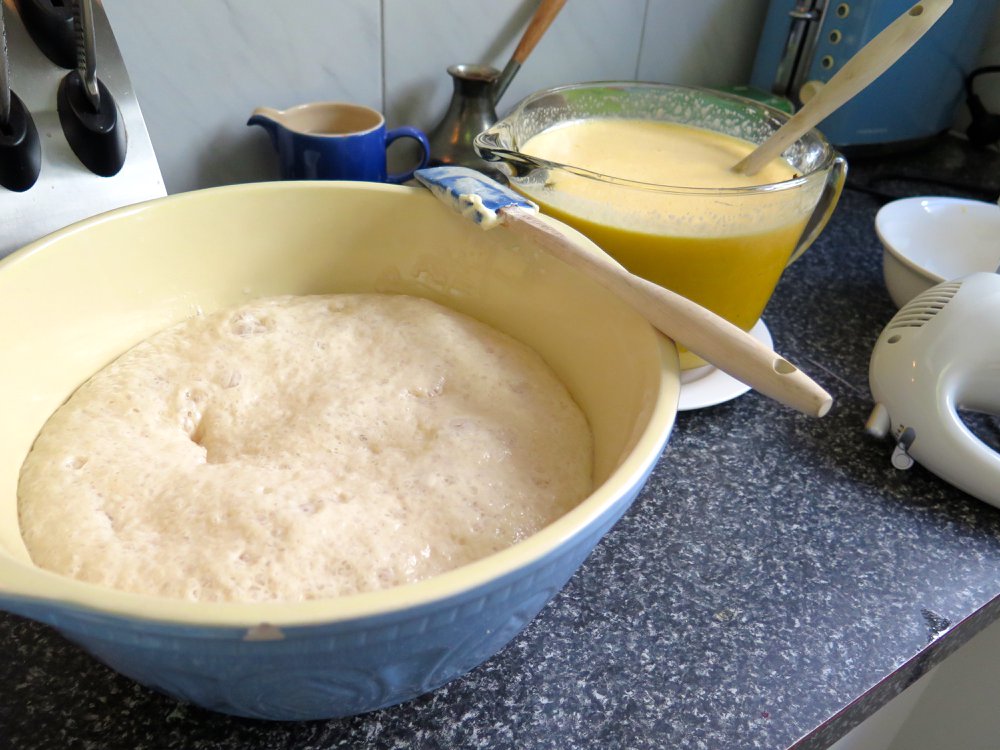
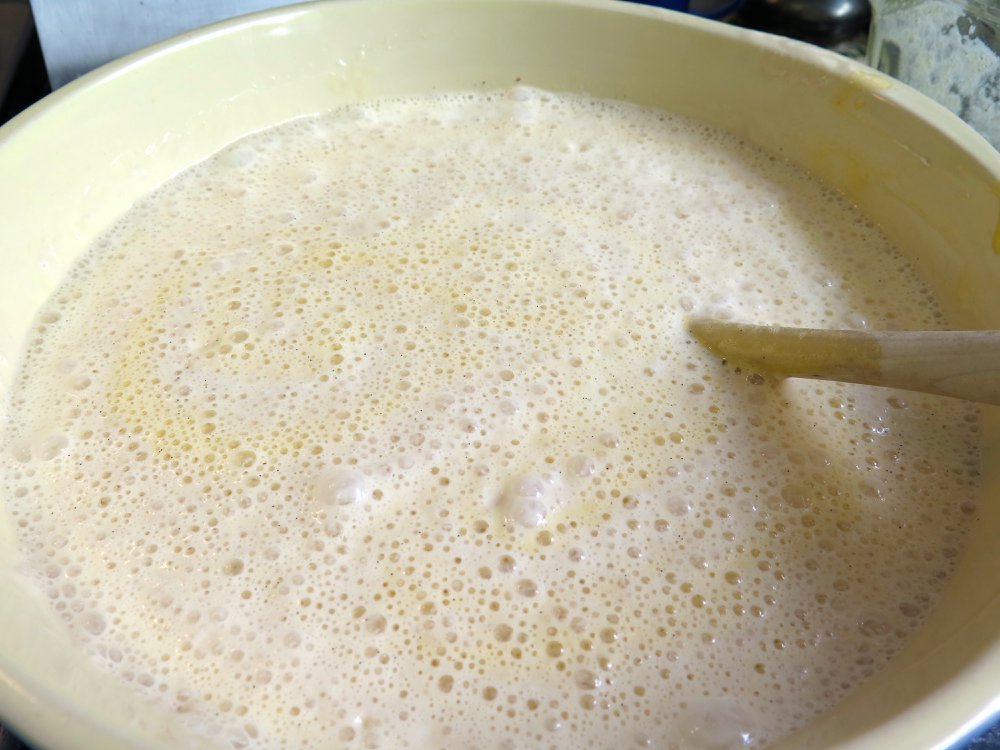
When the yeast has finished getting spongy in its warm sugary water, it is poured into the milk/flour paste and stirred VERY GENTLY.  While this is rising (you want it to rise to what it looks like in this photo), it is time to take a little break, in today’s case – breakfast.

paska 7

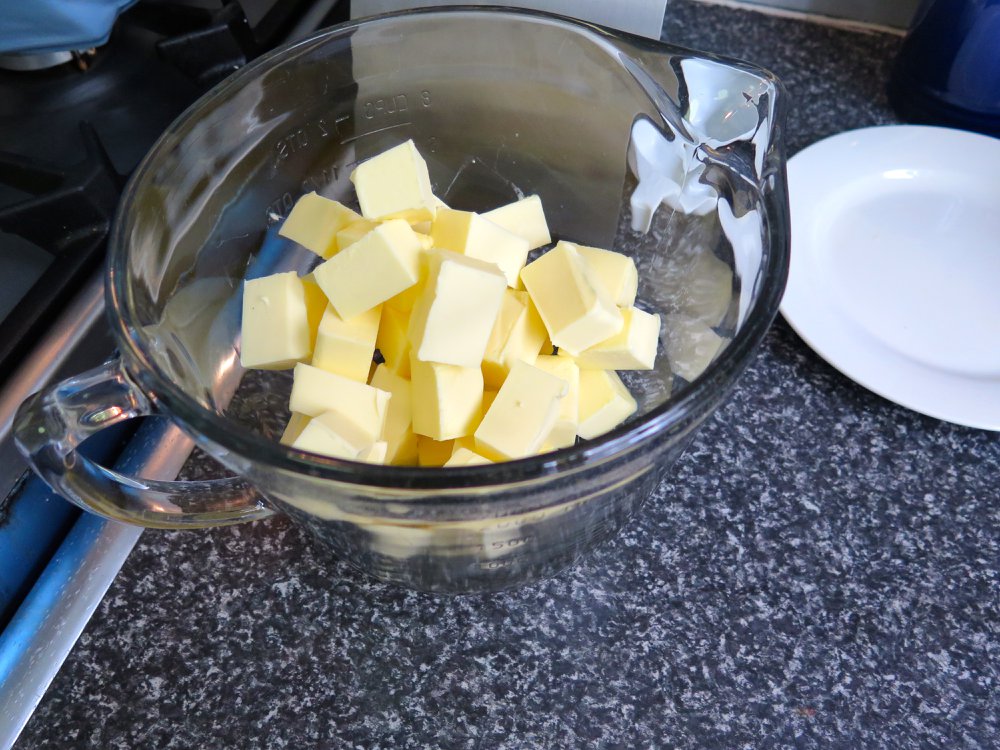
I think a French person was involved in this recipe.  Here is a lot of butter, 500g in fact. It gets melted.

paska 8

Nearly ready to start mixing wet with dry.  On the left are 2 cups of sugar and 2 teaspoons of salt.  The eggs (24 egg yolks and 4 whole eggs) get beaten and then the salt and sugar are added slowly while beating continues.

paska 9

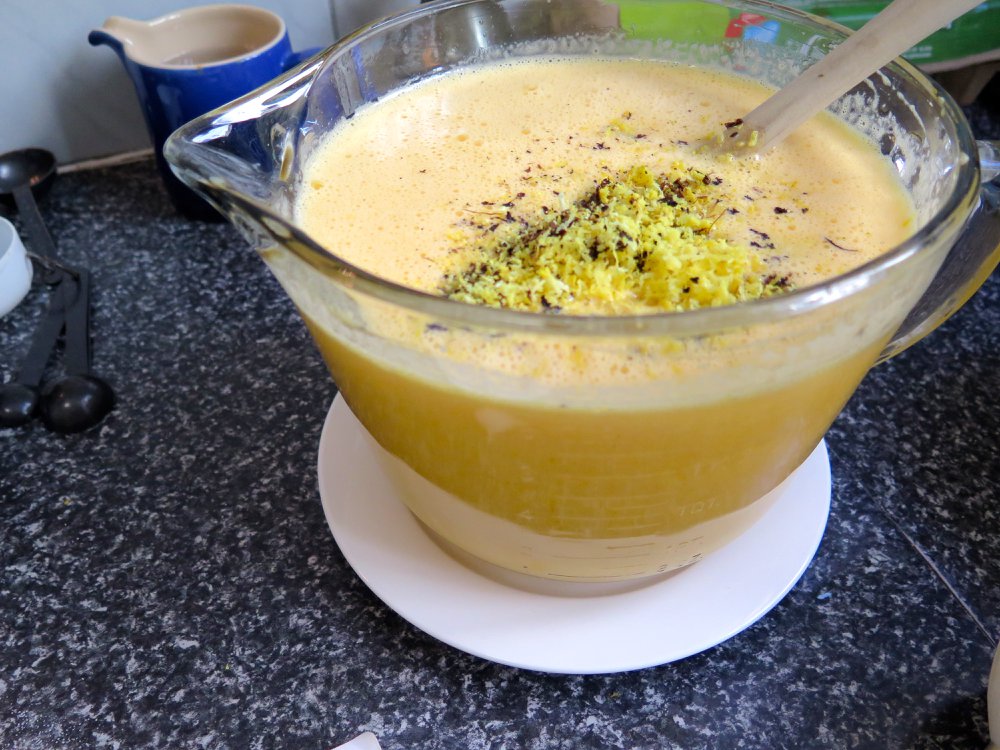
Eggs/sugar/salt are poured into the melted butter (which is cooled) and stirred through.  Then the vanilla bean and lemon rind is added.  May I just say that the smell of vanilla, lemon rind and yeast is the smell of Velykden’ for me.

paska 10

Now another step in which to be very gentle with the yeast.  The butter/egg mixture in the jug needs to be mixed with the yeasty, spongy, milky thing.  I pour the butter/eggs along the side of the bowl so they pour into the bottom.  I then stir VERY GENTLY again.  It wont look a lot different and because the yeasty bubbles will always want to be on top but you can see a bit of yellow in it – that is good enough for me.  I wouldn’t advise rigorous stirring!

paska 11

This is a good spot to have a drink of water and a pee break because the next step takes a bit of time.  12 cups of plain flour are mixed with the wet ingredients.  How are 12 cups of flour going to fit into that bowl?  They flatten the mixture so it all gets in there somehow.  I add 2 cups at a time, sifted, and stir each time.  Above is half-way, with still a v moist dough.

paska 12

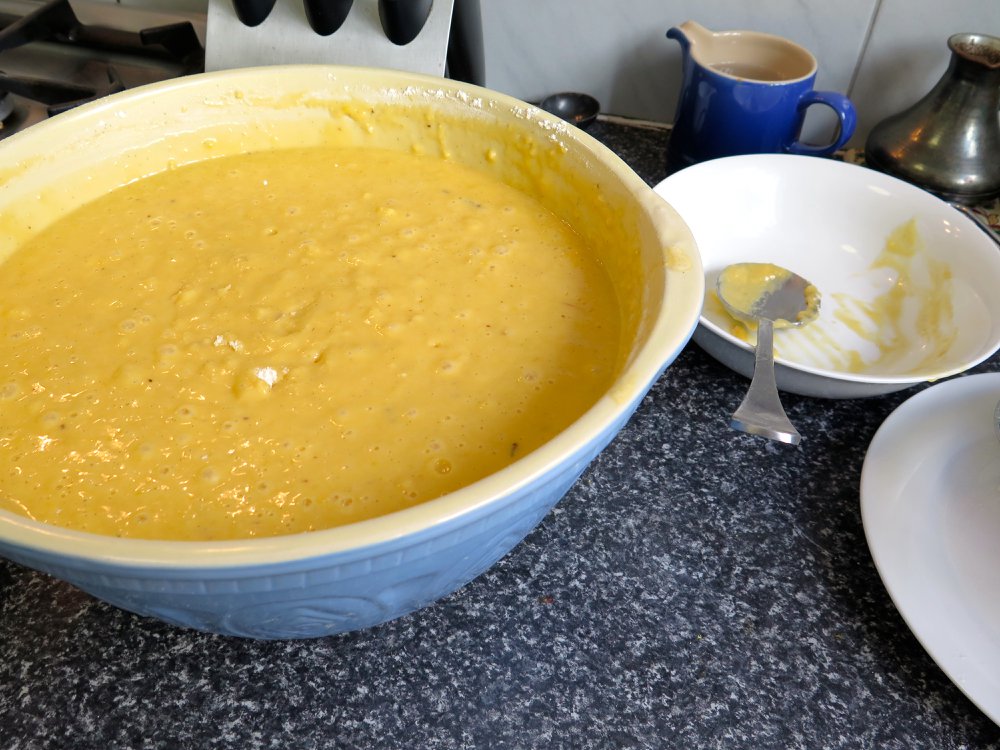
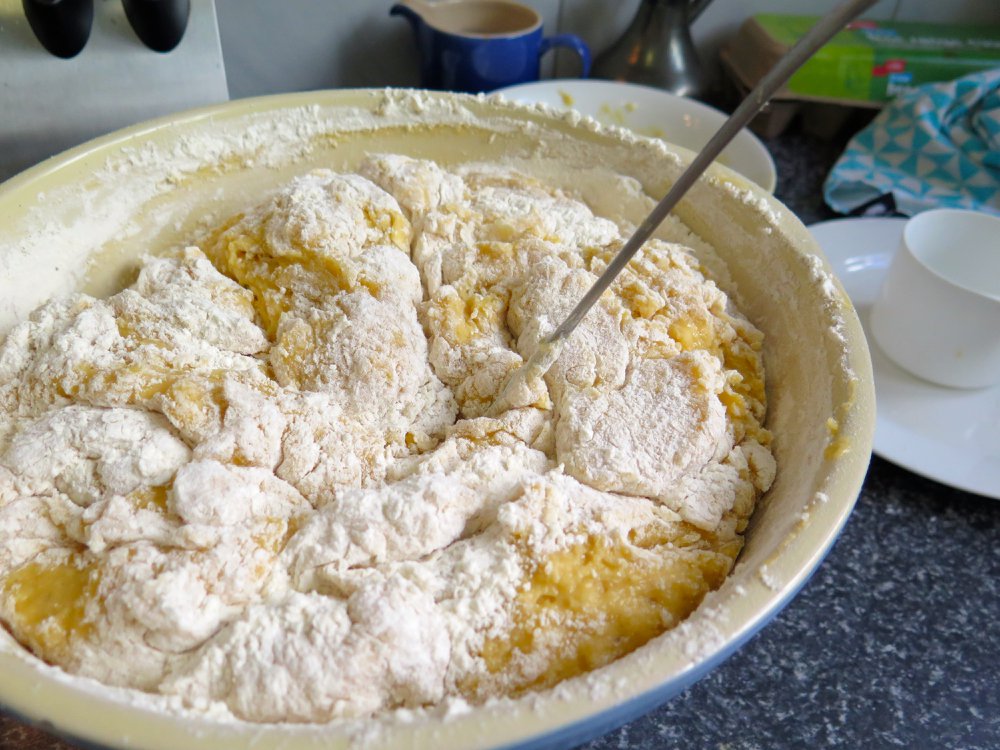
12 cups are in.

paska 13

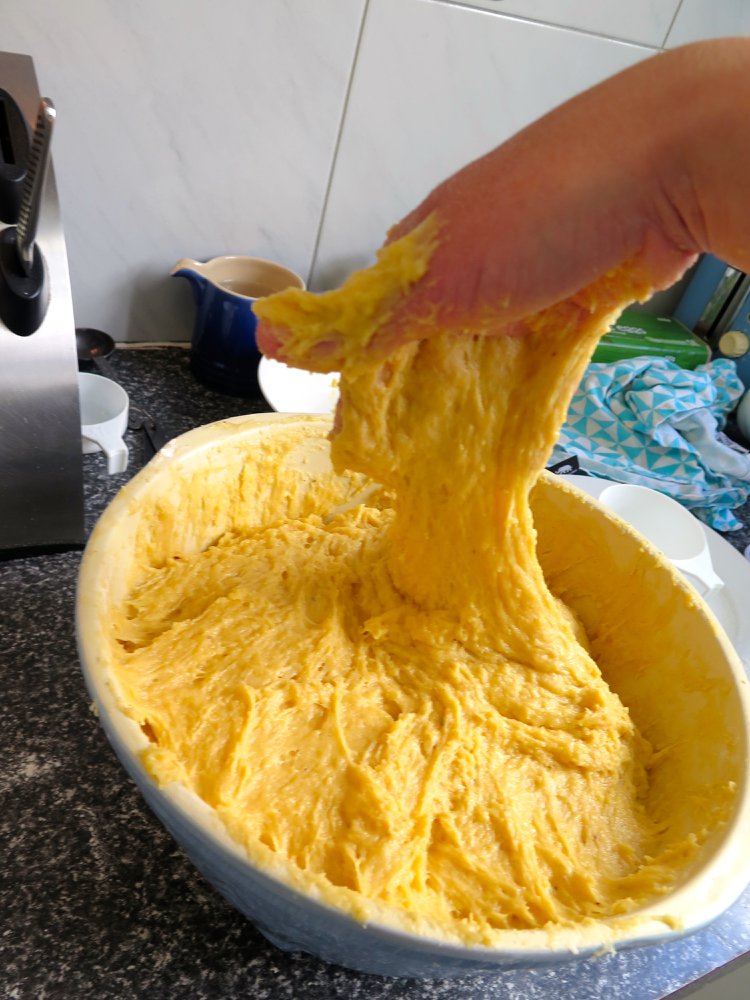
Stir a bit and then knead by hand.  It remains a very moist and sticky dough.  Knead for approx 10 minutes.

paska 14

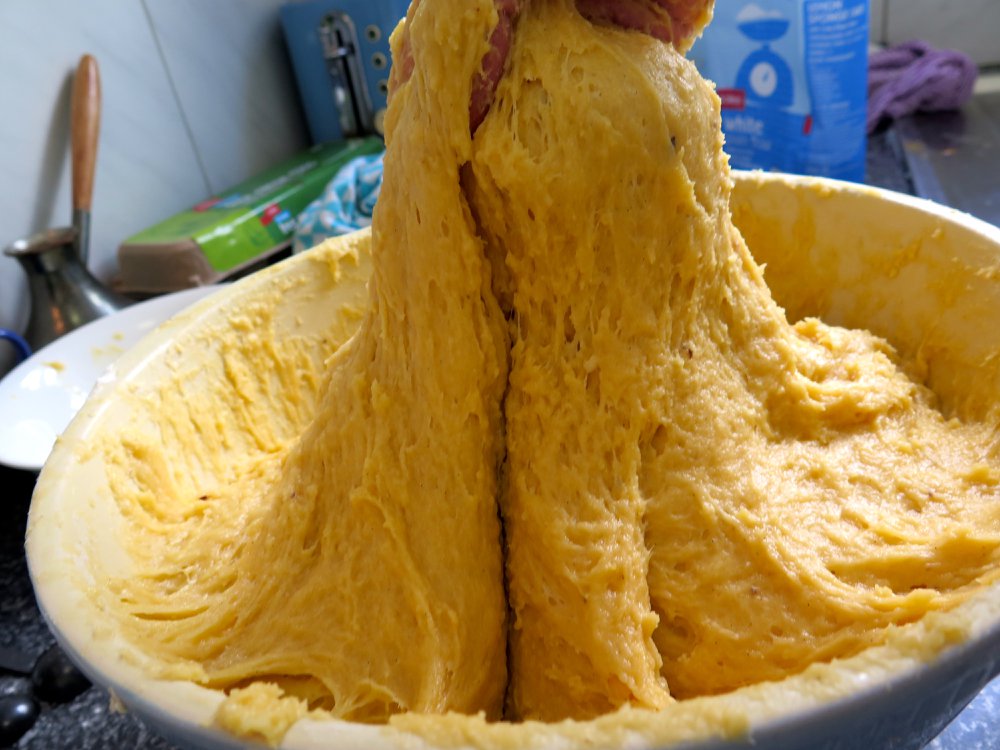
Still very sticky.  At this stage, resist the temptation to eat heaps of it raw – it already tastes DELICIOUS.

paska 15

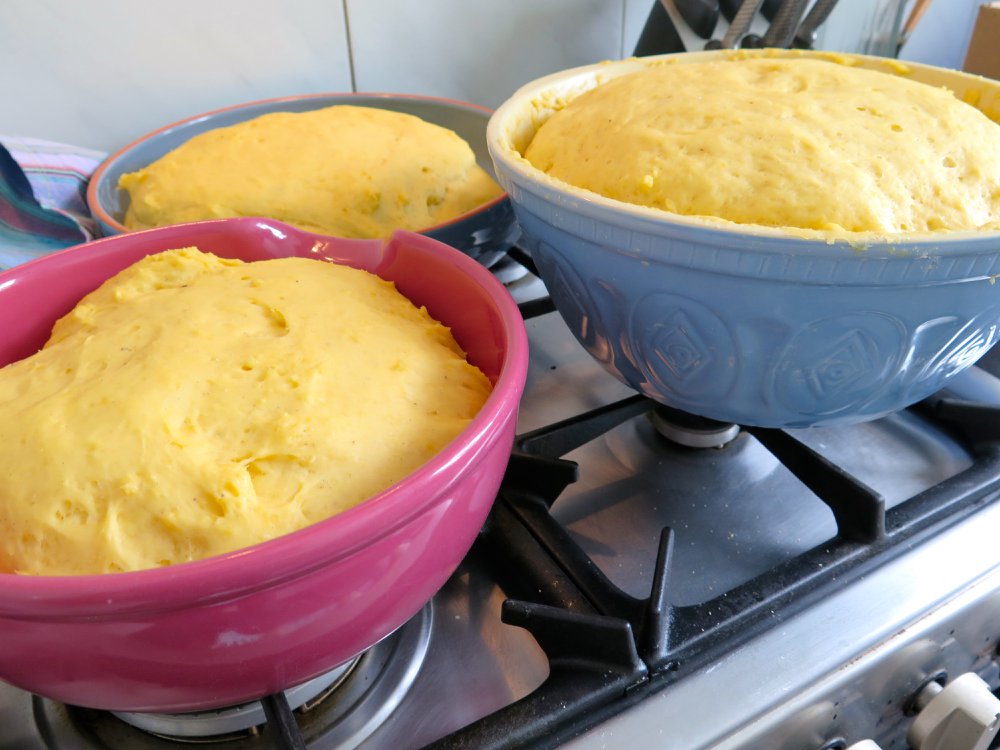
Then the dough is divided into bowls and given time to rise (the recipe says to double in size).  I put the oven on low heat and get the temperature up in the kitchen.  As it is, this recipe takes AGES, so a bit of heat to move things along is welcome.

paska 16

Snug like bugs for the 1st rise (creep away, have a shower, eat, do something else for a bit).

paska 17

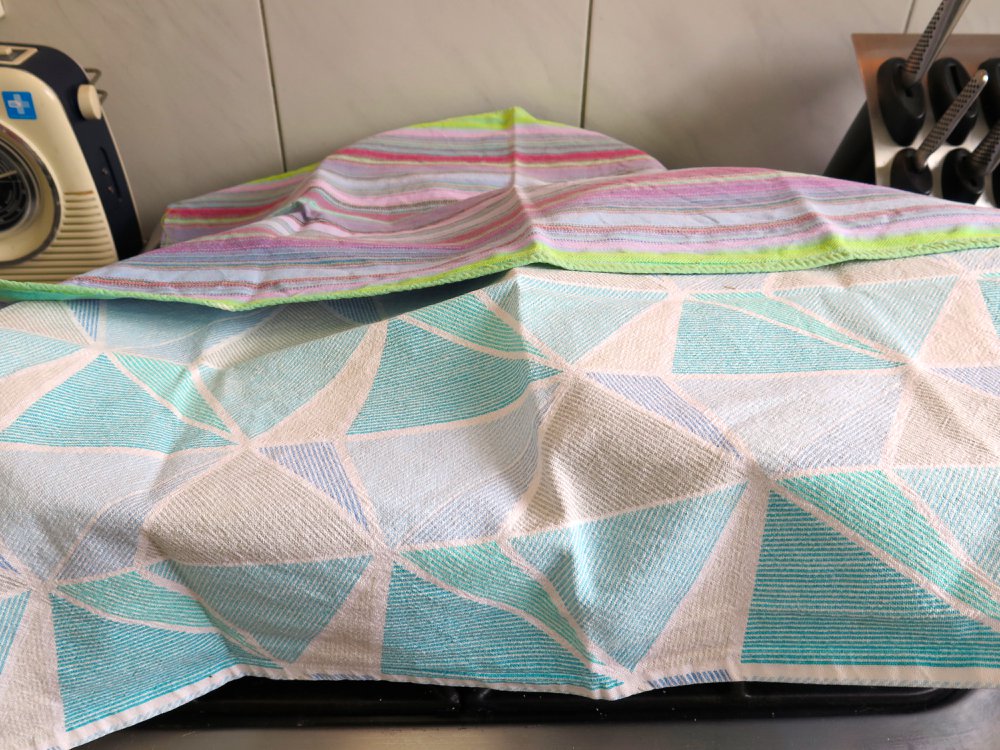
When I see the dough starting to push up the tea towels, it is time to knead.  Nothing fancy happens next.  The dough is covered up again and allowed time to do its 2nd rise.

paska 18

After the 2nd rise, we are ready for tins.

paska 19

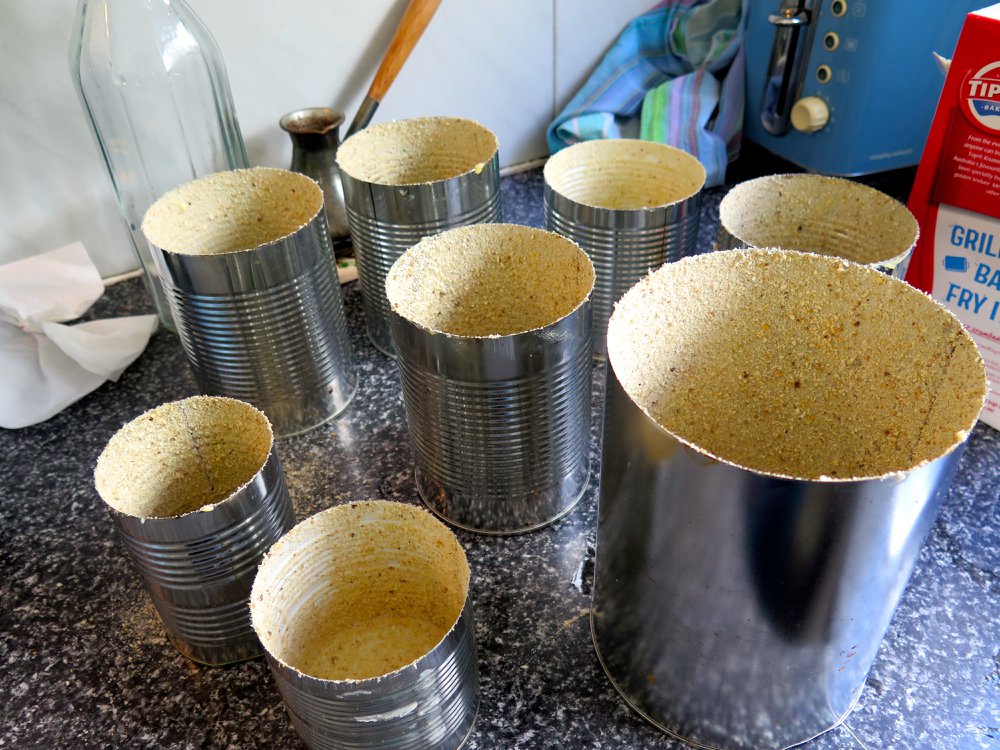
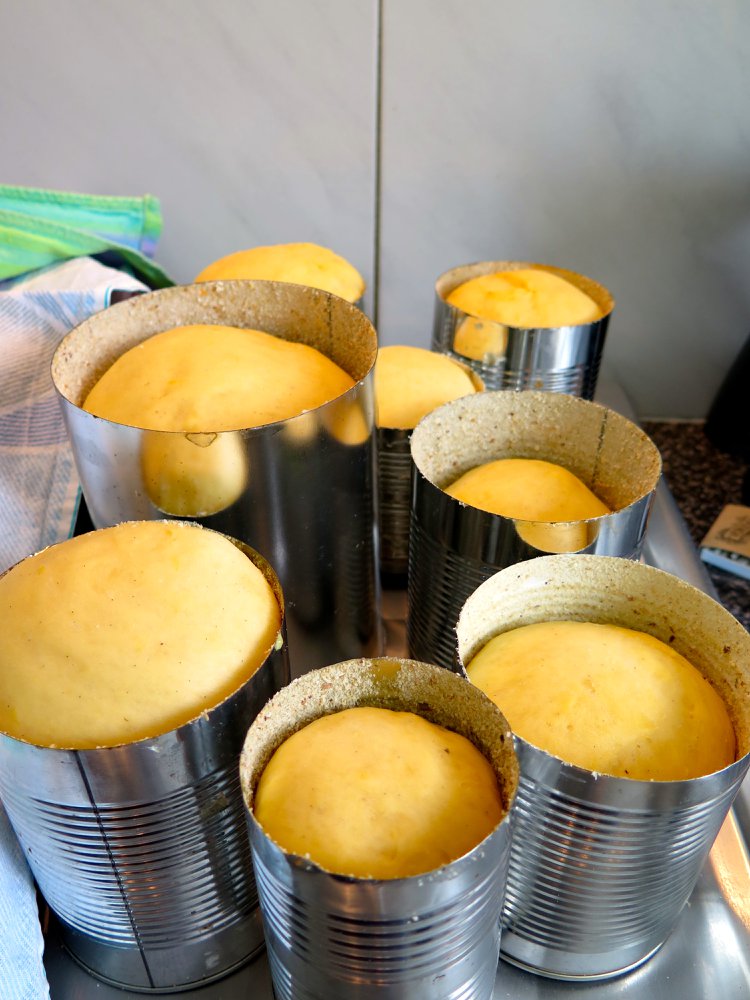
Tins are either from Milo or otherwise International Roast.  Beetroot slice tins also good…

Buttered on the inside and then lined with bread crumbs.  Beware sharp tops and cuts to knuckles whilst buttering.  There was blood.

paska 20

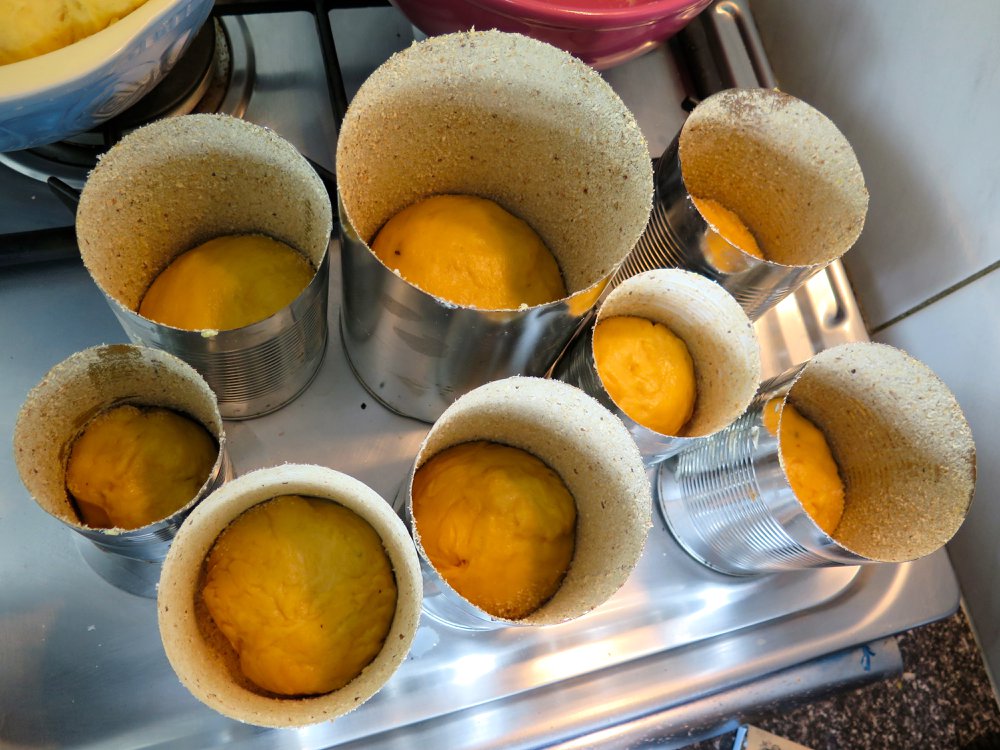
Dough is kneaded in the bowl and then rolled into balls that will fill approx 1/3 of the tin.

paska 21

Cover them with their blankets and let them do their 3rd rise.  They are ready when they’re nearly at the top.

paska 22

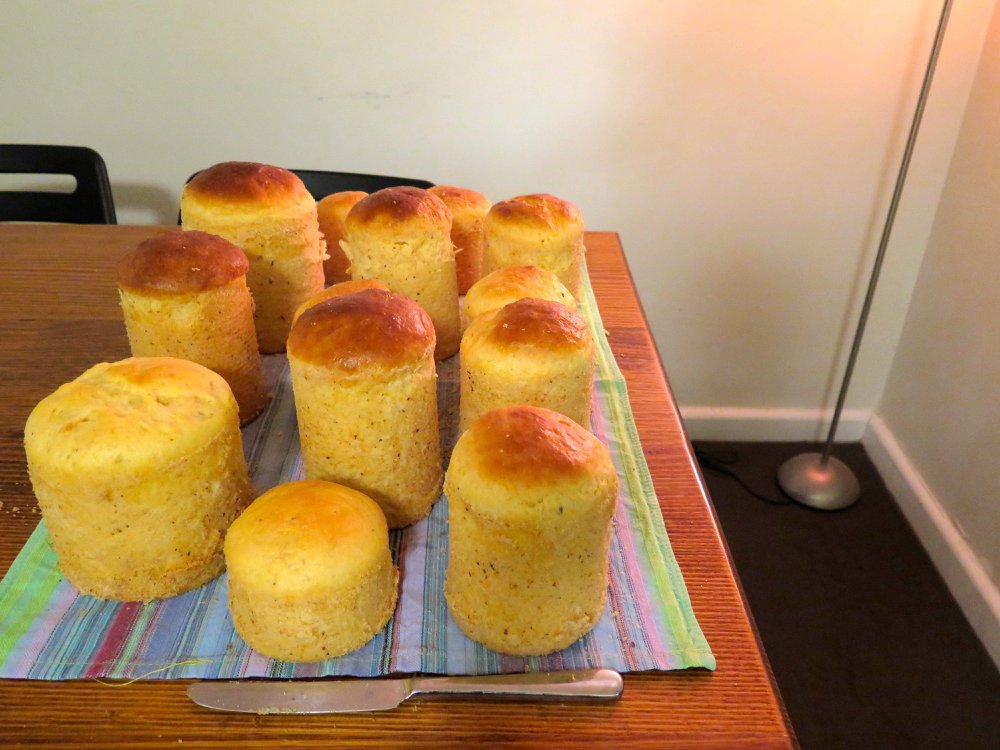
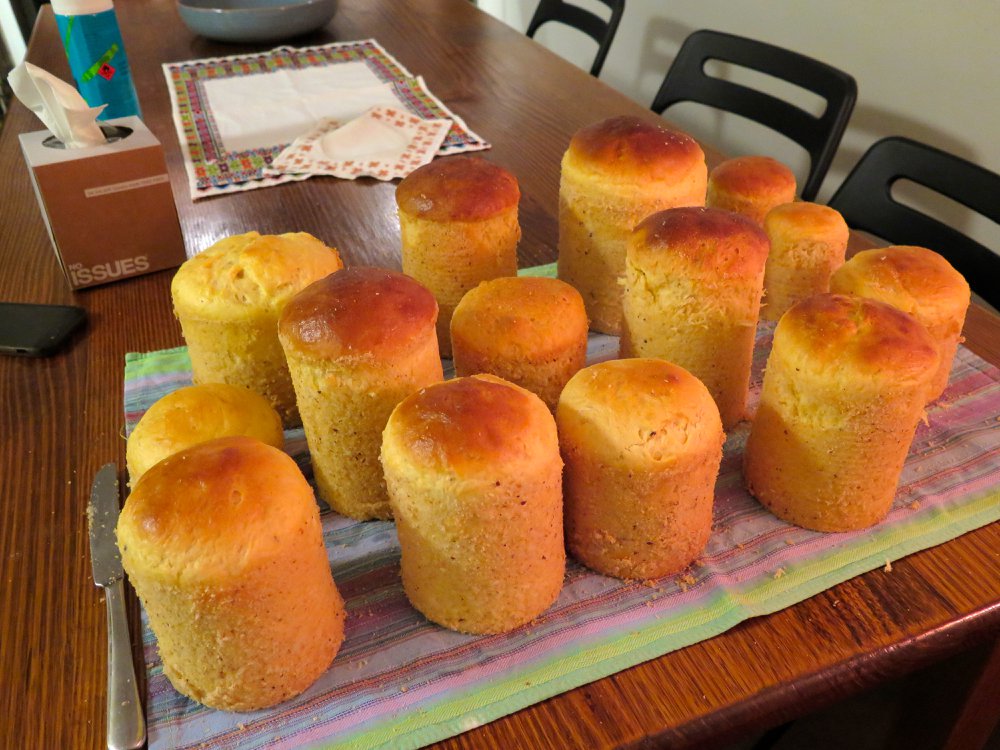
Brush with egg/milk mixture for shininess and then into the oven.  Baking instructions: 10 mins at 190 degrees, then cover them with a sheet of foil and bake for another 30 mins at 160 degrees, and then for another 15 mins at 130 degrees with the foil still on top.  Take ’em out and let them cool until the tins are cool enough to handle by hand.  Now it REALLY smells like Velykden’!

paska 23

If there was enough butter/breadcrumbs on the insides of the tins, they can be loosened by pressing the tin a bit from the outside and then tipped out.  If they’re a bit sticky, might need to run a breadknife around the inside of the tin.

paska 24

Wash tins and repeat for any remaining dough – usually end up doing two bakes.  And here they are!

paska 25

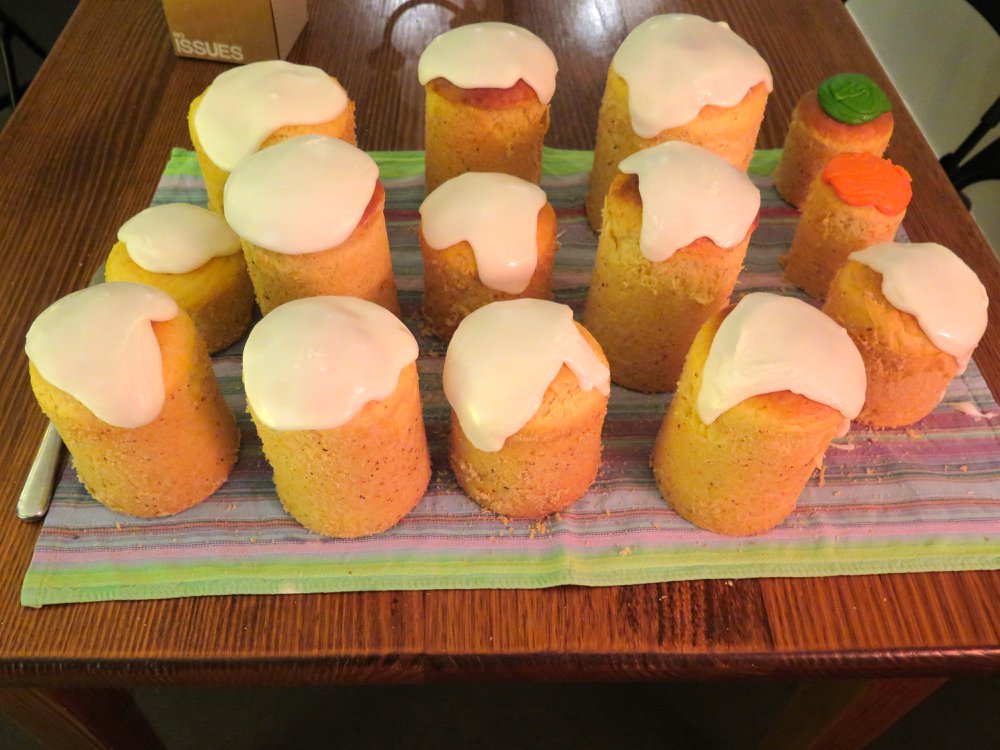
Always icing so you can squidge it in with soft butter – best flavour combination EVER.  Just sugar and water on the stove to soften then pour on thick.  Some coloured ones for the little people coming for Velykden’ this year.

~oOo~