ANATOMY OF AN OBERIH

How to translate the word oberih.  The internet tells me amulet, talisman, charm, guardian.  I like the word amulet.

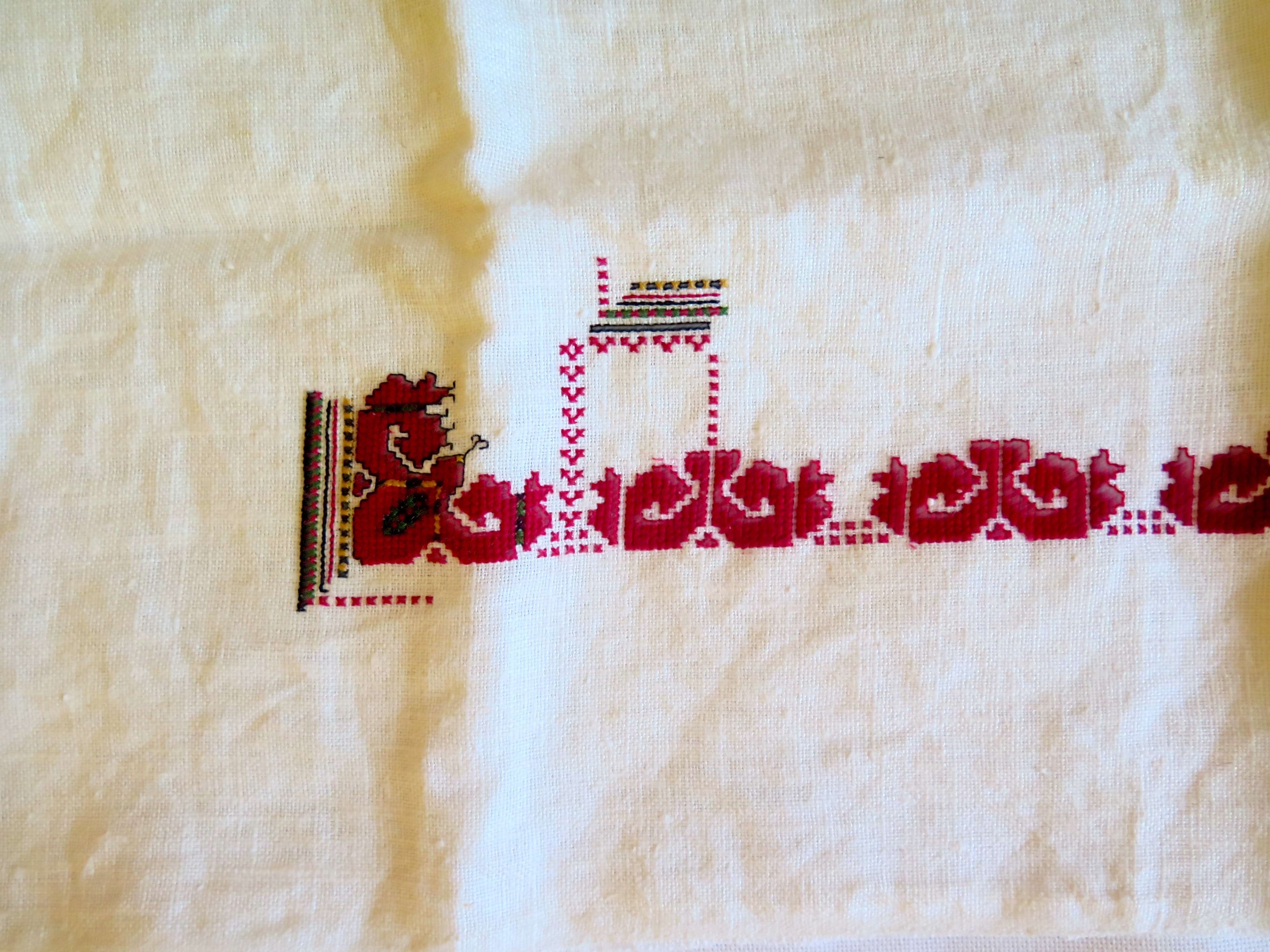
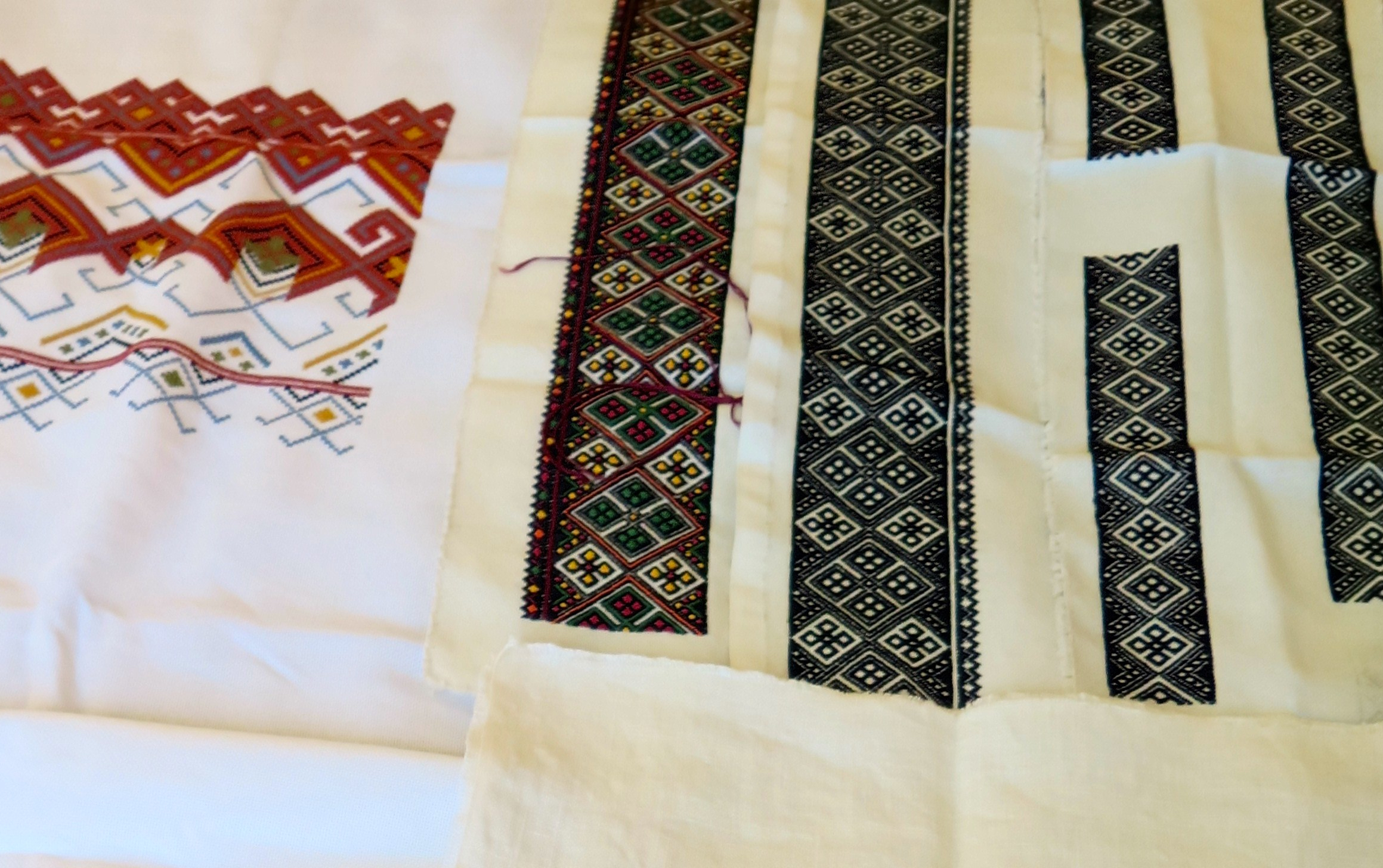
Embroidered amulets (pleural oberehy) have gained a lot of attention in Ukraine in the last three-and-a-half years and for obvious reasons.  They are believed to offer protection and can be present in the main design on an embroidered shirt, or sewn as a separate symbol nearby a seam or on a collar.  They can be embroidered as a whole motif onto a cloth worn somewhere on one’s person, like a mini-scarf in a pocket.  I’ve also been told that the boys, the defenders, are asking that they be backed with Velcro, which would make them like a chevron, worn as a patch on the uniform/camouflage.  For me, this concept epitomizes one of the ways in which the traditional is being brought into the hyper-contemporary in this current moment (all three-and-a-half years of it) in Ukrainian history and society.

I’ve referenced it in a previous post, but if you didn’t pick it up, visit #сорочкадлязахисника (shirt for a defender) in Facebook or on Instagram.  This is a grassroots project in which women around Ukraine and abroad are embroidering bespoke shirts for defenders, using khaki fabric to go with military kit and designs imbued with the powers of protection, adding embroidered patches of brigades or the Ukrainian flag onto sleeves.  It’s a wonder of a movement, breath-taking to behold, even from this distance.  To me, it symbolizes Ukrainians’ connection to heritage, this utter conviction that embroidery is OUR CODE, the significance of the embroidered Ukrainian shirt and the way in which people throughout Ukrainian society understand that they all have something to contribute.  Behold and be inspired.

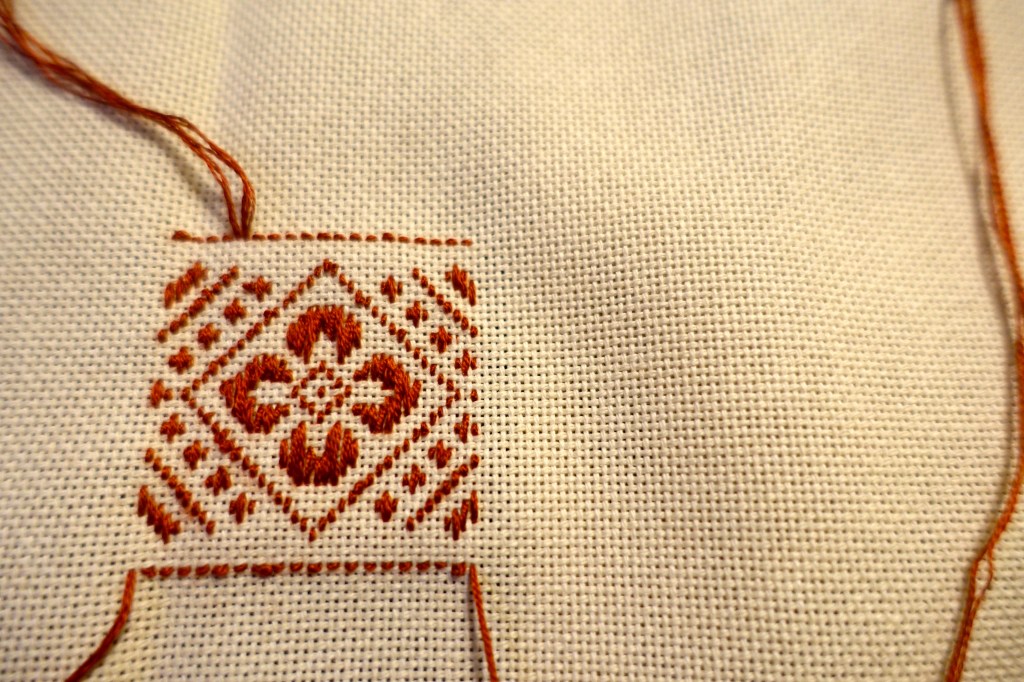
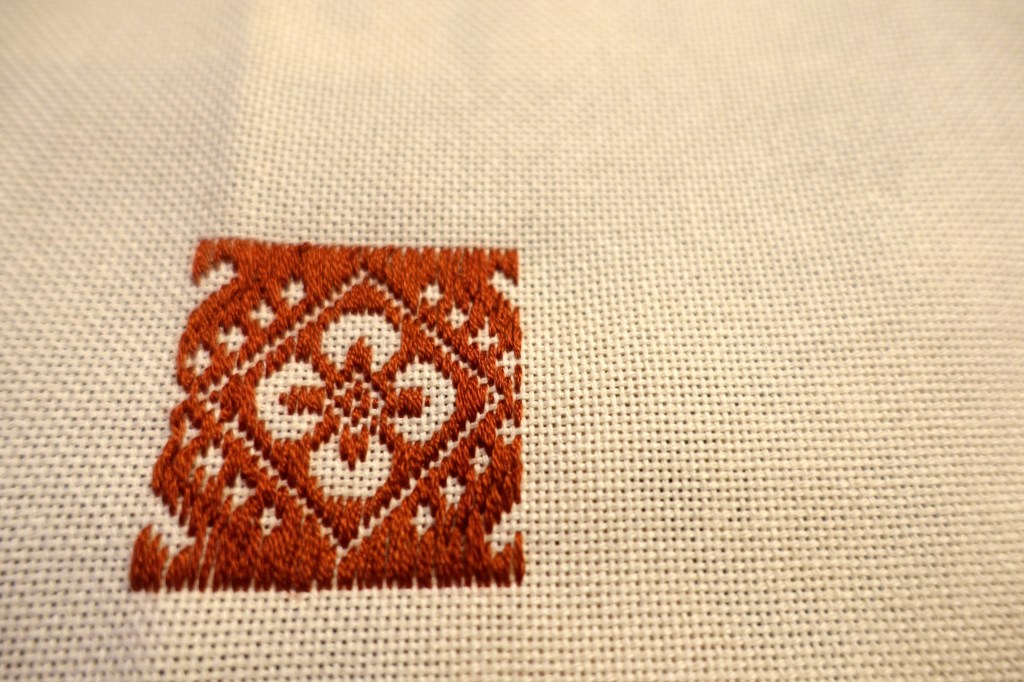
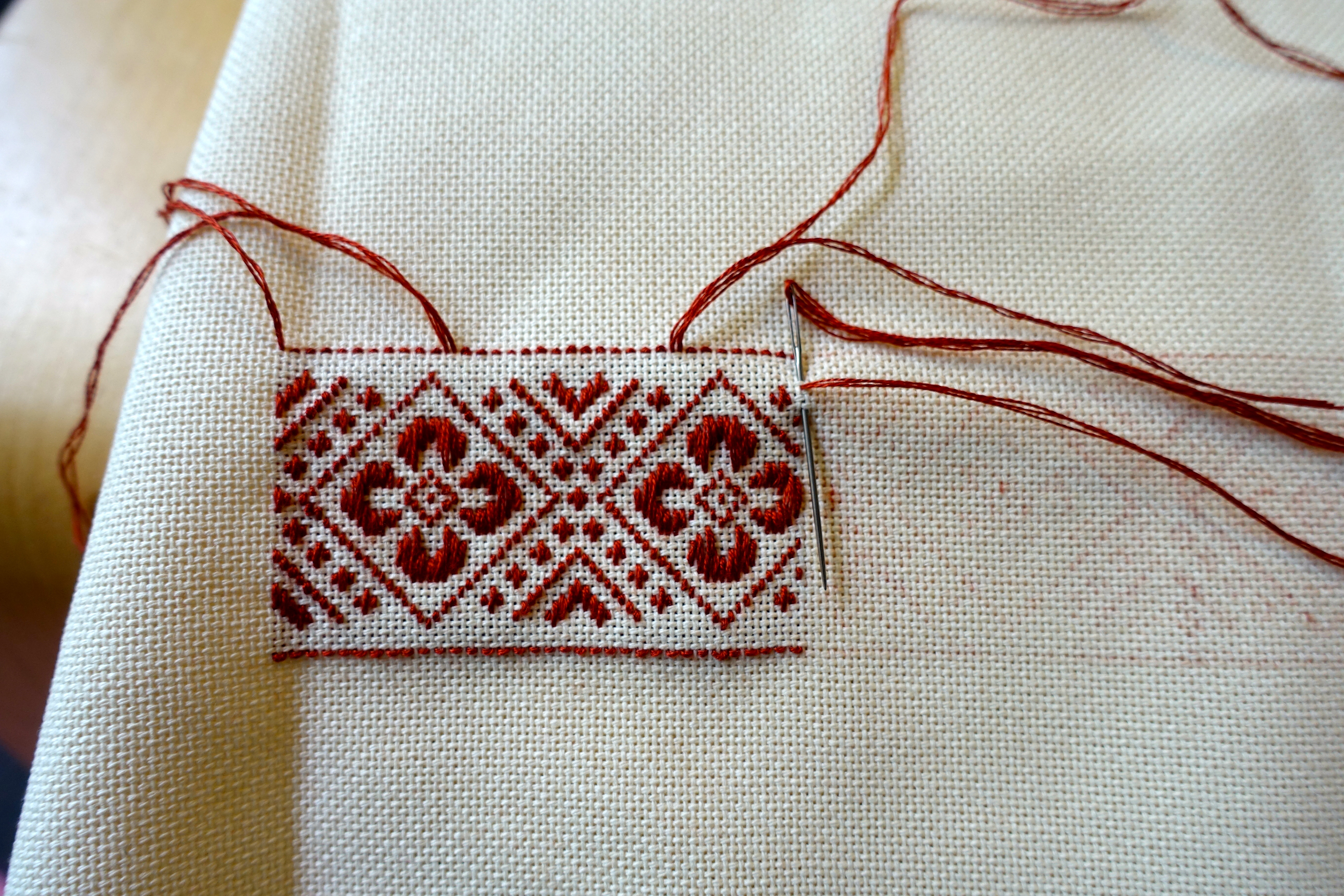
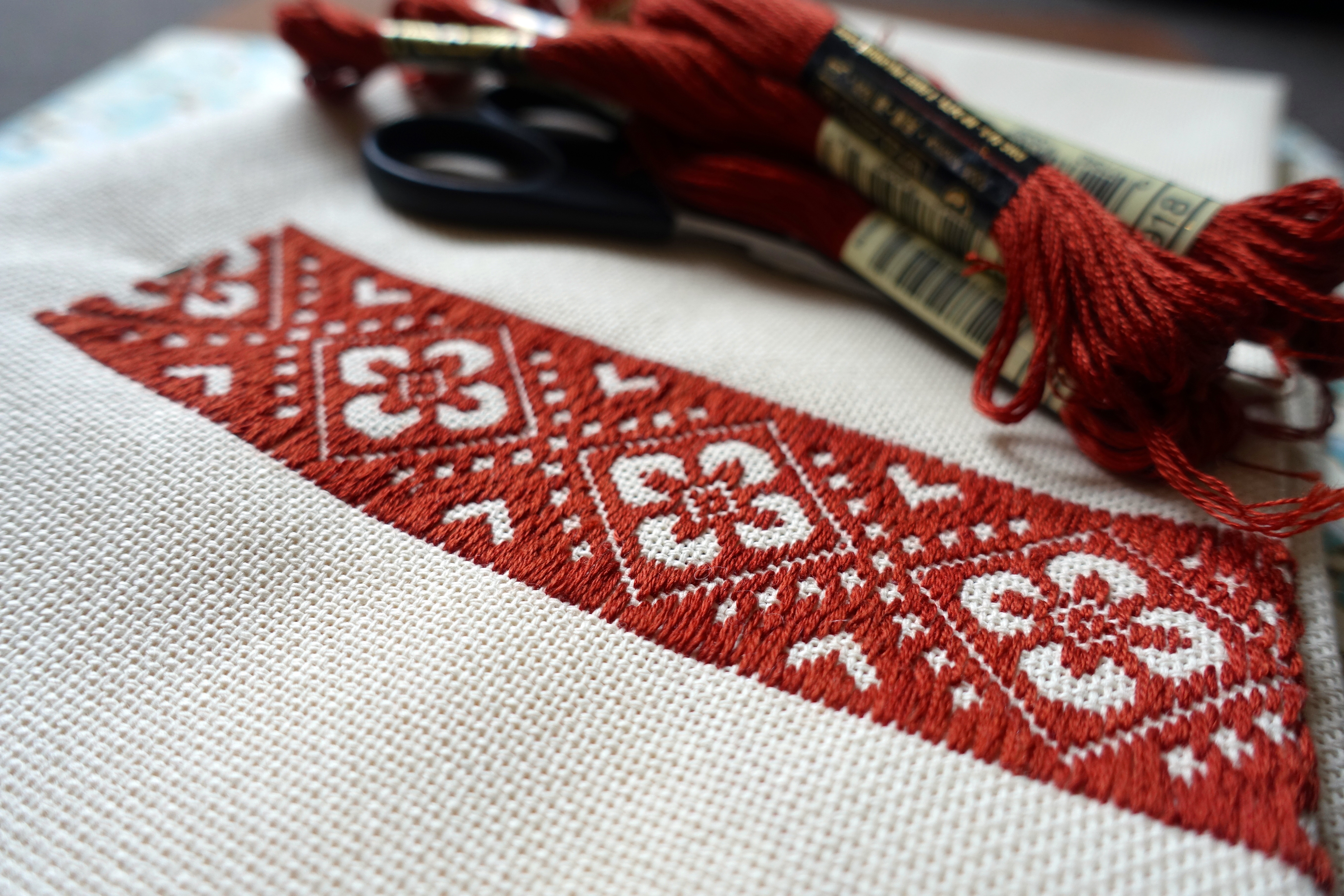
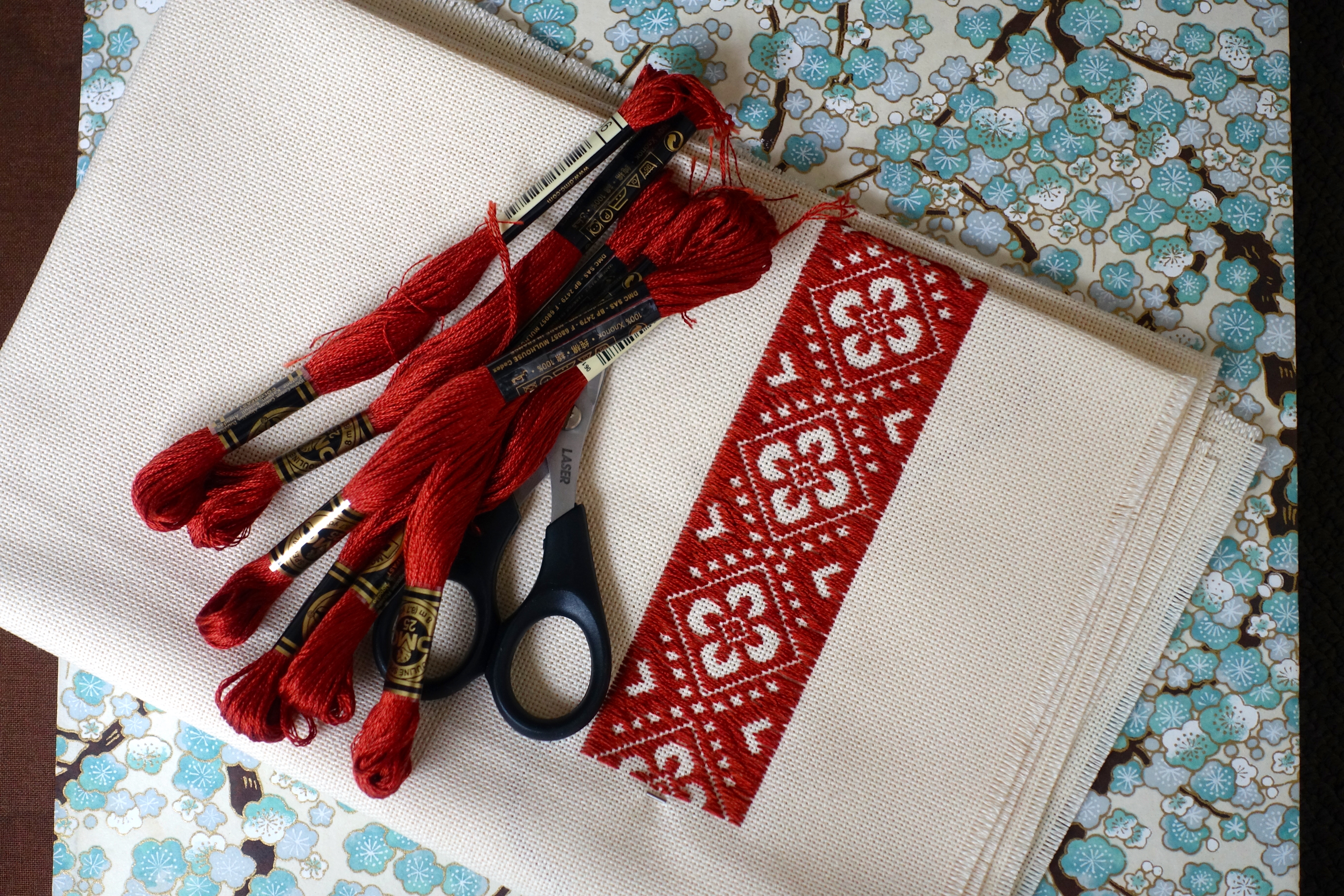
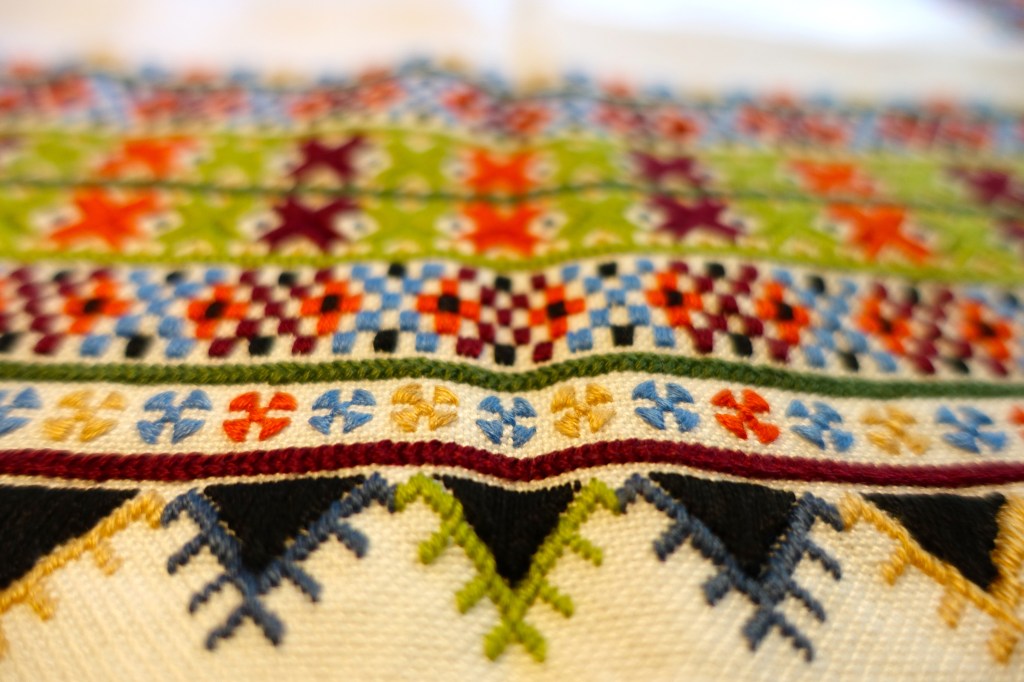
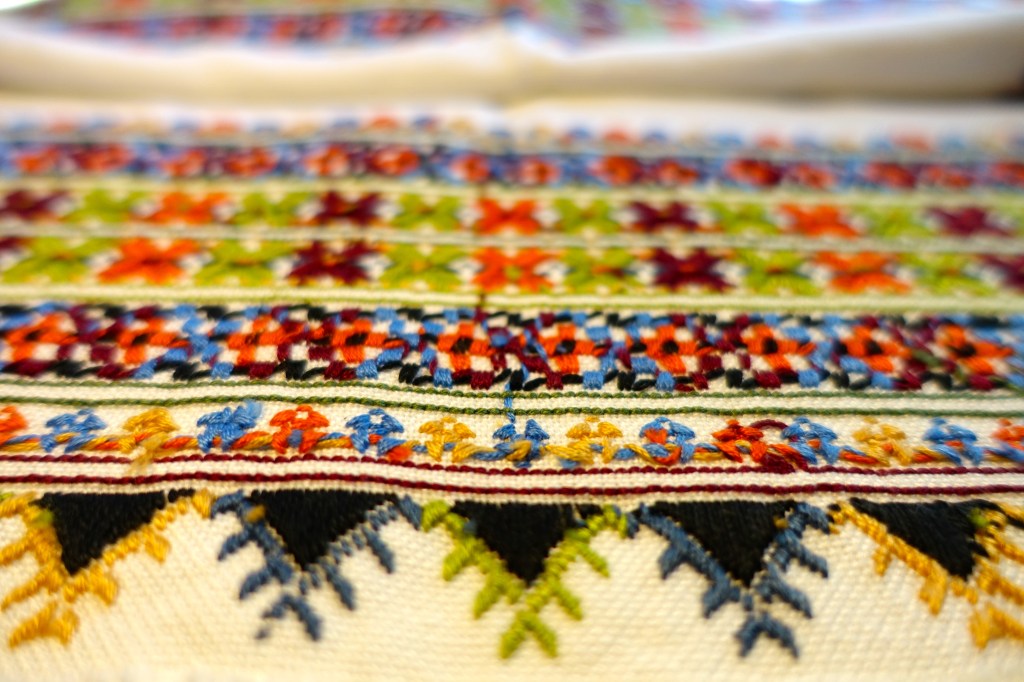
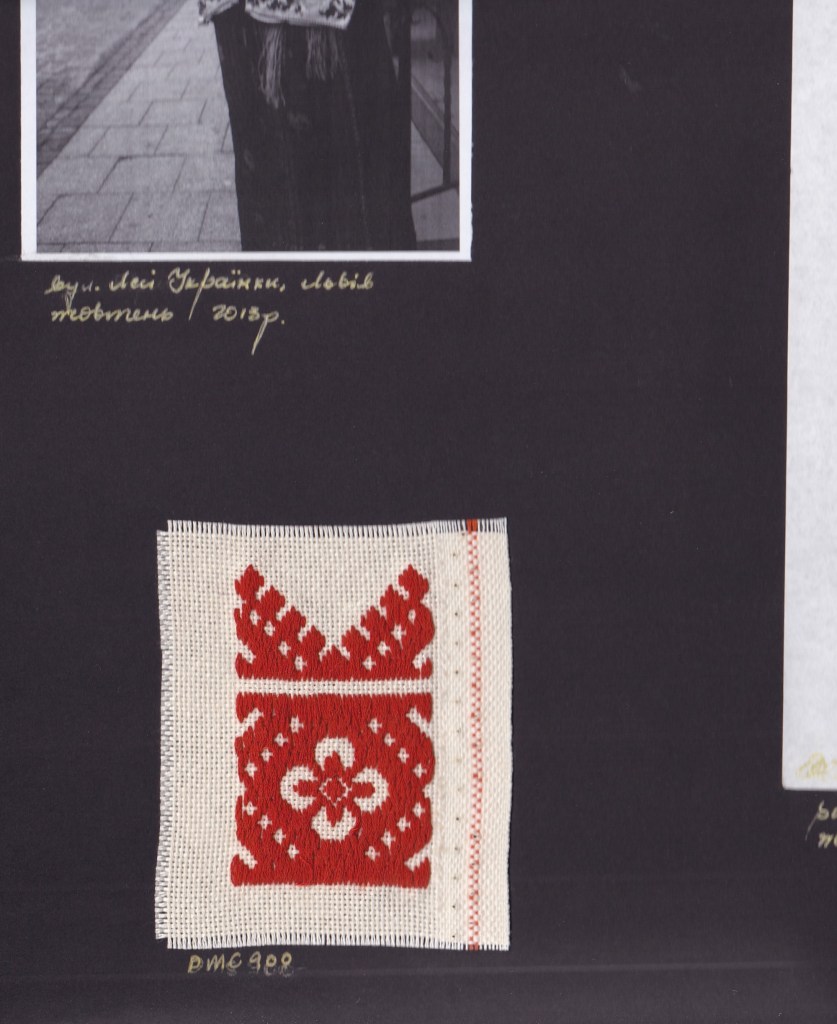
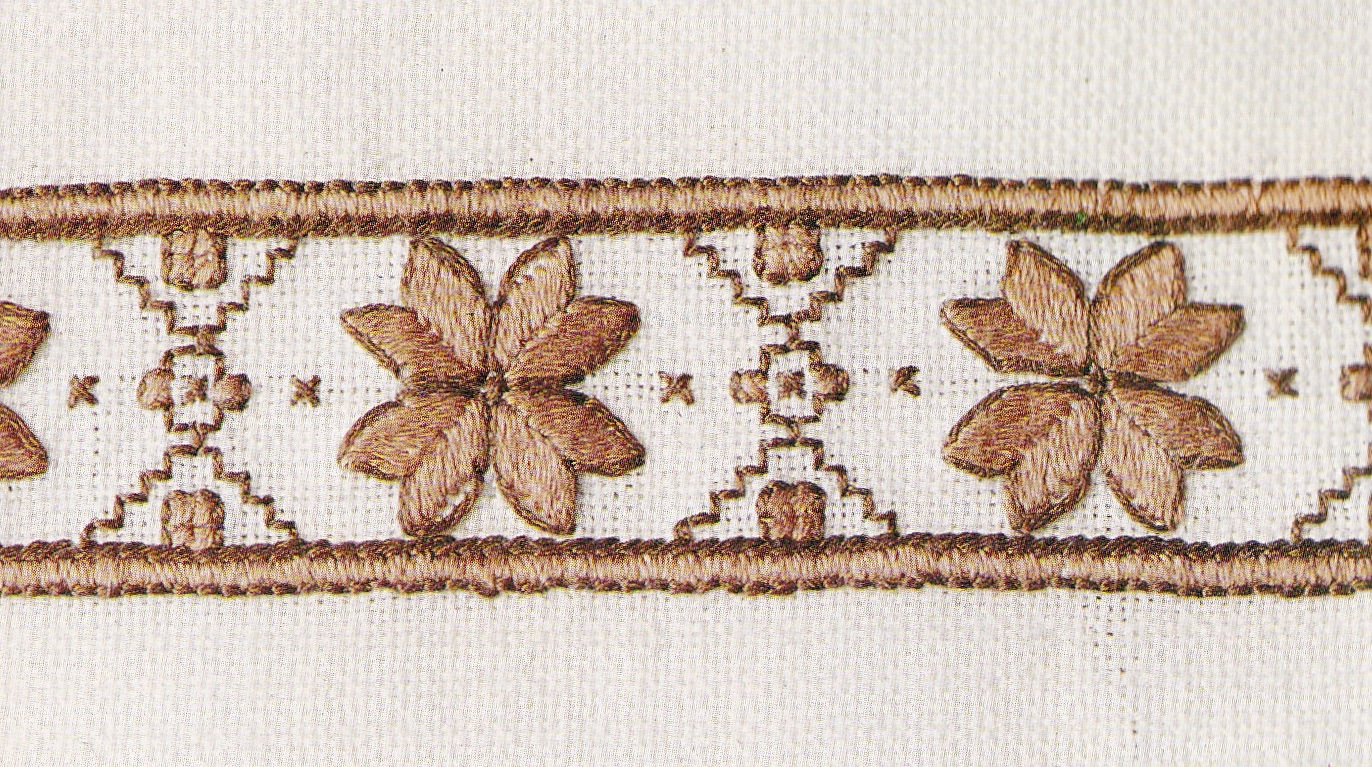
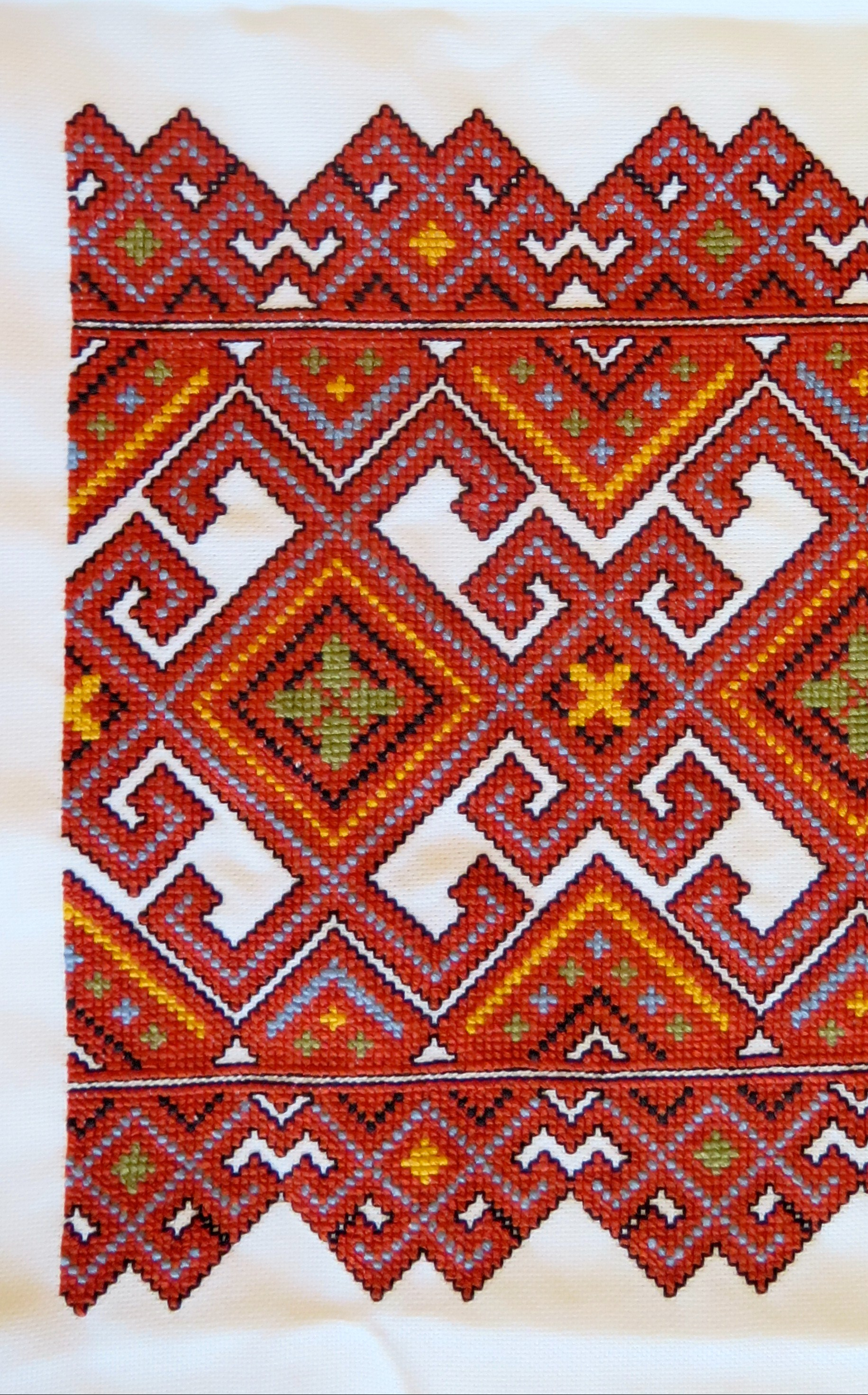
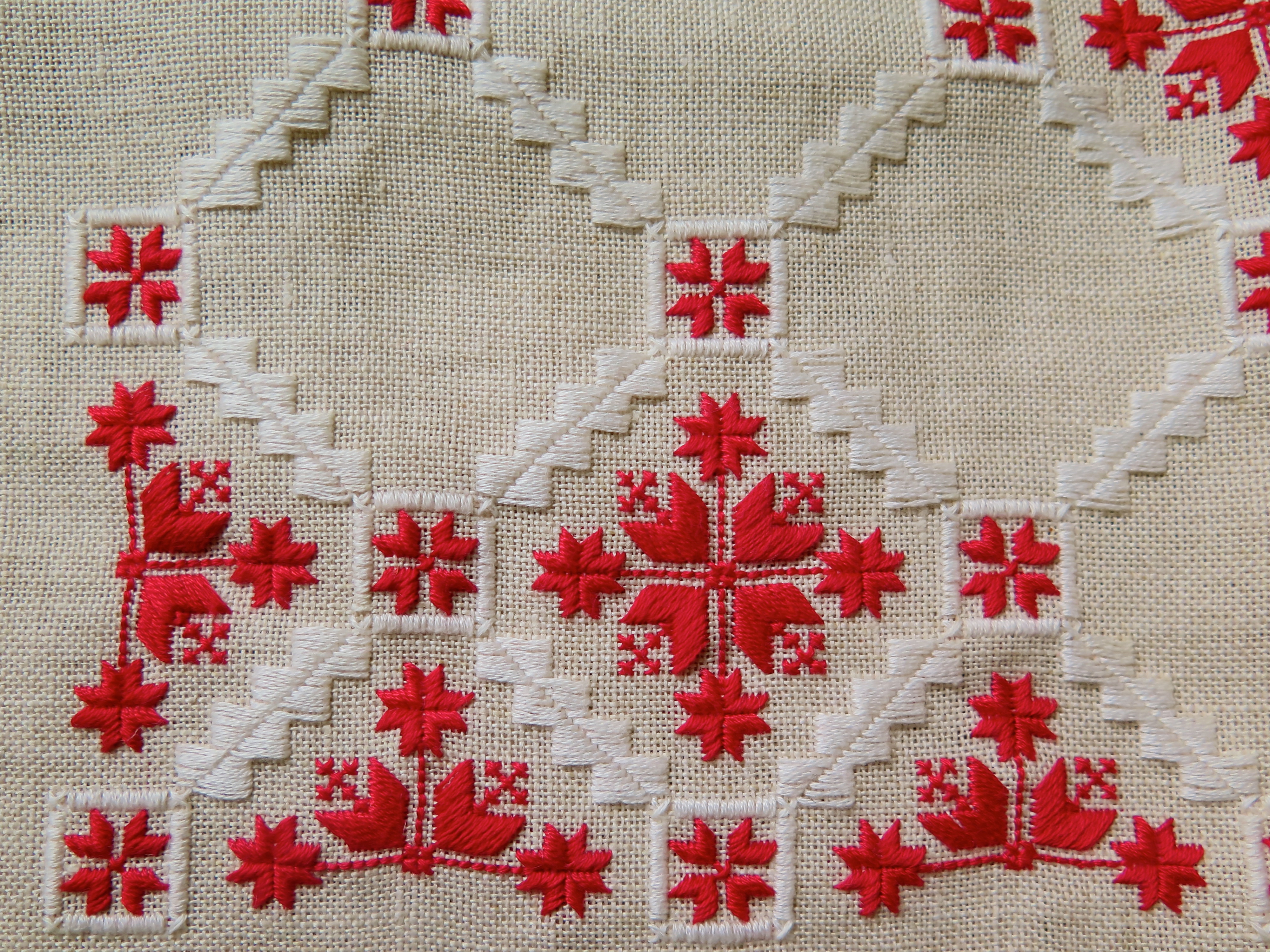
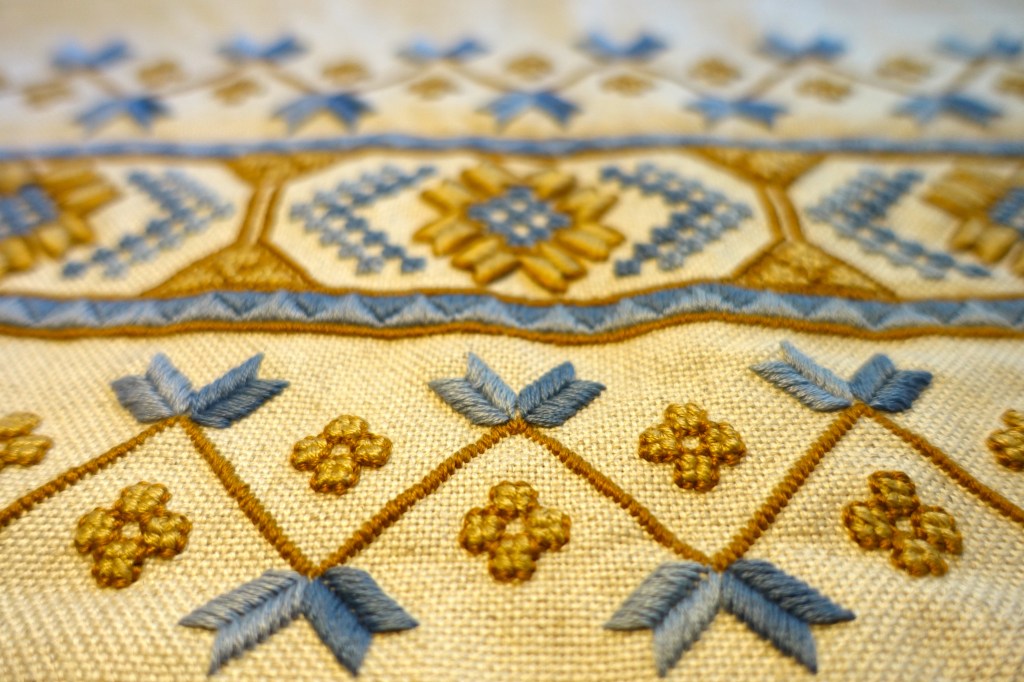
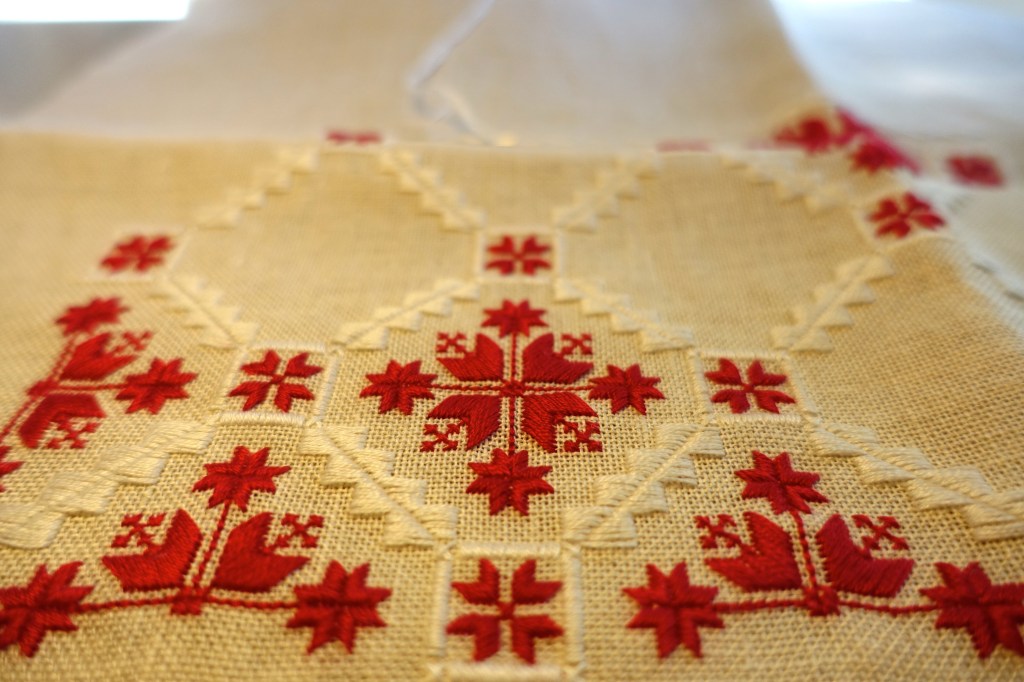
I certainly have been. I saw a call to embroider oberehy for our defenders on the front lines and from the resources being shared, I took this design, which hails from the Hadiats’k region of the Poltava Oblast’, north eastern Ukraine.

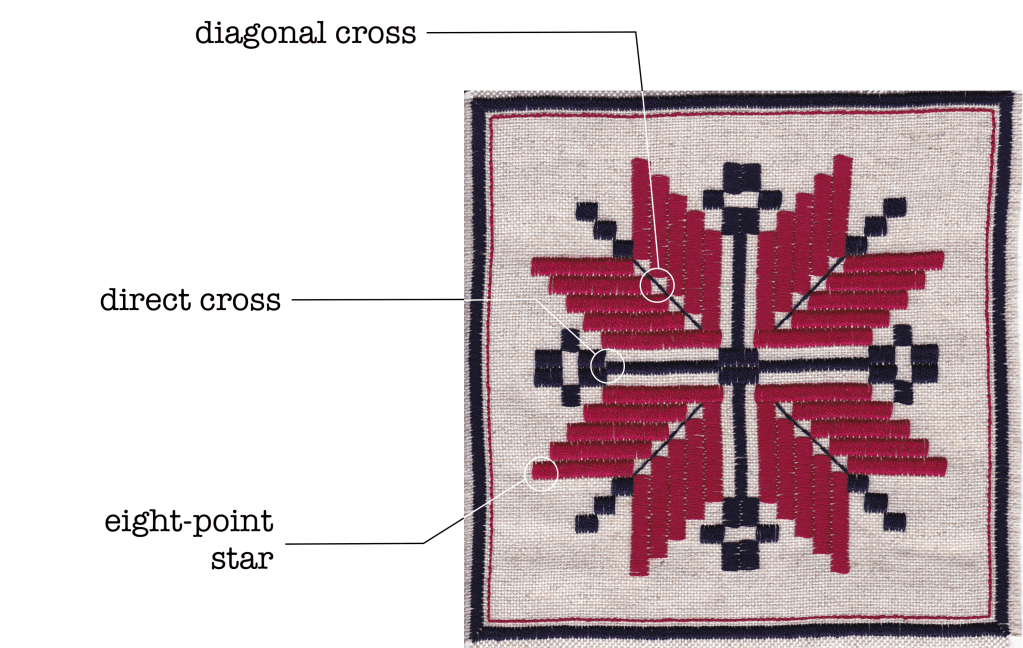
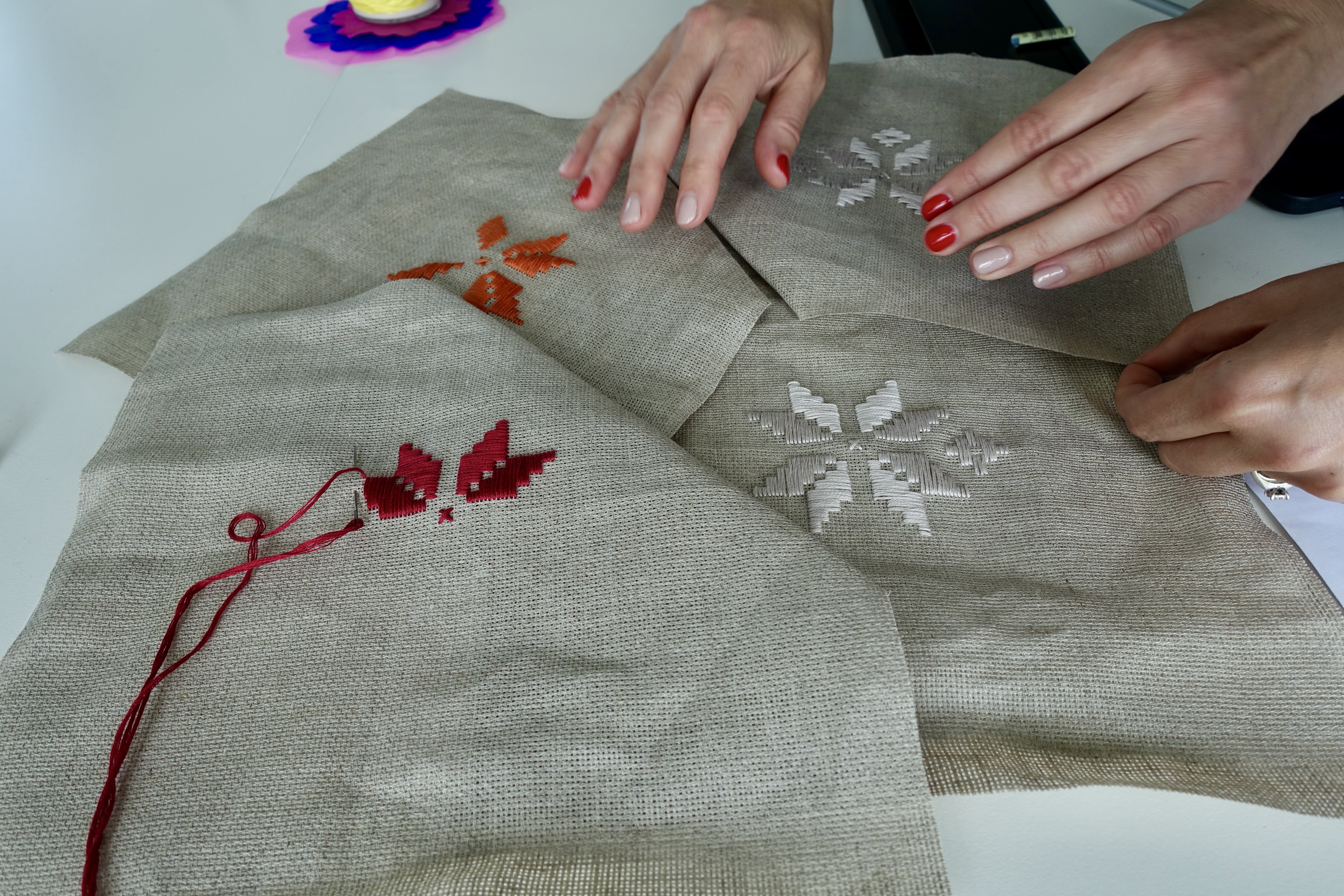
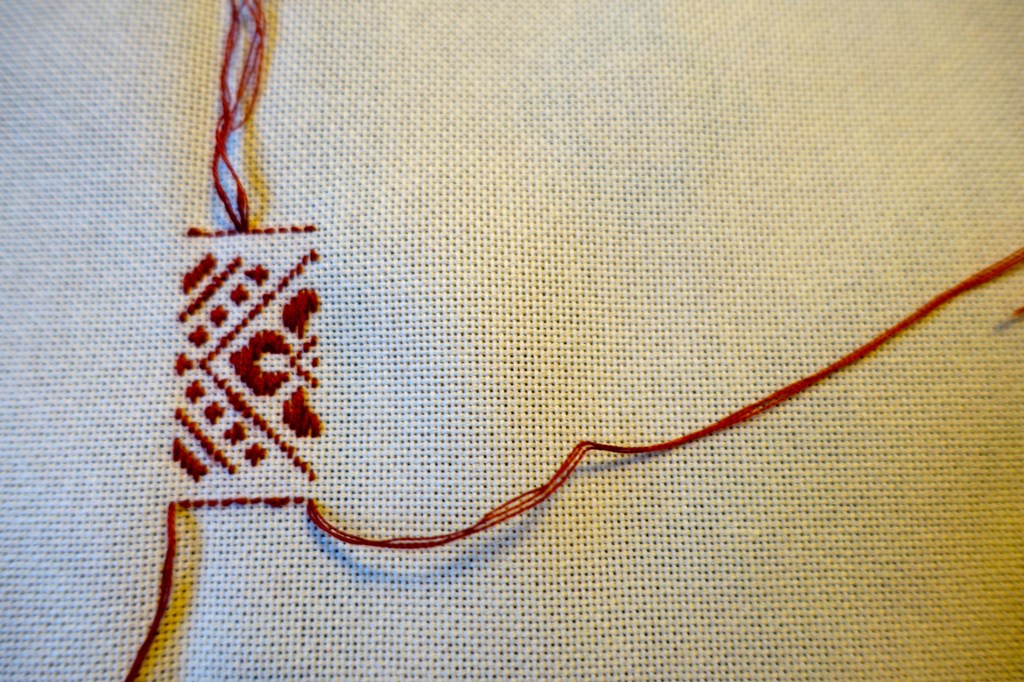
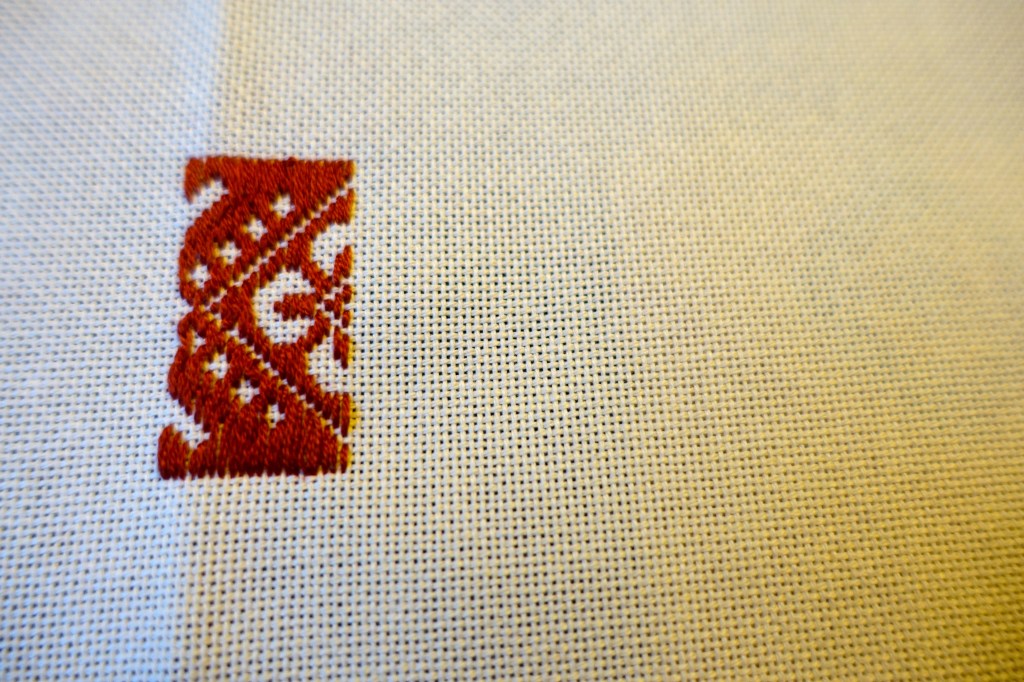
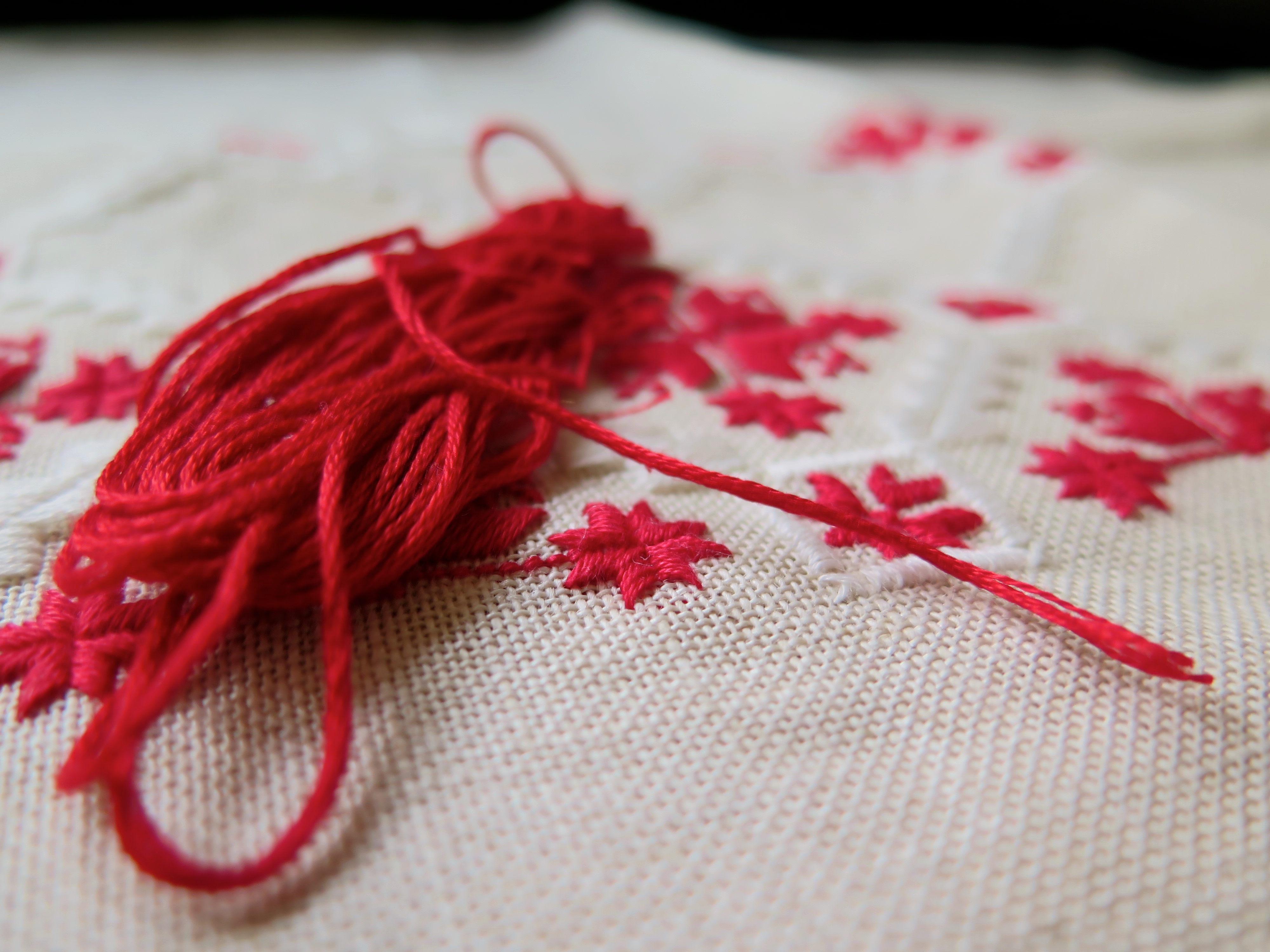
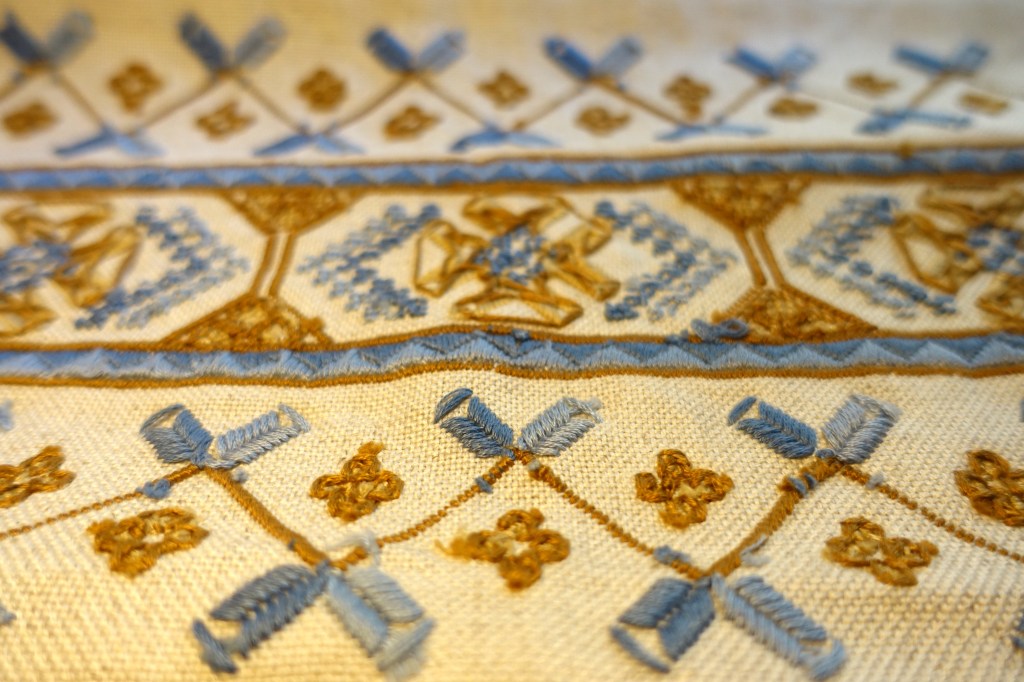
There are several motifs that are believed to offer protection.  In this design, you see three of them.  I’m translating a bit literally when I call them the direct cross (horizontal and vertical components) – прямий хрест – and the diagonal cross – косий хрест.  The eight-point star is also a protective motif.  Whilst embroidery varies incredibly vastly throughout different regions, direct and diagonal crosses and eight-point stars are ubiquitous.

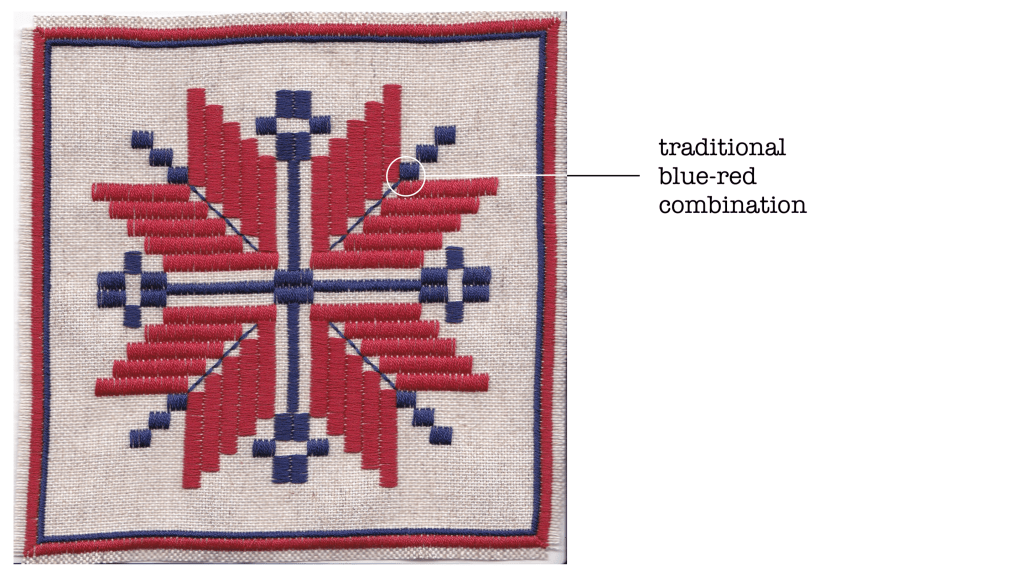
You may or may not have seen Ukrainian embroidery in black and red.  Did you know that before the development in Europe of alanine dyes, which were used to produce black threads, these designs were in fact blue and red?  The blue was indigo blue and came to Ukraine from India!

And in the same way that motifs carry meaning in Ukrainian embroidery, so do colours.  In Ukrainian worn embroidery (тілесна вишивка), red is literally used as protection against foreign influences onto the body of a person and against curses and witchcraft.  Blue and red in combination are harmonizing.

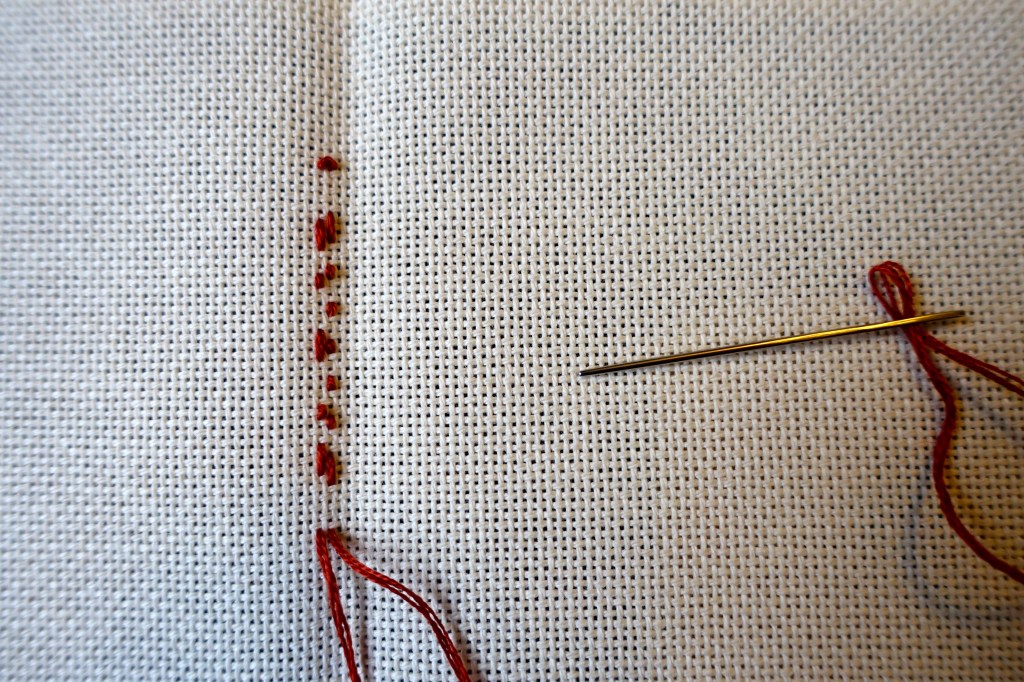
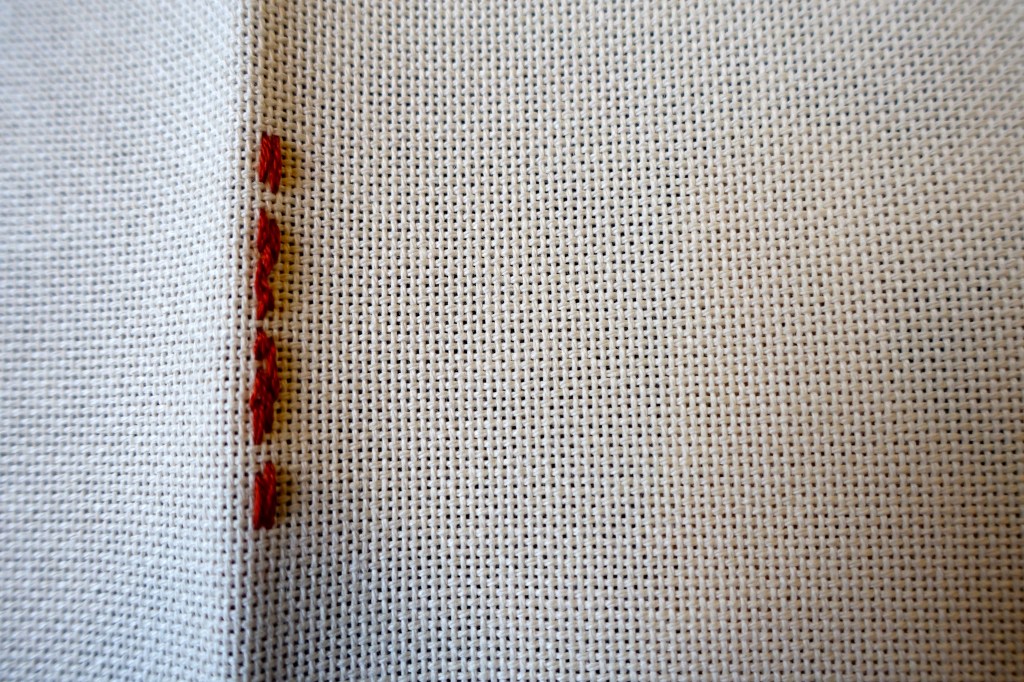
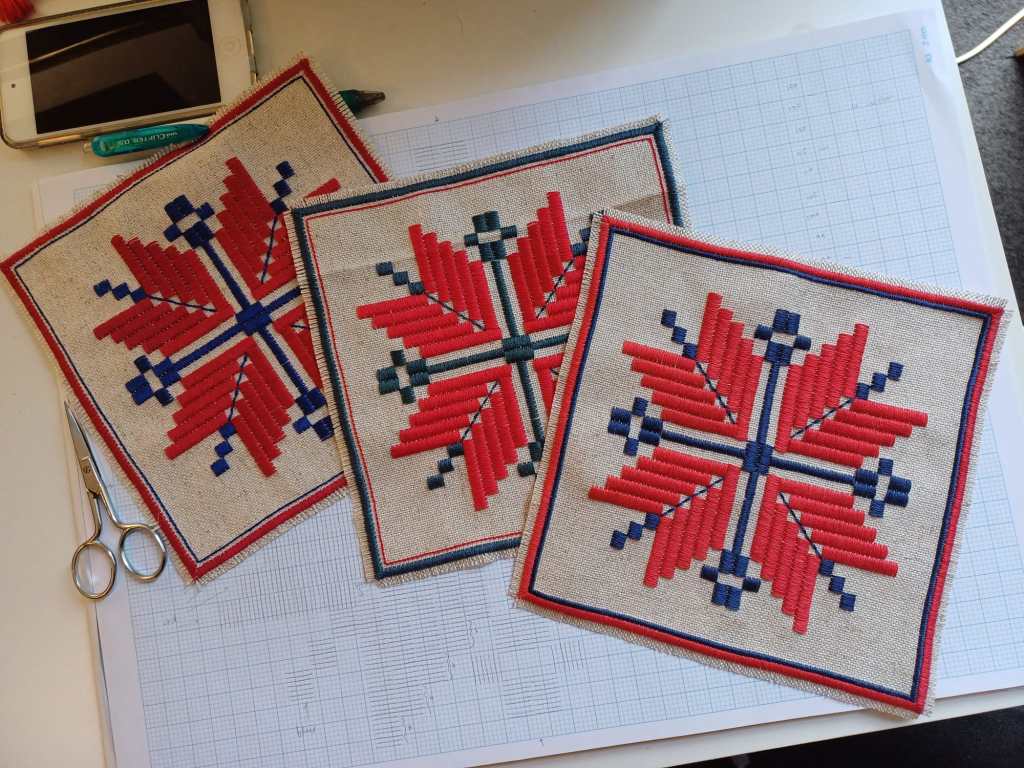
These oberehy were the mini-scarf (хусточка) in a pocket kind.  Let me show you their key characteristics as amulets.

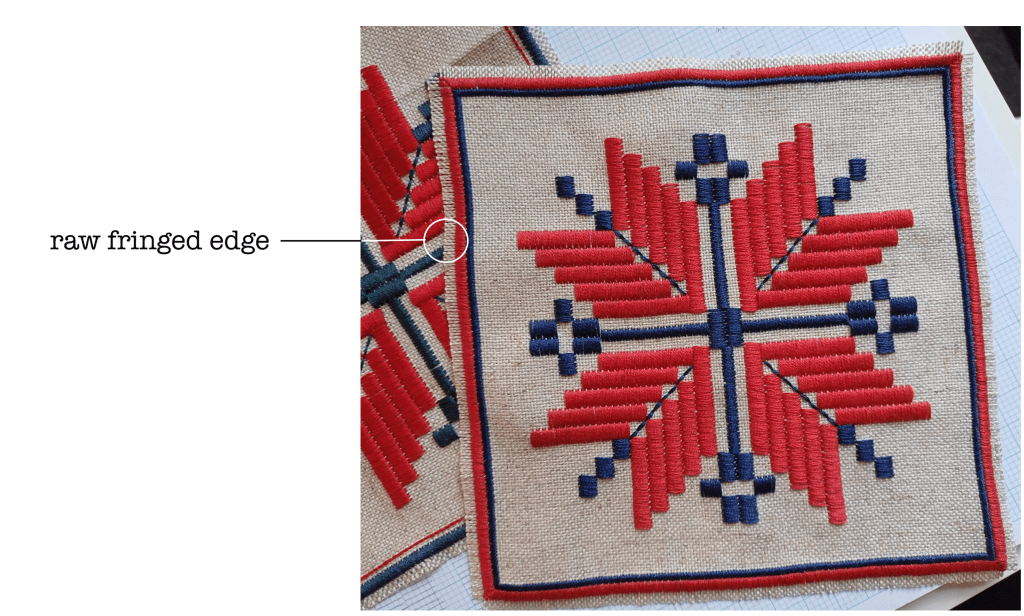
And what is with the edges?

Embroidered amulets are deliberately left with an unhemmed, raw fringed edge.  This allows all the power of these small pieces to flow from them and into the bodies of those who carry them, who wear them on their person.

Of course, I took the opportunity of making these to have myself some colour play.  And not only with the shades of blue and red, but I also named them in ways that I hoped would bring some smiles and warmth to Ukrainians, after quintessential symbols from Ukrainian life or culture.

On a more serious note: I finished these oberehy over a year ago and sent them to Ukraine, to someone who could send them on to the frontline.  May they be continuing to do their work, protecting the defenders who received them.  

~oOo~

Fundraising with Embroidery ~ Пожертвувати вишивкою

Please scroll down for English.

Привіт друзі!

Слава Україні!

Пишу ‘звіт’ – як відбулися перші майстеркласи української вишивки в Мельборні, колаборація цієї ентузіастки і дорогої Наталі від Create for Ukraine Project createforukraine.wordpress.com.

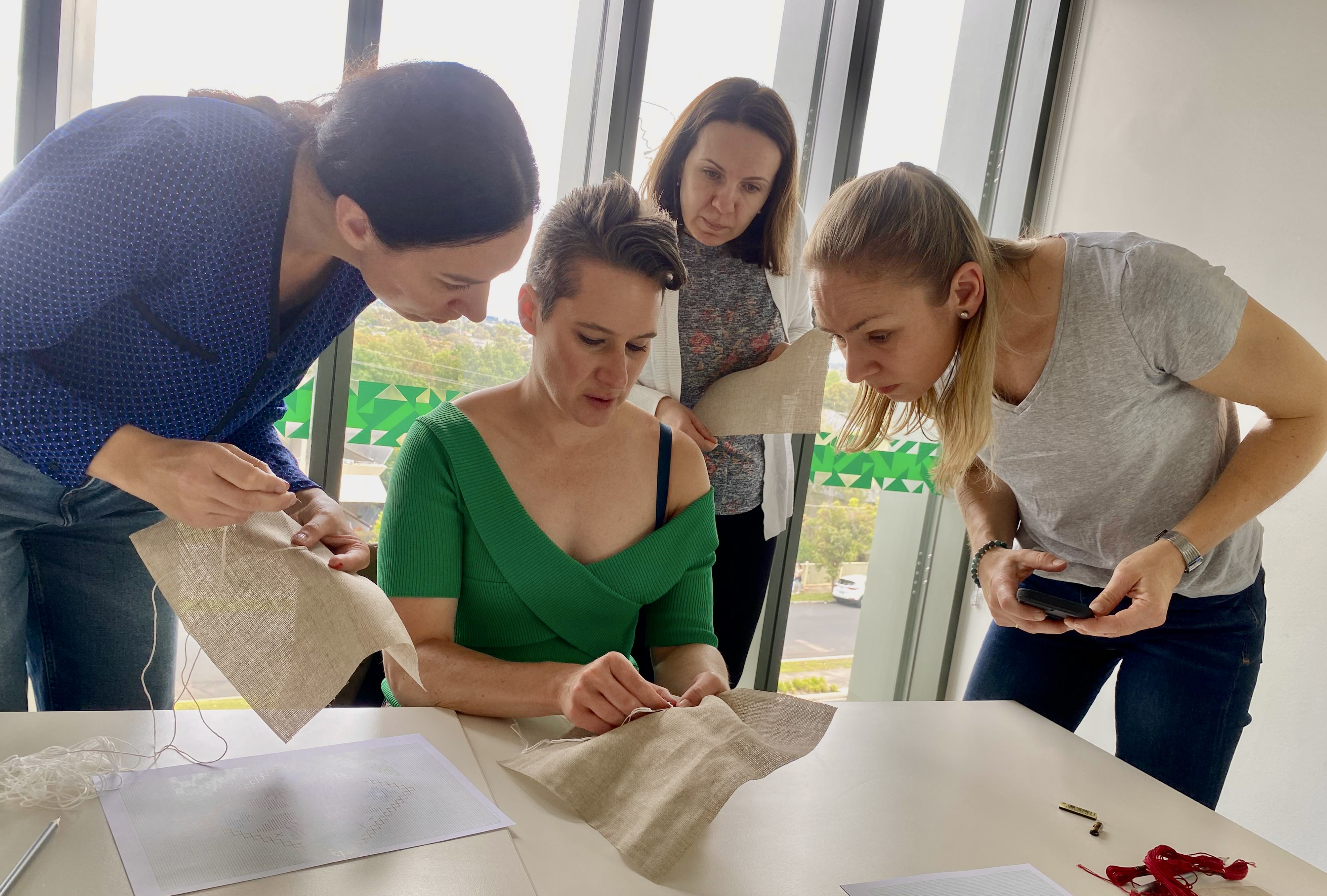
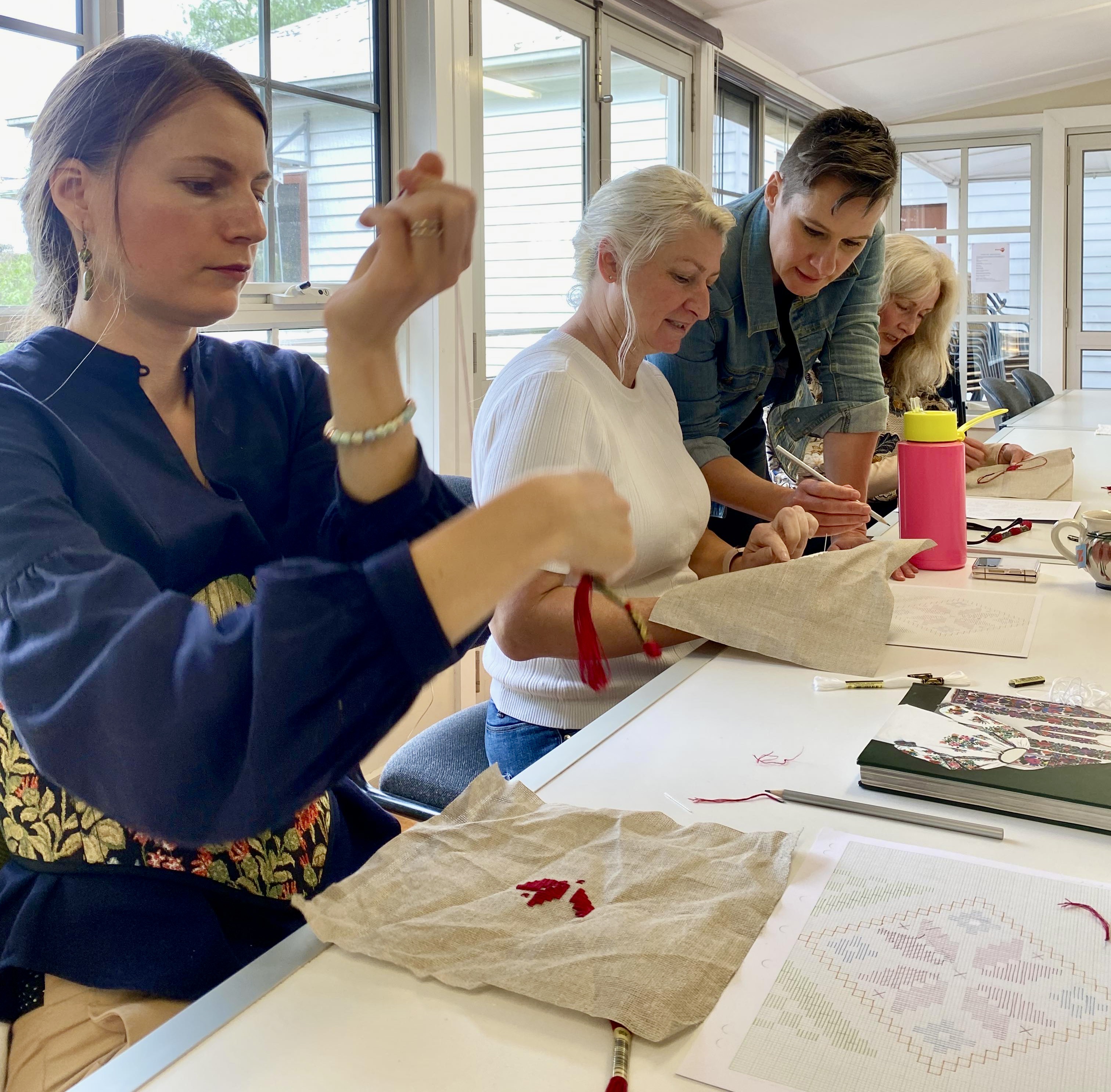
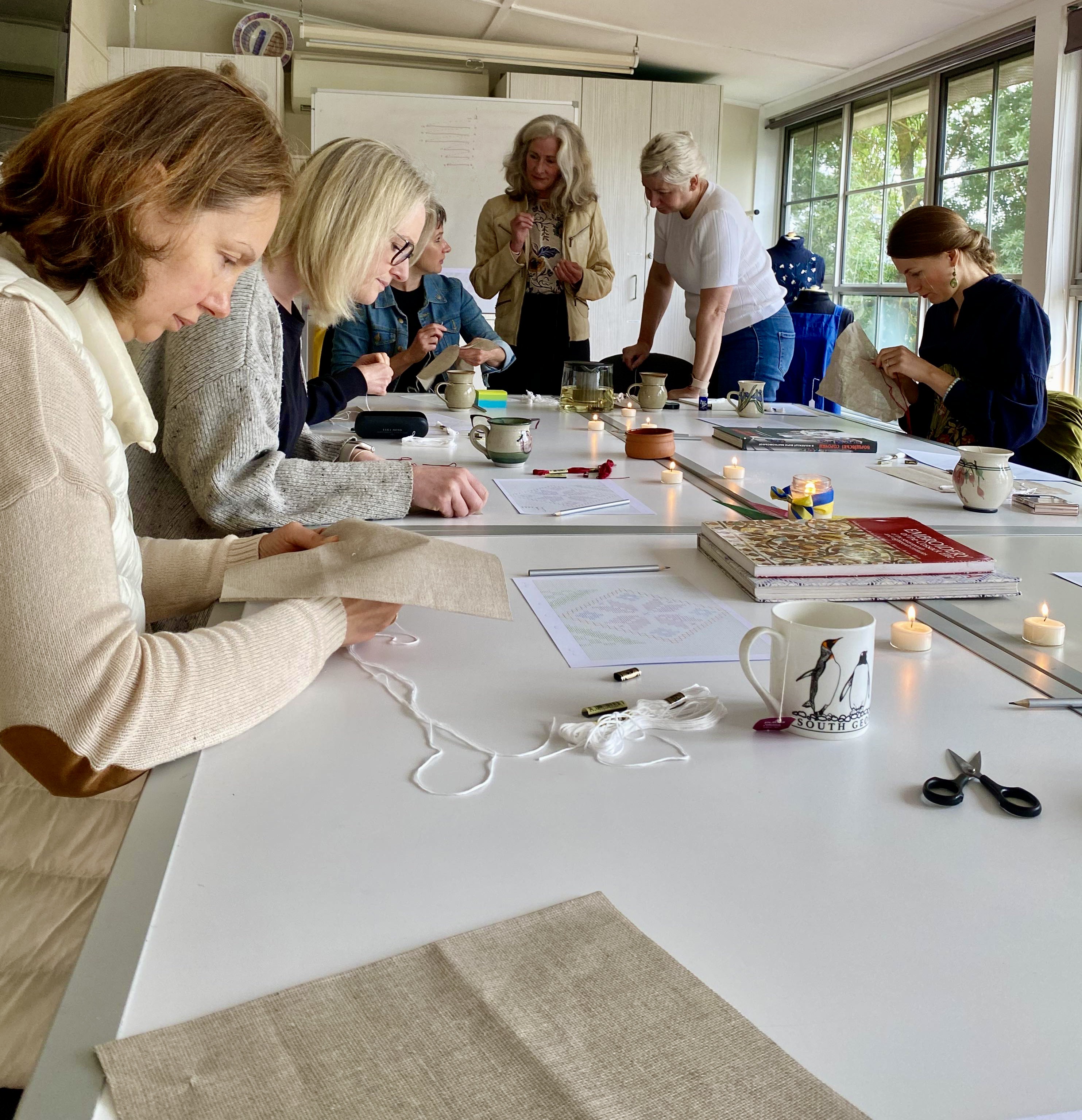
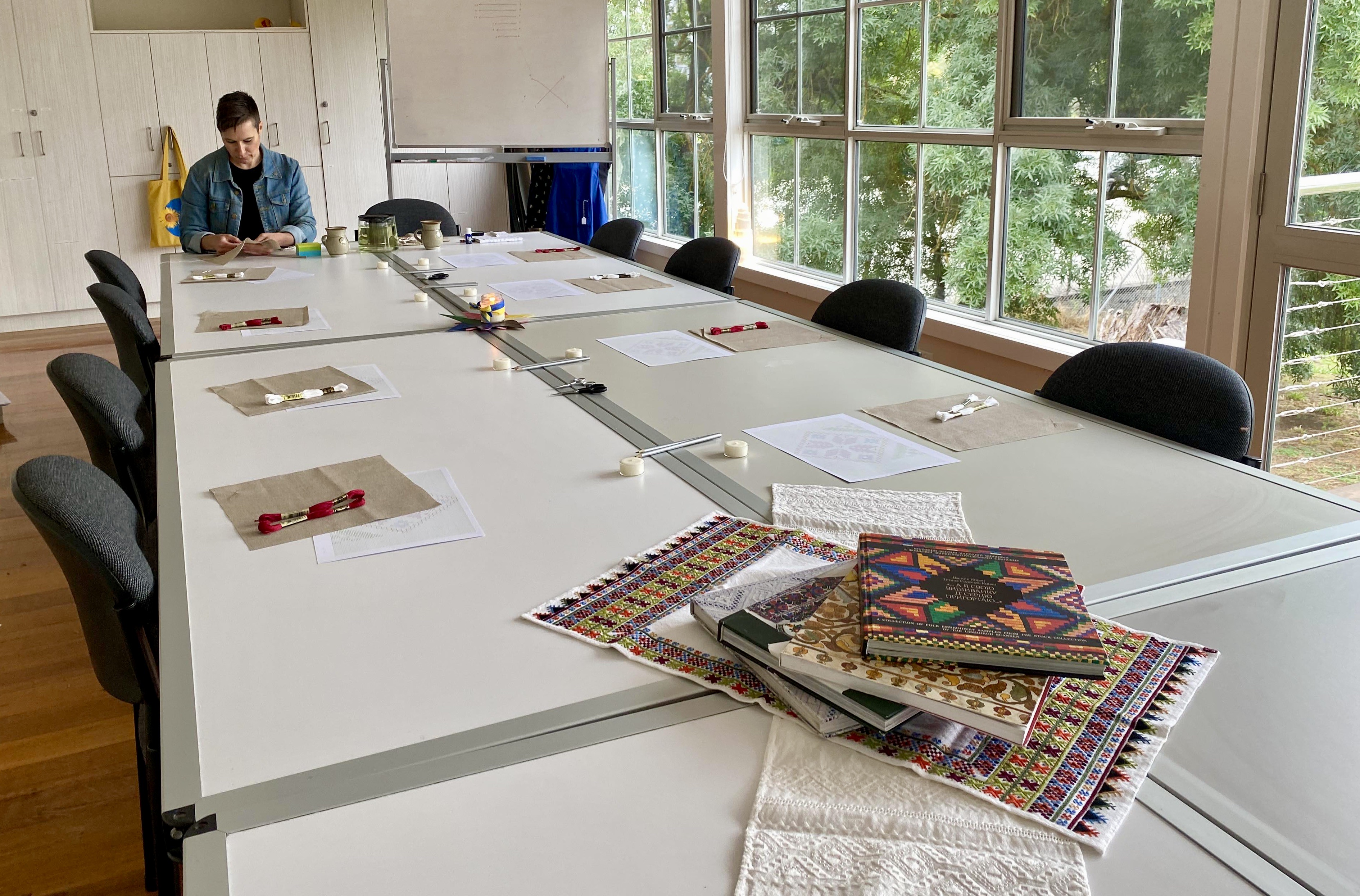
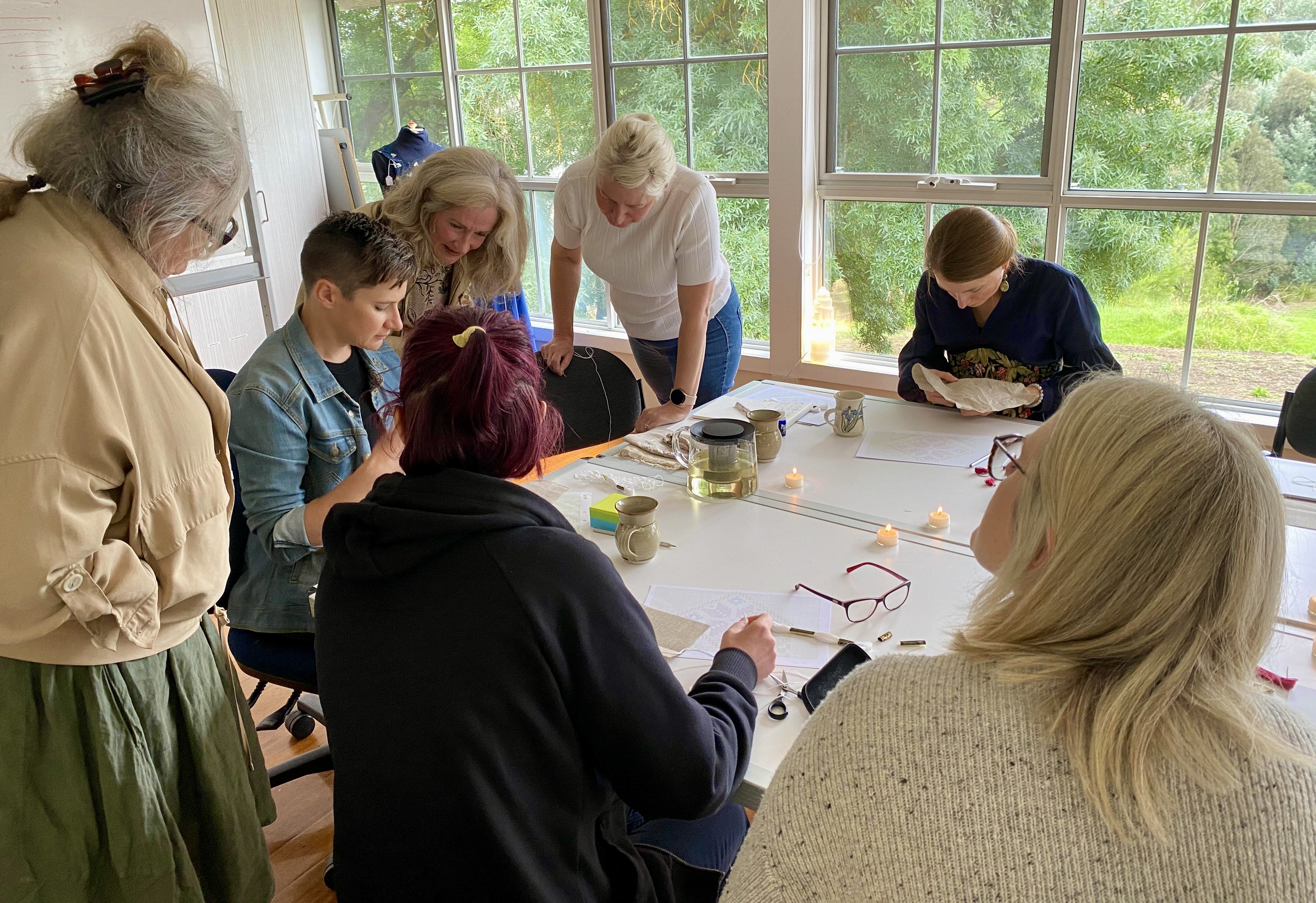
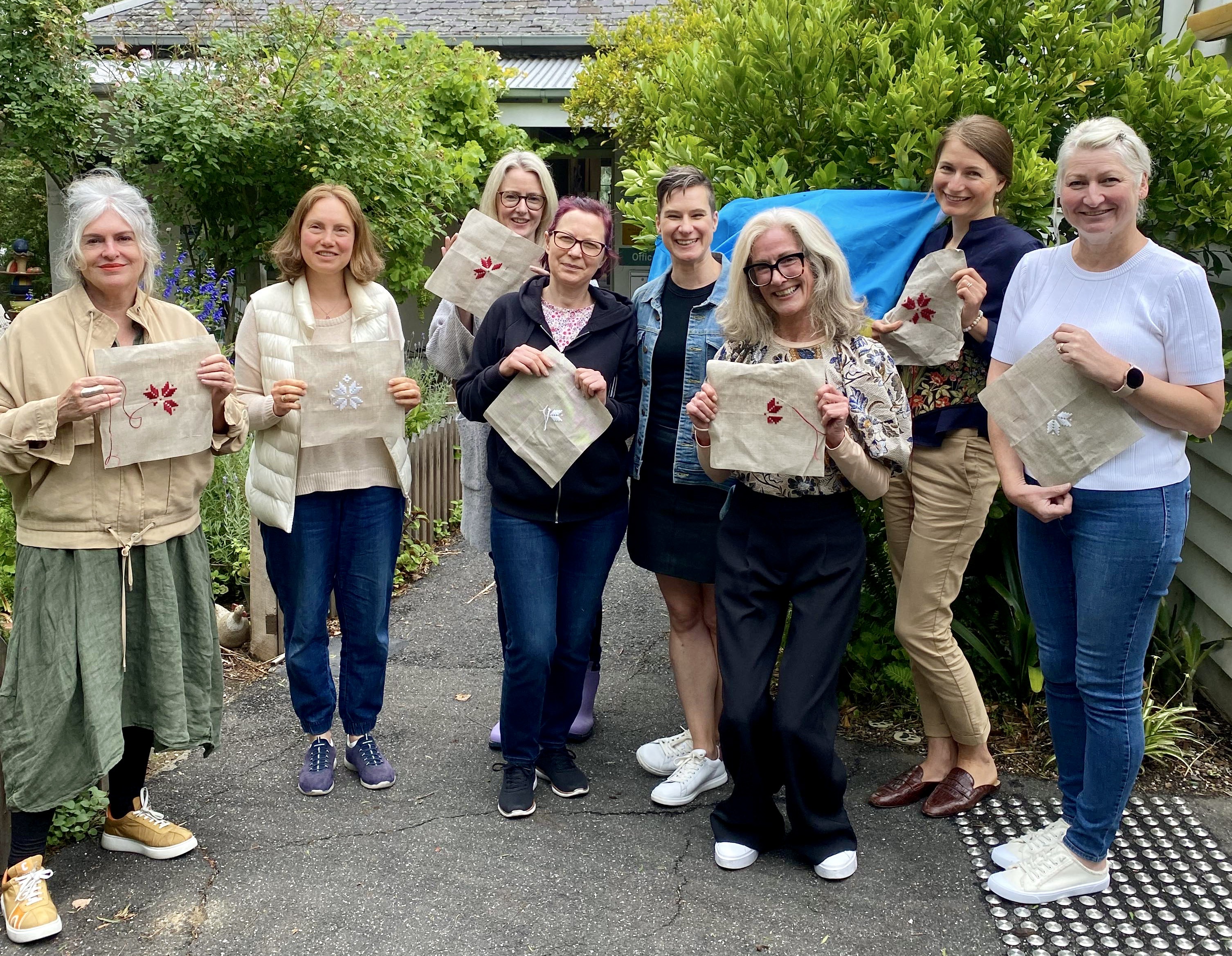
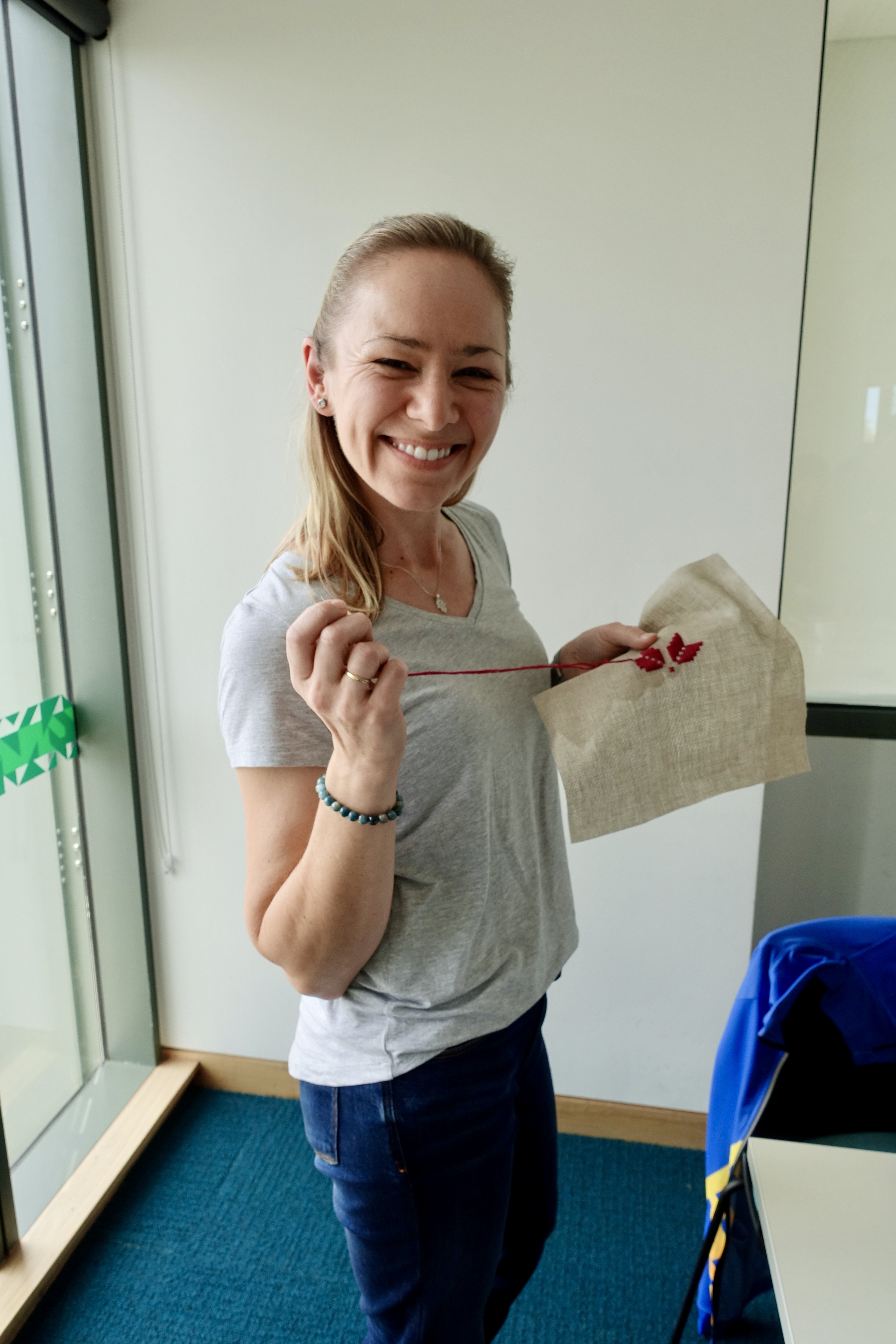
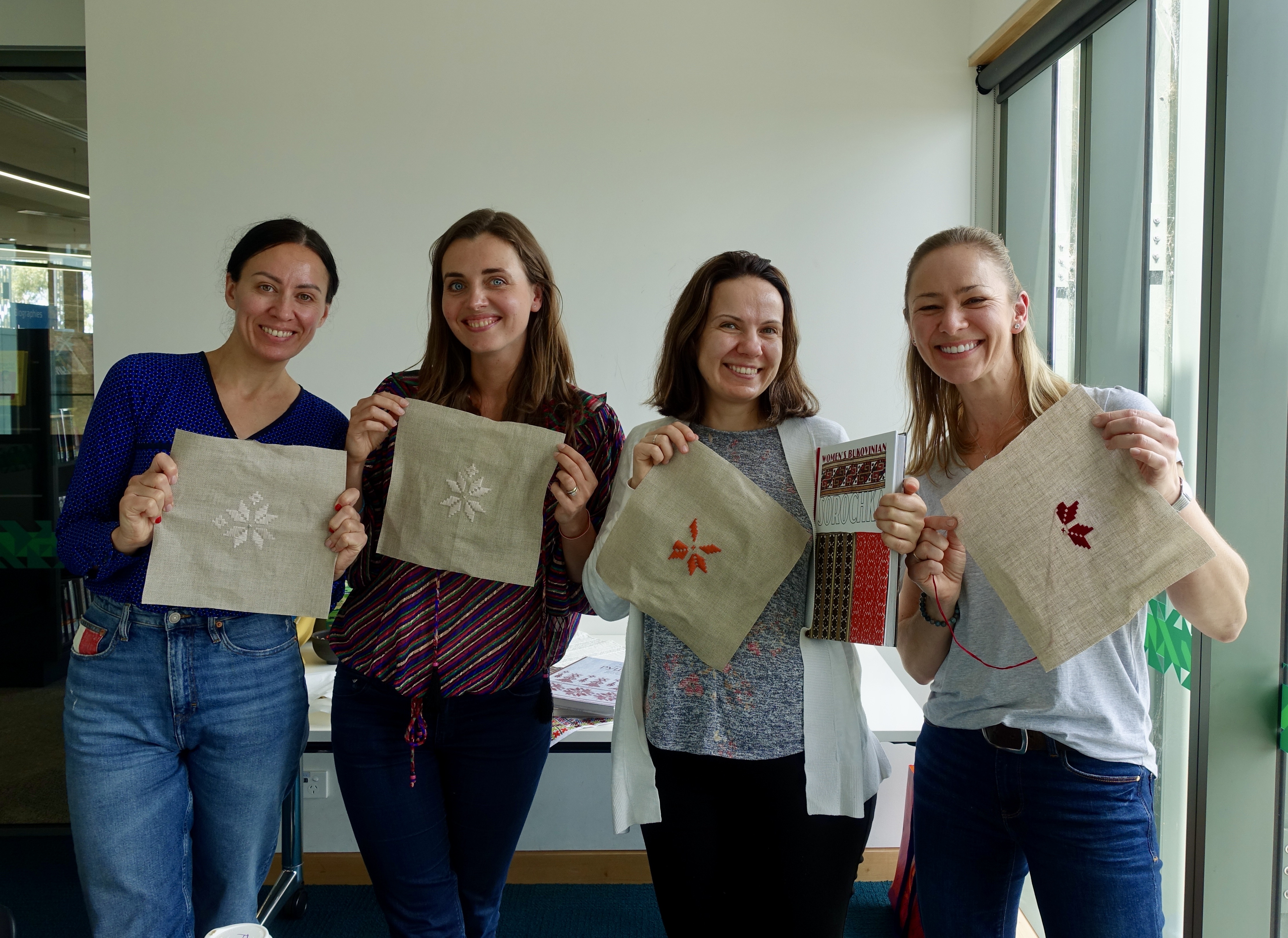
На двох майстеркласах, вчилися пряму лічильну гладь у формі оберегового взору із Волині 11 учасниць українського і австралійського походжень. За кожну хвилювалася – чи вдастся, чи сподобається, чи задовольнить? Кожна мене втішила! Ділюся відгуками деяких в низу. А й ще подивіться фотографії – які усмішки, яка увага, яке задоволення. Що мені найбільше сподобалося – коли в кінці вишивали стоячи! Це й я. Я це добре знаю! Деякі учасниці продовжили вишивати наш візерунок вдома, ділилися фотографіями і зовнішнього і зворотного виглядів (бабця Зіна всміхається з небес), висилали запити, збігали що другого дня в магазин придбати ще ниток, радилися про полотно, навіть одній відібрали ножитці на литовищі, коли несла з собою вишивку на перельот до Сіднею! Є охота вишивати обереги і висилати на фронт.

Мети цього проєкту прості до складної ситуації – в англомовному середовищі, на далекому континенті ділитися українською культурою у виді її прекрасної і виточненої вишивки (мені така велика честь це робити, що розчулює); збирати кошти на пожертву – цими коштами ми підтримали зусилля Фонду Притули щодо тактичної медицини prytulafoundation.org/help-army/direction/taktichna-mediczina; і, надіюся, своїми ділами дати знати українцям в Україні, що ми підтримуємо Вас і душевно стоїмо з Вами. Все присвячене Україні! Також значно розчулює.

Не уявляю ці майстеркласи без Наталі Орел, і в практичному сенсі би не відбулися без неї. Наталя скинула ідею мені в голову і дозволила до неї повернутися через довгий час. Дякую дуже, Наталю! Мене у творчій справі з вишивкою підтримують мої чудові брати і чудові подруги – також дякую! Всім учасницям, які прибули з довірою, що я ї’м покажу щось цікаве – дякую!

Особлива подяка Living and Learning Nillumbik Eltham і Ivanhoe Library and Cultural Hub за гарні, спокійні і творчі приміщення.

Натхення та ідею щодо цього майстеркласу мені показалися в соцмережах, у творчості, проєктах і зусиллях українських майстринь і майстра-знавця. Ділюся з вами:

  • пані Оксана Поступак і 100% захоплюючий проєкт #сорочкадлязахисника www.facebook.com/hashtag/сорочкадлязахисника/, в рамках якого я вперше побачила цей взір – дякую за таке велике натхення!
  • пані Тетяна Бабич, київська майстриня, і пан Юрій Мельничук, київський майстер і знавець української вишивки/українського костюму, на кого сторінках побачила взір у вишиті формі; а далі пан Мельничук ще відповів з інформацією про нього – дяукю що поділилися!
  • пані Ірина Зайцева – завжди крута і надихаюча, справді провідна особа у світі української вишивки – яка поділилася цим відео www.facebook.com/vihilasy/videos/1259785254508590. Не тре пояснювати як воно вплинуло. Дякую вам, бабцю Ірцю, що Ви є!

Якщо бажаєте дізнатися першими про майбутні майстеркласи вишики, будь ласка підпешіться на повідомлення від Наталі на сторінці createforukraine.wordpress.com. А на поки що, ділюся з Вами новим чеслом на наступний клас: FUNDRAISING.

Творити і ділитися – глибока насолода. Такий вид волонтерства надає найвищу нагороду яку собі могла уявити. Чекаю нагоди далі продовжувати цей спільний проєкт в Новому році!! До тоді!

Hello friends!

Slava Ukrajini!

I’m writing some impressions about our first masterclasses in Ukrainian embroidery in Melbourne, hosted in collaboration between this wee enthusiast and Natalia of Create for Ukraine Project createforukraine.wordpress.com/.

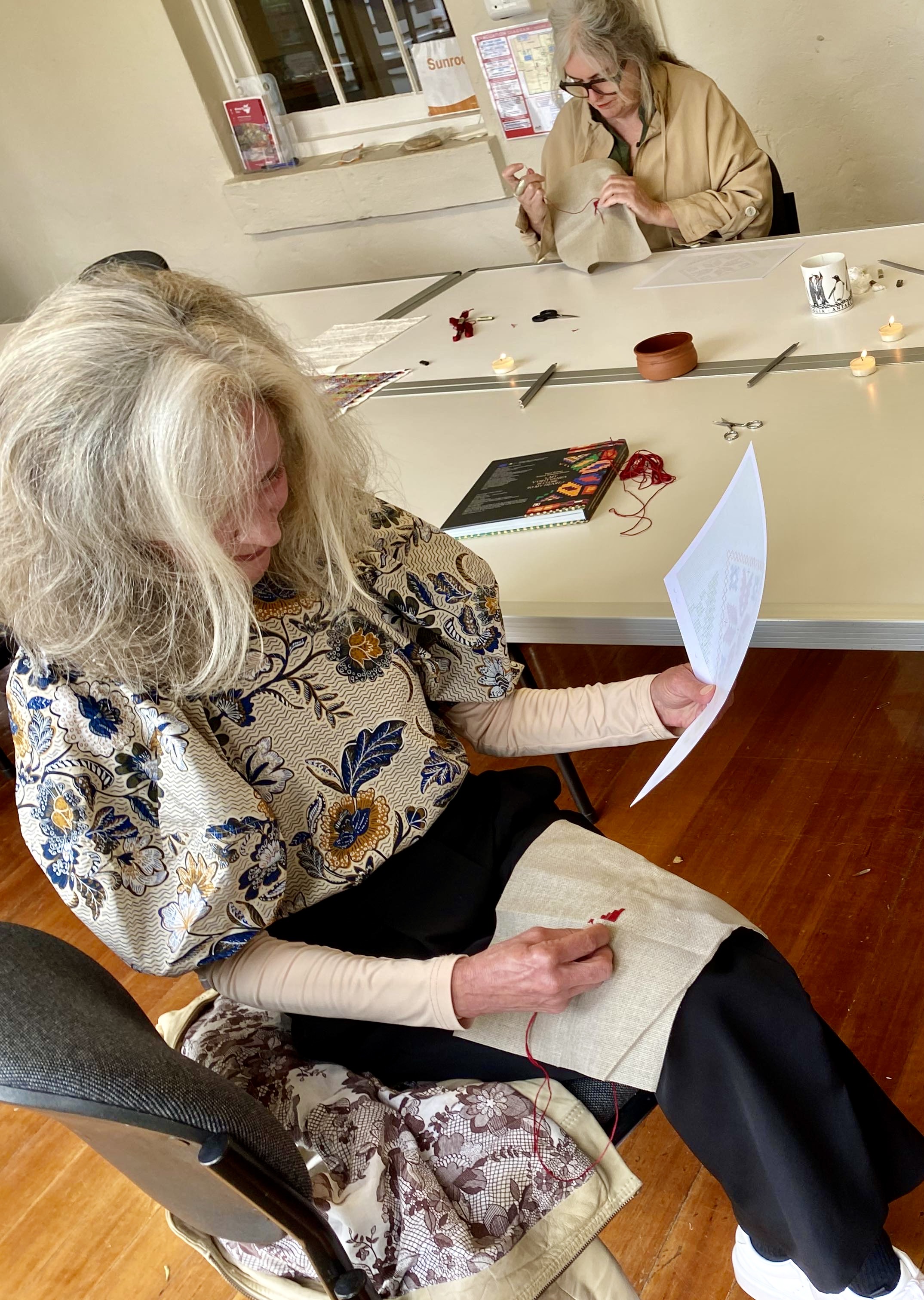
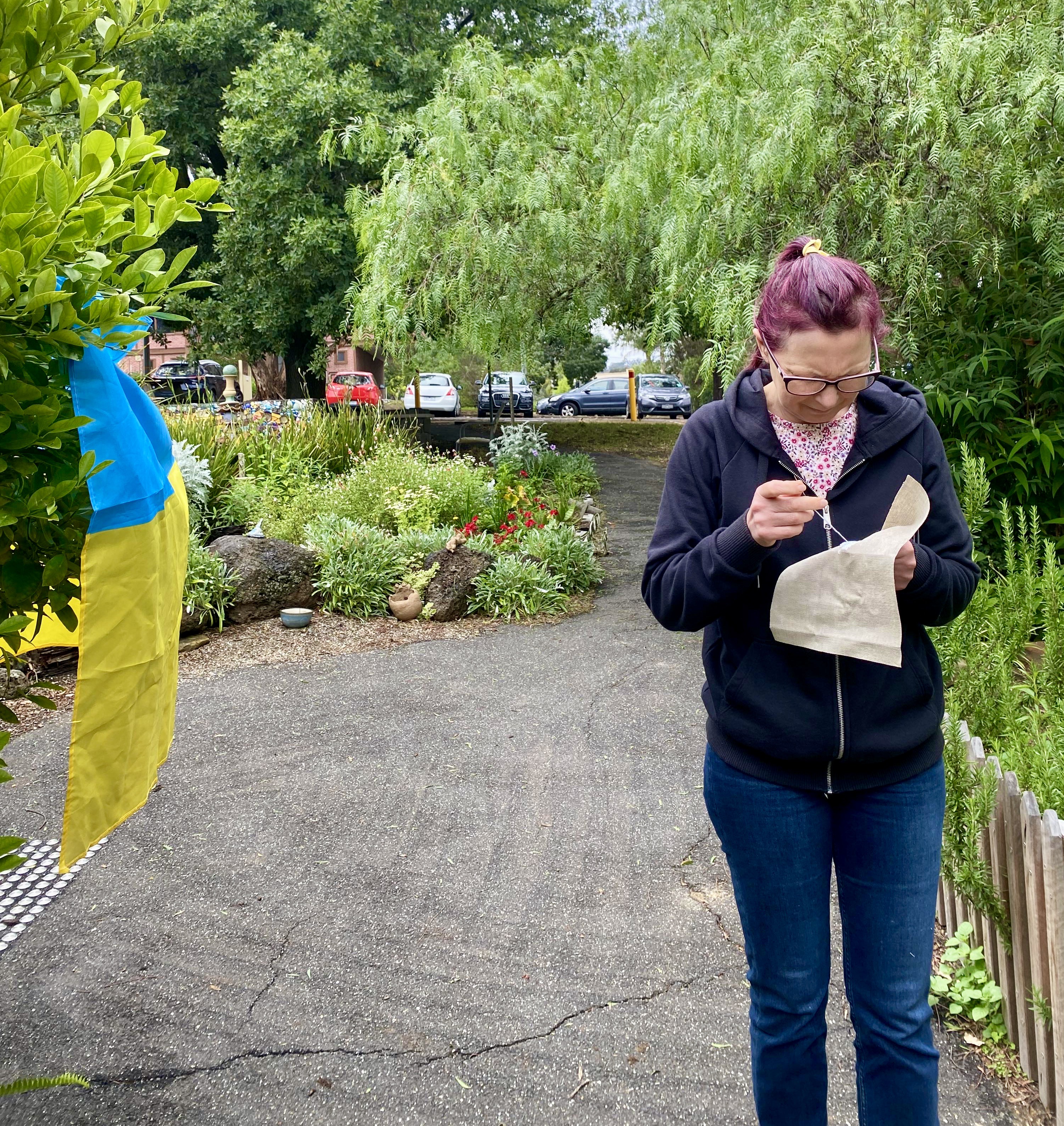
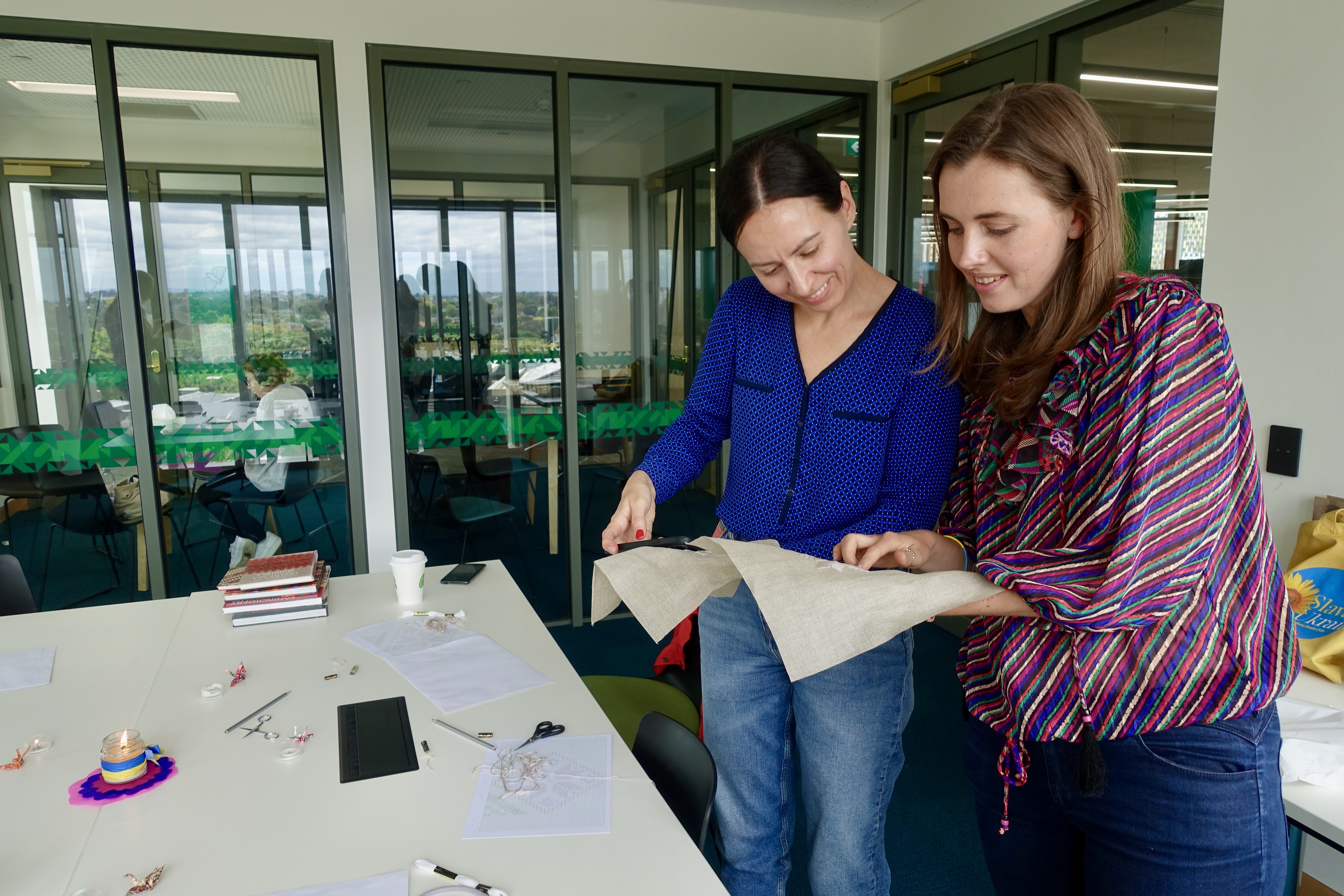
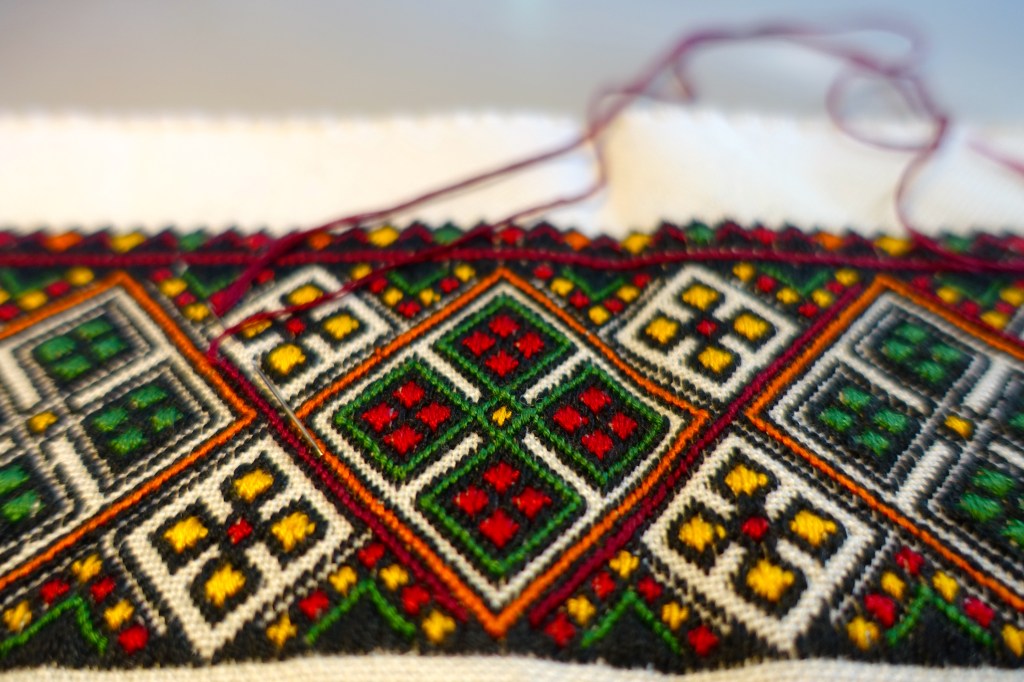
Over two masterclasses, 11 ladies of both Ukrainian and Aussie backgrounds learned direct/parallel satin stitch in the form of a protective design from the Volyn’ region of Ukraine.  I was anxious for every one of them – will it click, will she like it, will it be rewarding?  Every single one of them brought me the reward!  I’m sharing the comments of some below.  Also, check out the photos – look at the smiles and the concentration.  What I loved the most – the embroidering standing up at the end.  This is me!  I know this so well!  Some of the participants continued embroidering our design at home, sent photos of the front and reverse appearances (my grandma Zina is smiling down from above), asked questions, went shopping every second day to buy more threads, asked advice on embroidery fabrics and one of them even had her scissors confiscated at airport security, having packed her embroidery on a flight to Sydney! What more, there is a desire to send these embroidered amulets to the front lines in Ukraine.

The goals of this project are simple for a very complex situation – to share Ukrainian culture in the form of it’s beautiful and refined embroidery in an English-speaking environment, on a far-away continent (it’s such a great honour for me to be doing this, that I’m significantly humbled); to raise funds for donation – with the proceeds from these masterclasses, we have helped the efforts of the Prytula Foundation in the field of tactical medicine prytulafoundation.org/en/help-army/direction/taktichna-mediczina; and, I sincerely hope, to show Ukrainians in Ukraine that we are supporting them and that we stand with them in spirit. This all is devoted to Ukraine! which makes it even more extremely humbling.

I can’t imagine these masterclasses without Natalia Orel and in fact, in a practical sense, they wouldn’t have happened without her.  She planted the idea in my mind and let me return to it a long way down the line. Thank you, Natalia!  In embroidery and creativity, I get a lot of support and encouragement from my really quite awesome brothers and my really wonderful friends – thank you!  Thank you to all of those who came to our classes, trusting me that I would share something interesting with you! 

And thank you to Living and Learning Nillumbik Eltham and Ivanhoe Library and Cultural Hub for lending us their beautiful, calm and creative spaces!

The idea for this particular masterclass came entirely from the work, projects and efforts of embroiderers in Ukraine, whom I follow online.  To share with you:

  • Ms Oksana Postupak and the 100% captivating project #сорочкадлязахисника (translatable as “Shirts for Defenders”, www.facebook.com/hashtag/сорочкадлязахисника/, in the context which I first saw this design – thank you for such deep inspiration!
  • Ms Tetyana Babych, a Kyiv-based craftswoman and Mr Jurij Mel’nychuk, a Kyiv-based craftsman and expert in Ukrainian embroidery/Ukrainian costume, on who’s pages I saw this design in embroidered form; and also to Mr Mel’nychuk, who answered questions and provided me with information about it – thank you for sharing!
  • Ms Iryna Zaitseva – always so groovy and inspiring and really a leading figure in the world of Ukrainian embroidery – who posted this video www.facebook.com/vihilasy/videos/1259785254508590.  No explanation required for how it was influential.  Babcia Ircia – thank you for being you!

If you would like to be the first to hear about future masterclasses in Ukrainian embroidery, you can sign up for notifications from Natalia on her page createforukraine.wordpress.com. In the meantime, I can share with you the date for our next class: FUNDRAISING.

To create and to share – so enjoyable!  This form of volunteering has brought me the deepest reward that I could have imagined.  I’m really looking forward to continuing this project with Natalia in the New Year!  Until then!

~oOo~

Reviews from attendees at our first two Oberih masterclasses:

Відгуки учасиць на перші майстеркласи ‘Оберіг’:

To sit in a group with peace, artistry and tradition on their minds was a joy.  Under Ksenia’s gentle guidance, we stitched a traditional Ukrainian star pattern.  The day was not sunny, but the outcomes were, all round.  I am giving thanks for being part of this wonderful experience. – Kay

Сидіти в мирній, творчій групі в якій традиція тримається в думках було радісно.  Під ніжним керівництвом Ксені, ми вишивали традиційну, українську зіроньку.  День не був соняшним, але підсумки були.  Дякую за нагоду брати участ в такій творчій події. – Кей

The high quality rest for your brains is only possible in case of switching of activities and the best option is to switch to something completely new for you.  This masterclass was a mindfulness activity with visible results after it – highly recommended if you are looking for something exciting and relaxing. - Arina

Якісний відпочинок для мозку можливий лише за умовами зміни видів діяльності, а найкращий варіант – переключитися на щось вам абсолютно нове. Цей майстерклас був усвідомленою діяльністю з видимими результатами – настійно рекомендую, якщо ви шукаєте щось захоплююче та розслаблююче. - Аріна

A brilliant workshop that will leave you wanting it to continue.  The smaller group numbers enables the attendee to relax into a welcoming and supportive environment, as Ksenia is able to generously offer individual guidance where needed, to ensure all are enjoying the experience and feeling at ease with their own learning and at their own pace.

What I love most about the structure of this workshop is that not only is it inviting to non-Ukrainians, or the fact that by participating one is contributing to the spread of a strong, peaceful and beautiful Ukrainian tradition, but that funds received go towards medical supplies for the Armed Forces of Ukraine.

As for the instructor’s level of expertise, it’s really of professional standard, not just come skill, but also knowledge.  Highly recommended, even if it’s just for some artistic fun, you won’t be disappointed.  If anything, you’ll walk away with a heart full of positivity, creativity and maybe even inspiration. - Jules

Блискучий семінар, який залишить бажання, щоб продовжувався. Обмежене чесло осіб в групі дозволяє учасницям розслабитися в привітній та сприятливій атмосфері, оскільки дозволяє Ксені щедро займається індивідуальним керівництвом, де це необхідно, щоб забезпечити кожній насолоду, і щоб кожна почувалася невимушеною підчас власного навчання та у власному темпі.

Що мені найбільше подобається в структурі цього семінару, є не лише те, що він запрошує осіб інших походжень, що участь робить свій внесок у поширення сильної, мирної та красивої української традиції, але й те, що отримані кошти йдуть на забезпечення медичних засобів для Збройних Сил України.

А що стосується рівня досвіду інструкторки – він дійсно відповідає на професійний рівень, не тільки вмінням а й знанням. Настійно рекомендую – навіть якщо це лише для творчої розваги, ви не будете розчарованими. У будь-якому разі, ви відійдете з серцем сповненим позитиву, творчості та можливо навіть й натхненням. - Юля

~oOo~
It’s Her, Eternal

A poem by Ksenia X.

It began, as it does, with a sunrise
and a goddess – Oriana.
She blessed the earth
and made it black, its fertility
a gift for generations.

Then came a river, north to south,
On its banks the wind-bent willows,
Where child-like mermaids played
and, turning their faces upwards,
Told poems to the moon.

At three fields, you fired your earthenware
and buried it underground.
You cast your gold
and told your life.
You made relics that we cherish.

We were agrarian, hunters, fishermen,
traders.  We had our gods
of sun and thunder,
You your nymphs and forest sprites.
These were our religion.

He was the ancient ferryman.
Or were they the three brothers,
Who sailed downriver with their sister?
And greeting destiny with arms 
thrown back, we began in earnest.

We built our grand and ancient capital,
The seat of our civilization,
Whose chain-mailed princes
were conquerors and great and wise,
Whose daughters became the wives of monarchs.

They gave us their tridents
and first blessed us
and on they stand in silence.
They built first domes, touched by the same sun
turned golden and now will be forever.

We were the dark-eyed beauties
fit to beguile a sultan.
We were the warrior horsemen
building our island fortress
beyond the churning, burning rapids.

We lived in freedom and democracy.
We minted them with our horses’ hooves,
Striking sparks from the soil
of our grasslands, as we thundered forth
to defend them.

We were buried, eyes bound in silk,
In great mounds on the steppes.
On our bones grow wheat and rye,
That golden expanse meeting at the horizon
with the ever blue of sky.

And we learned about ourselves
from the blind bard led
by his little orphan guide.
We built white houses beside cherry orchards
And slept by them in summer.

Come winter we gather together
and await the rising star.
We light a candle to the harvest,
Feed our cattle, feast
and welcome song, the visitor.

Come spring we plough and sow
and draw the gifts of your
fertility onto fresh, new-white life,
Onto delicate shells.
You bless us and we share.

Come the next summer we
see you explode in life and flowers
and berries.  We imbibe your bounty
and we paint it 
onto the walls of our houses.

There are times, it’s true,
When our great poets statuesque
once again bend their furrowed brows,
When the guelder roses bow
with worry.  Then we know our task.

Come if you will.  Try to tell us
we are not.  We have giants.
There are lions amongst us
whom you’ll wake from slumber.
You do not truly know us.

We have been and we will be,
For our heroes do not die.
Bring your war.  You will create more.
And we’ll tell you
our unanimous reply:  We are!

On the eve of summer solstice,
On high mountain meadows,
She’ll gather the fleetingly red rue
and walk forgotten paths to find me
where I dream in my forest clearing.

We’ll dye our threads
the colours of her flora
and with them we’ll embroider
the contents of our souls and wear
our hearts on our sleeves.

We’ll drink from mountain streams
so clear as to play music
with their crystal.
Bonfires will light a night sky
perfumed by fur and pine

and, as the shadows of our
forgotten ancestors dance on her
stone cliff faces,
We’ll remember how we can, if we must,
Protect what is precious with our hands.

Then we’ll walk the sloping parks
of our grand and ancient capital.
We’ll sing our hymn again
on the playground of our freedom,
Beneath our beautiful - Sophia.

We’ll gather sunflowers and poppies,
Braid ribbons, light candles
and set our wreaths to sail.
They will lead us to our love.
Of course, it’s her, eternal.


Melbourne, April 2022

~oOo~
On Nyzynka and Coziness

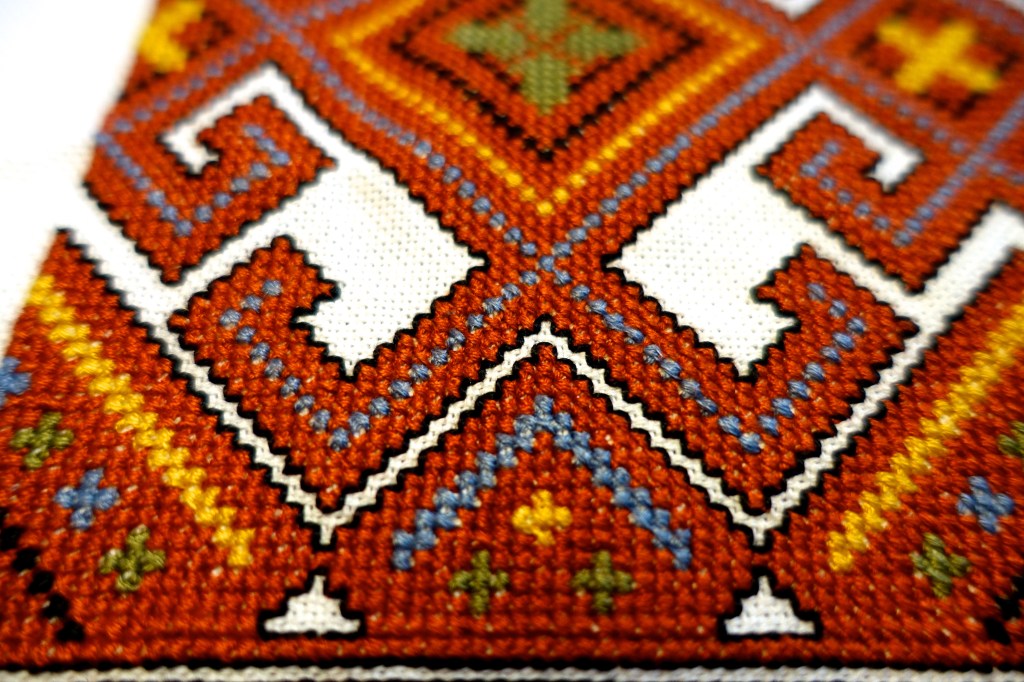
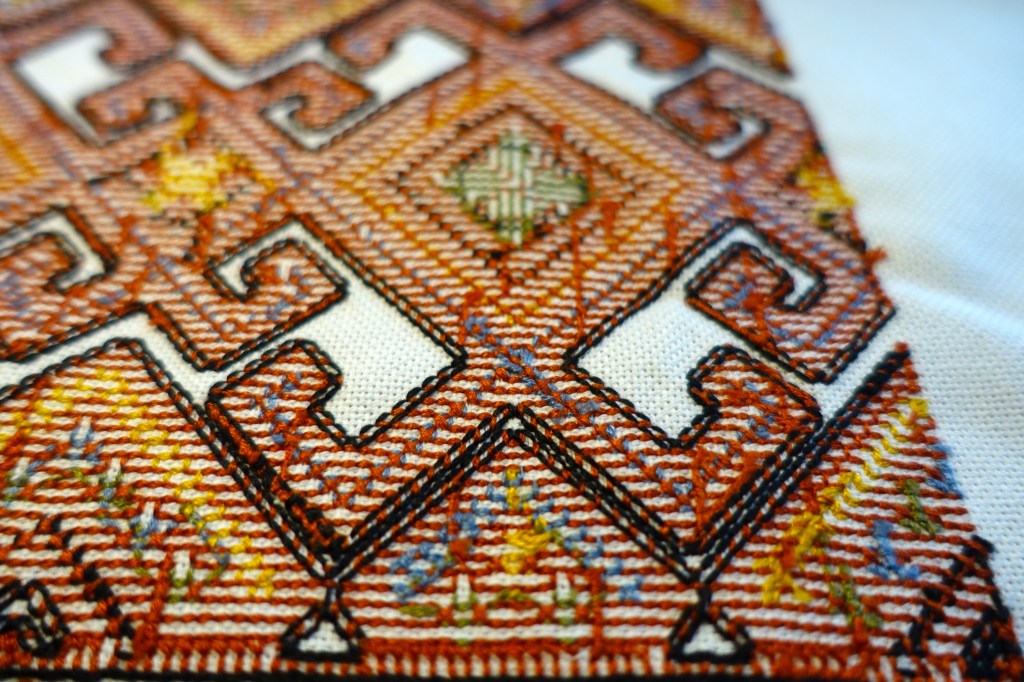
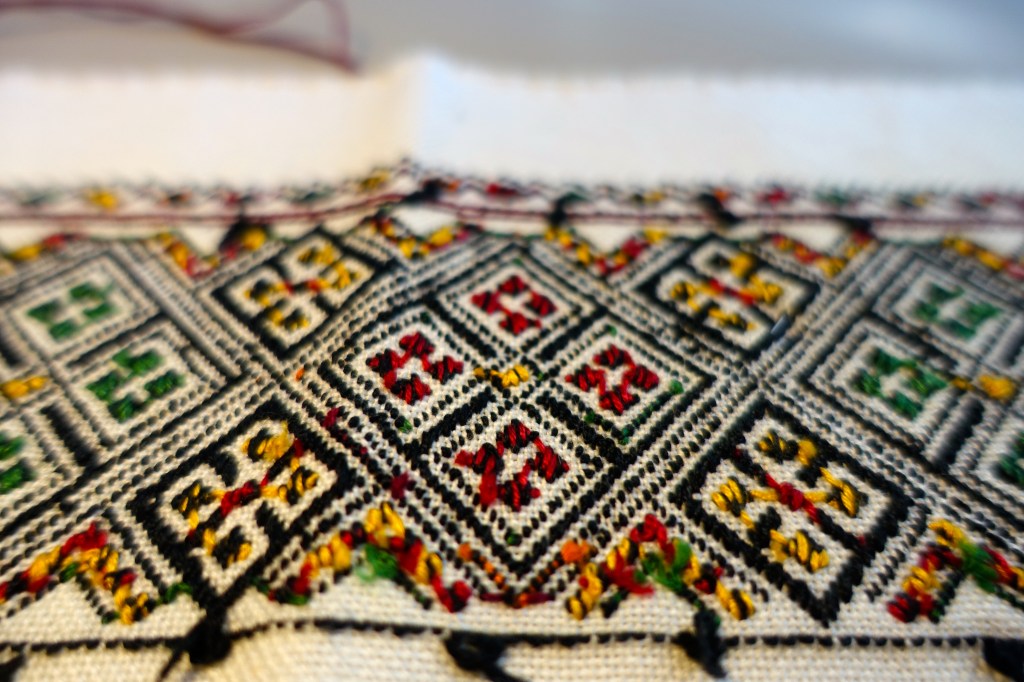
About a fortnight of my non-work time during peak viral social distancing in Melbourne was spent on this nyzynka.  I’ve had this design for YEARS and have always wanted to do it in this colour.  It came from a servetka seen covering someone’s paska during a Velyka subota many years ago and lent to me to copy.  The colour is the deepest in a row of copper brown shades on the DMC colour chart, all of which appeal to my eyes every time I open my colour draws (which I’ll need to share with you another time.)

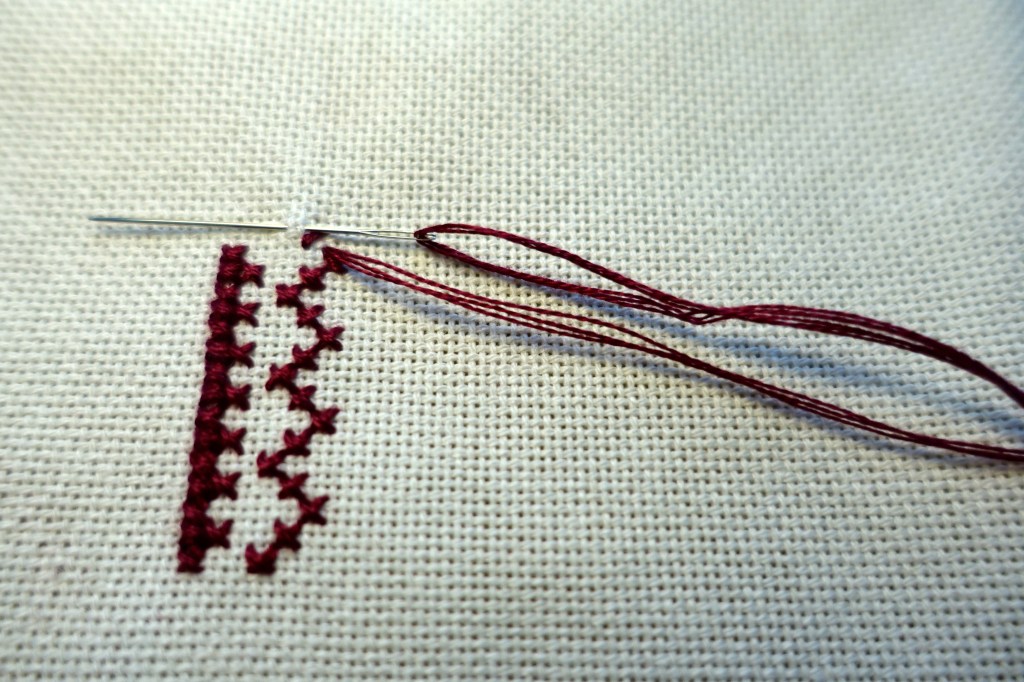
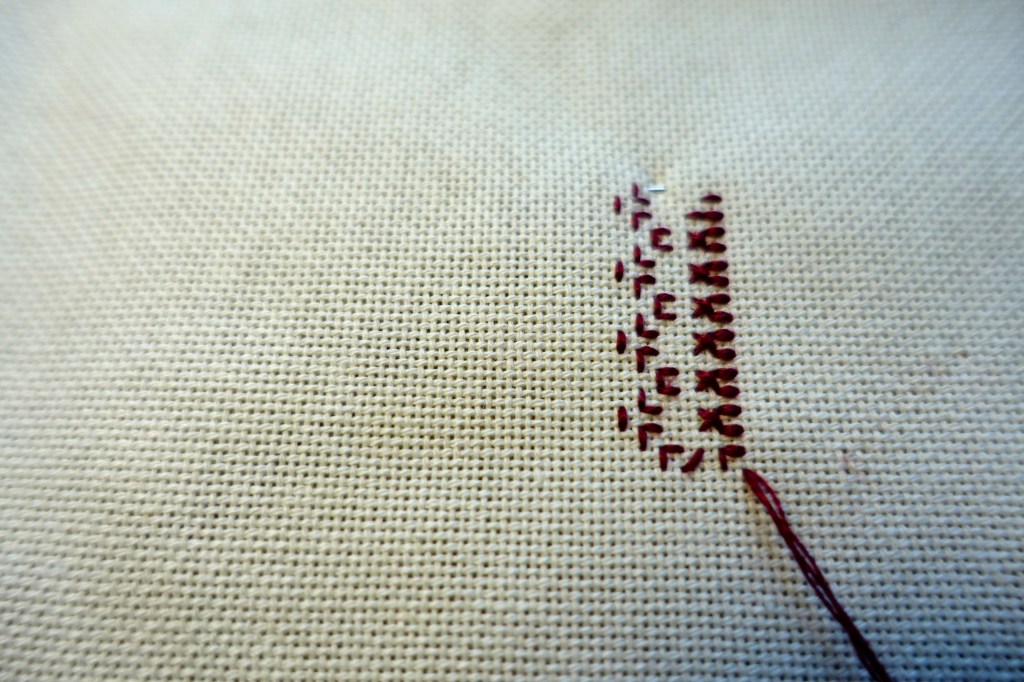
Nyzynka is a funny thing.  How was such a technique invented, embroidered from the back to give a crisp design on the front, row on row of design deviating by a thread from its neighbour defining perfect diagonals?  Always one to watch carefully – mistakes can hide easily and are a cause of much, much unpicking in this technique.

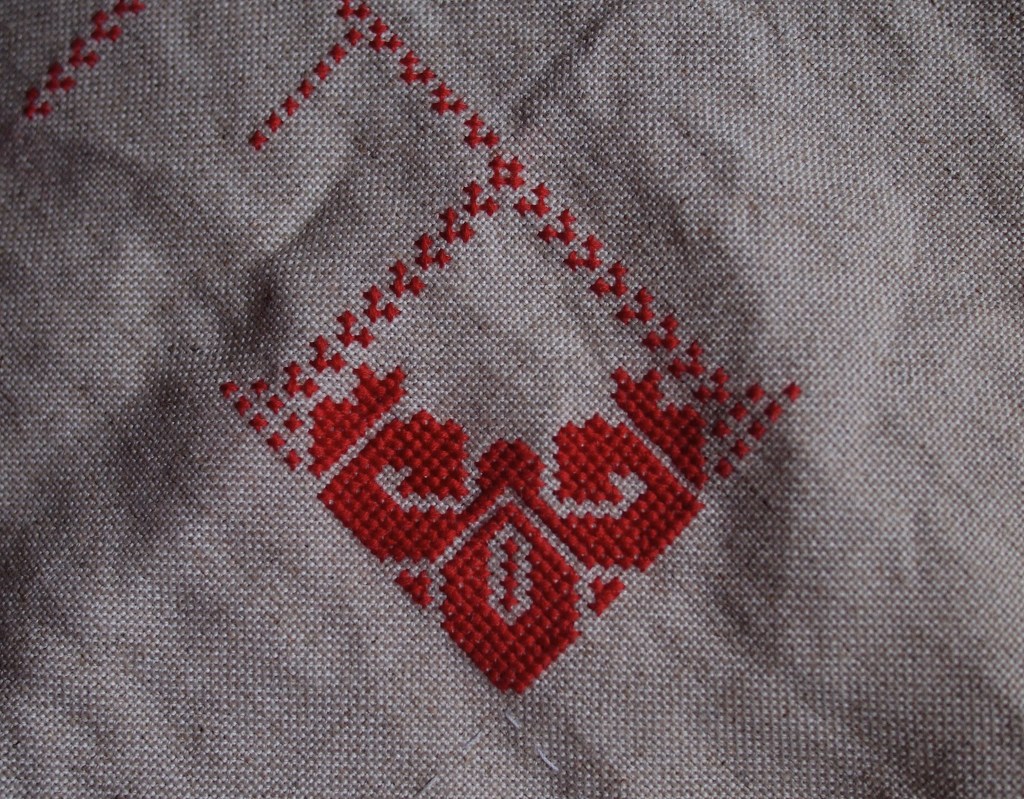
Here is the beginnings of a nyzynka design.

What starts as really a couple of blebs on a fabric becomes surprisingly rich.  This design makes me think so much of derevoriz’ba.  Before long, it is looking like this:

DSC02552
DSC02549
DSC02550

Now, as social distancing eases throughout Australia, winter is settling in.  This morning there is a light, light rain, low cloud and I can’t see the city-scape I usually see from my study window.  In the corner, my cozy armchair and cushions, my very comfortable place to stay warm, listen to pods or music and work on this gorgeous nyzynka.

DSC02553

~oOo~
The Flip Side

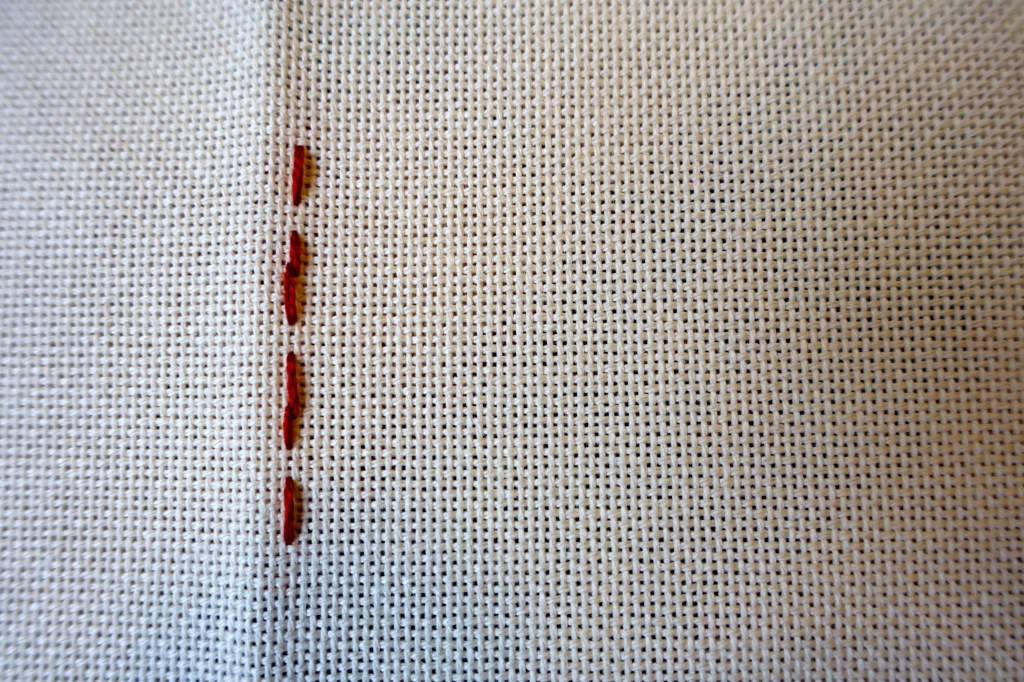
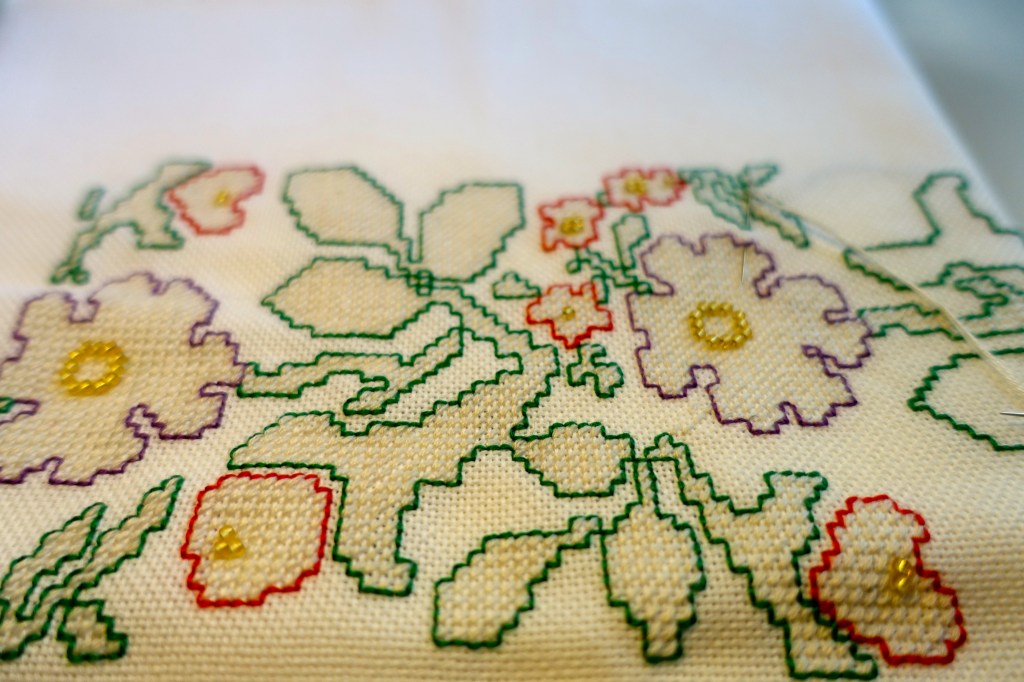
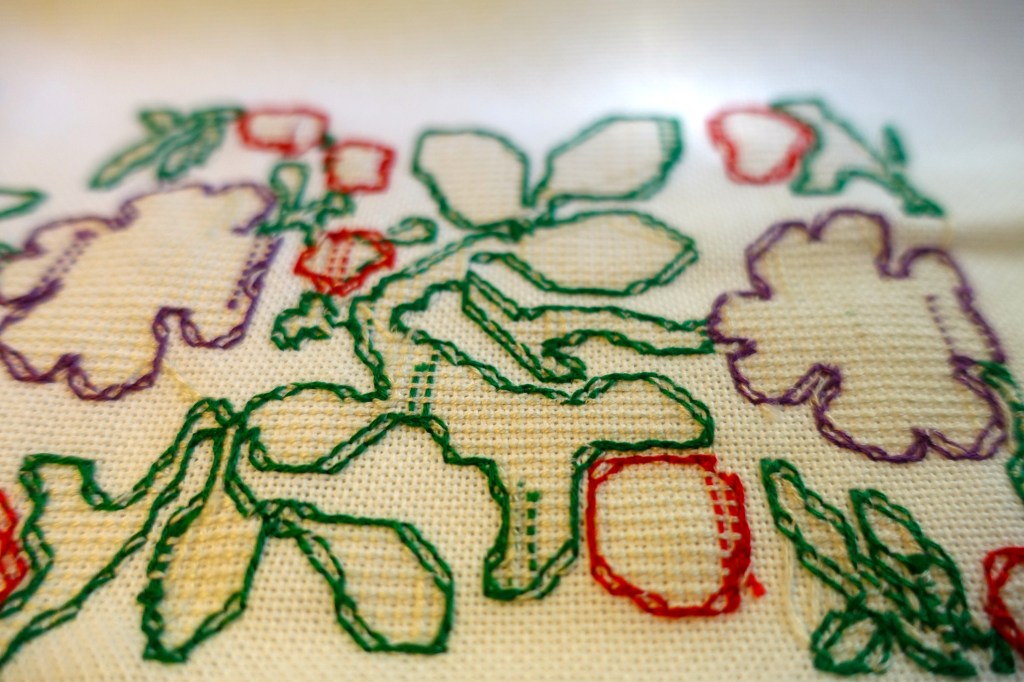
There is a great emphasis in Ukrainian embroidery on having a very tidy reverse side.  This is part of the no knots caper, and was also taught to me by my Baba Zina.  Along with knots, one also does not want loose threads on the reverse side or long bits of thread navigating from the end of one stitch here to embark on another stitch over there.

How does one achieve this?  No knots is one factor, of course.  Additionally, navigation.  The needle makes the shortest possible transition from the end point of one stitch to the start point of another.  If needing to travel to another spot, the thread in use is tucked under existing stitches, or, if they aren’t there, is finished off and started again.  There is no random through and through here.  It all comes down to technique and that really means organization, being aware of what is going to happen with the needle and thread next.

This is no exaggeration!  Any embroidery displayed will be quickly flipped up at the corner by someone in the know, and a discerning eye will be cast over the reverse side.  I often think that the more it resembles the front, the more the raised eyebrows of approval rather than disappointment.

My Baba taught me cross stitch.  We started by making straight horizontal or vertical rows of stitches.  We then progressed to stitching every second cross.  The final thing she tried to teach me was to embroider in little zig zags, zubchyky, literally meaning “little teeth”, which I did not understand at the time.

So my earliest starts in embroidery will have looked something like this, however with longer rows of the same.

I don’t remember how old I was when the penny dropped around making diagonals out of cross stitch, but suddenly zubchyky became clear.  There is a way – a way to make diagonals and keep reverse side stitches short and embroidery neat.

This particular fussiness extends to other embroidery techniques, but I think is actually its most difficult in cross stitch, which has often lead me to muse that other techniques in Ukrainian embroidery should be taught first.

In any case, the flip side is important.  Anyone could pass a needle through up and through down.  The technique lies in the organization that brings about a tidy reverse side and is really at the core of what one learns when one learns Ukrainian embroidery.

~oOo~
The Value of Graphing

So there are many inspiring examples of embroidery floating around.  You see photos online (a reason I keep Facebook), in books, on greeting cards under the quintessential representation of a Uki Easter or Rizdvo eve feast, or worn or used in like proper real life by people.

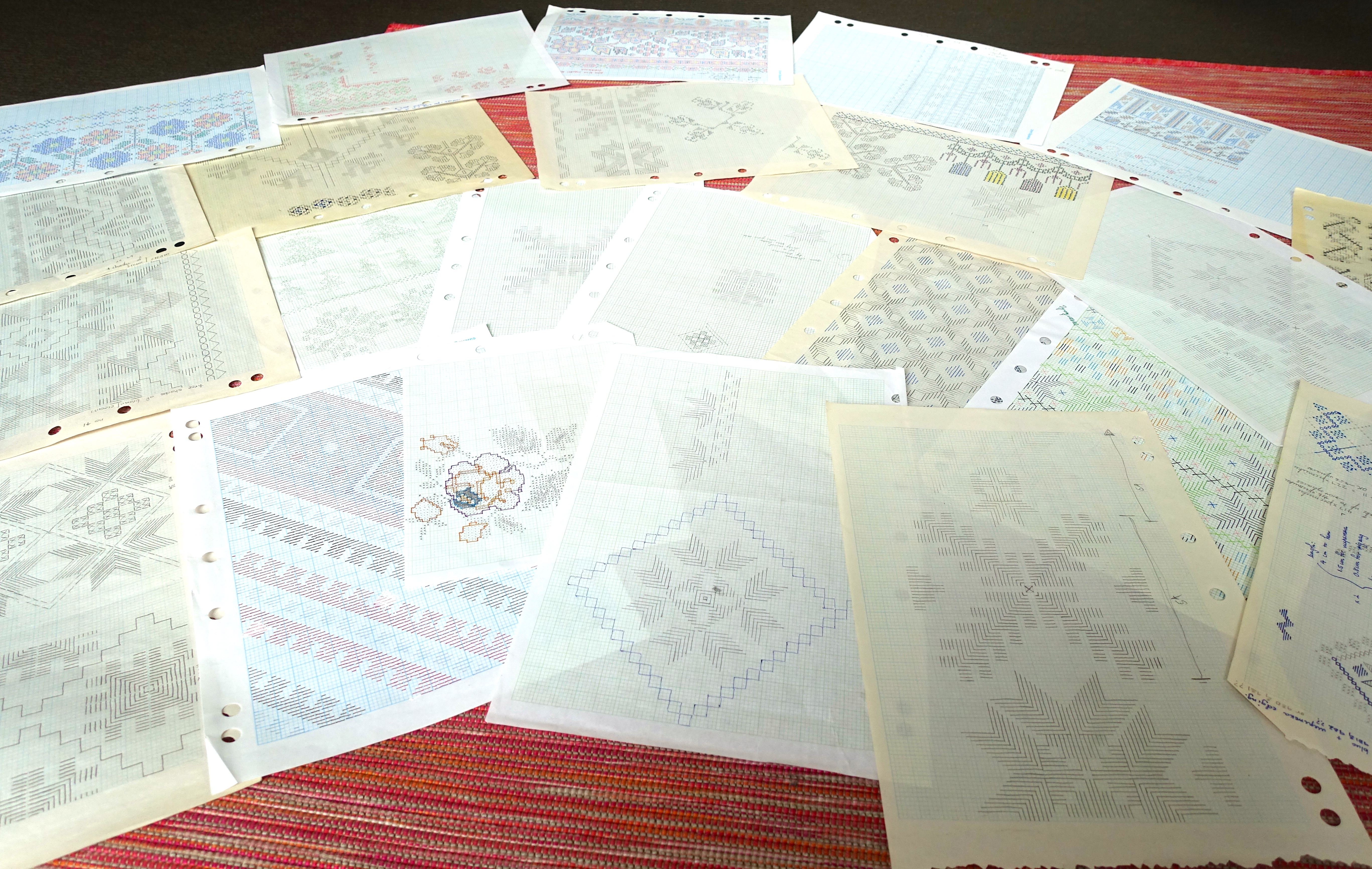
I remember one such example, standing at the back of the hall at church, awaiting the blessing of Easter baskets, spying and admiring someone’s beautiful servetka.  After the blessing, owner of said servetka whipped it off his basket and passed it over, to borrow, to copy.  And copied it was… onto graph paper.

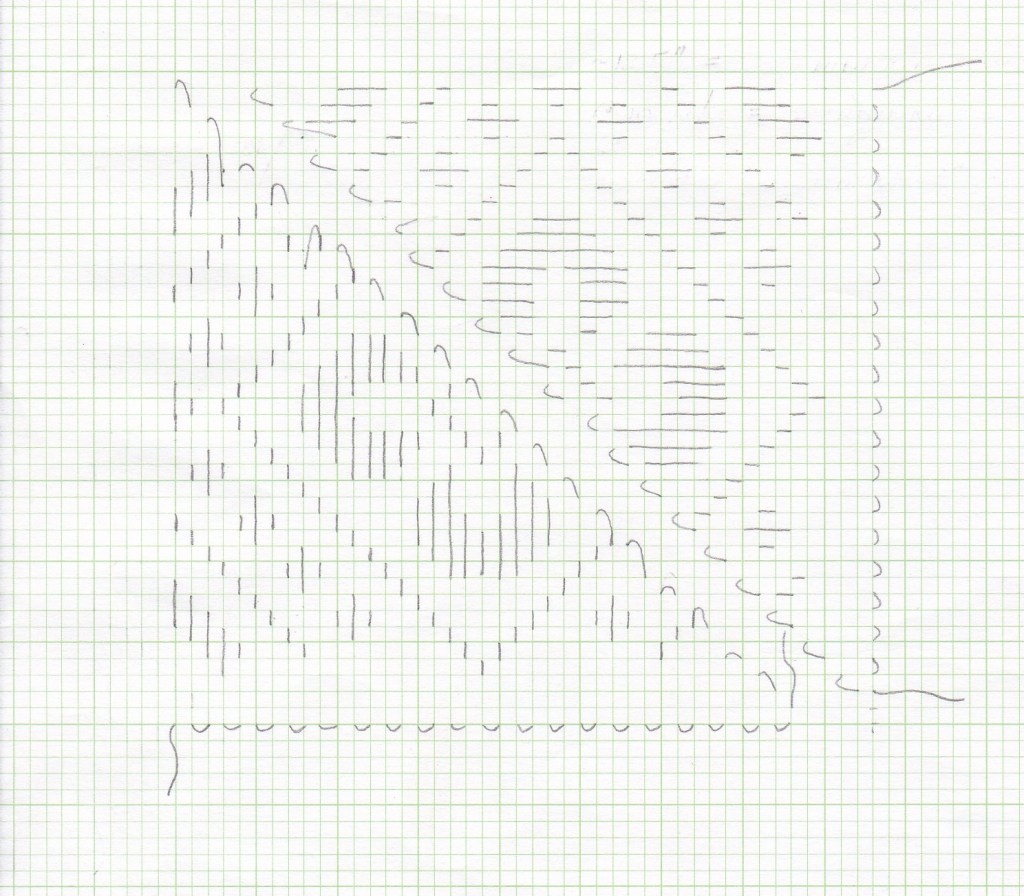
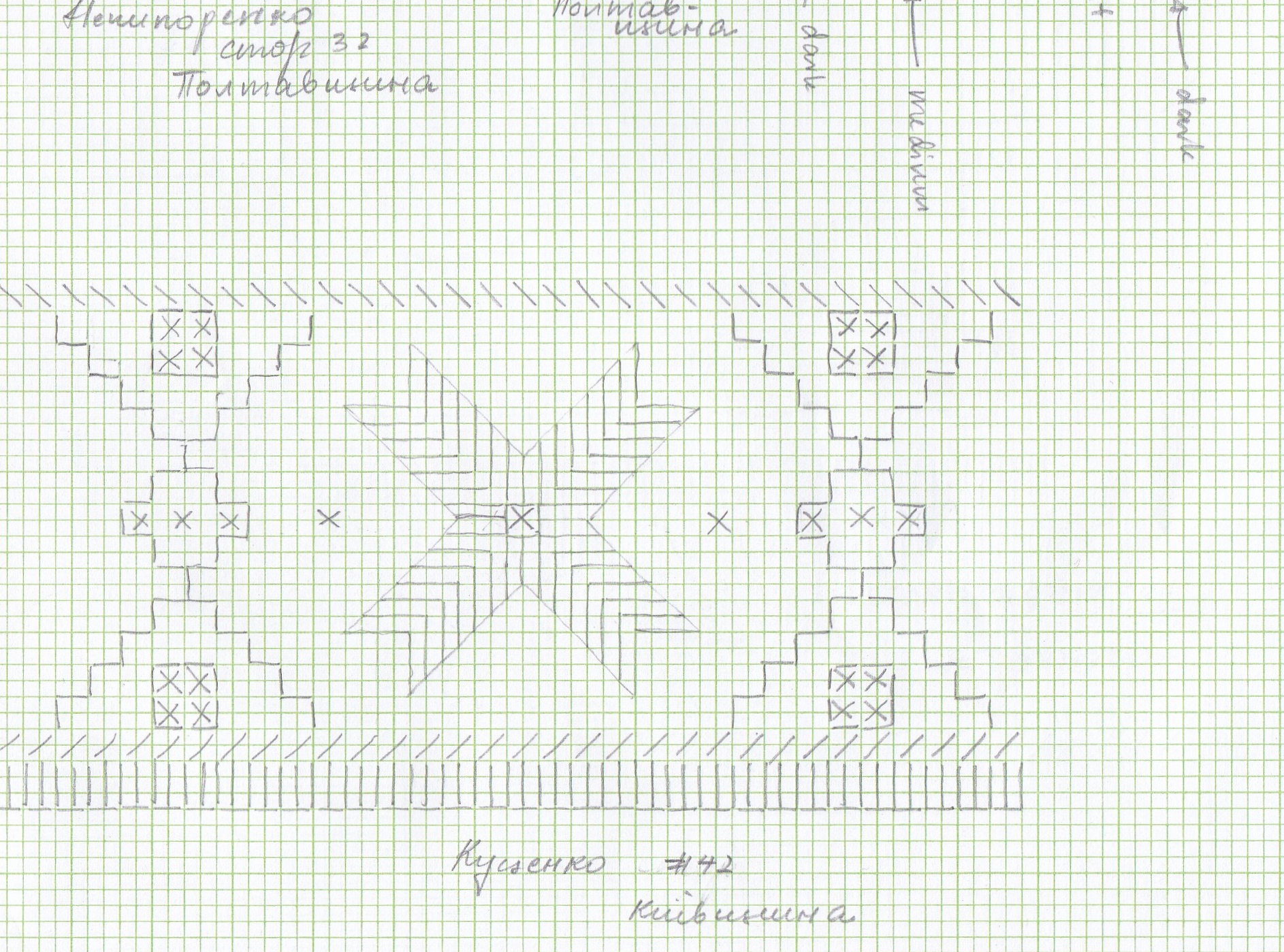
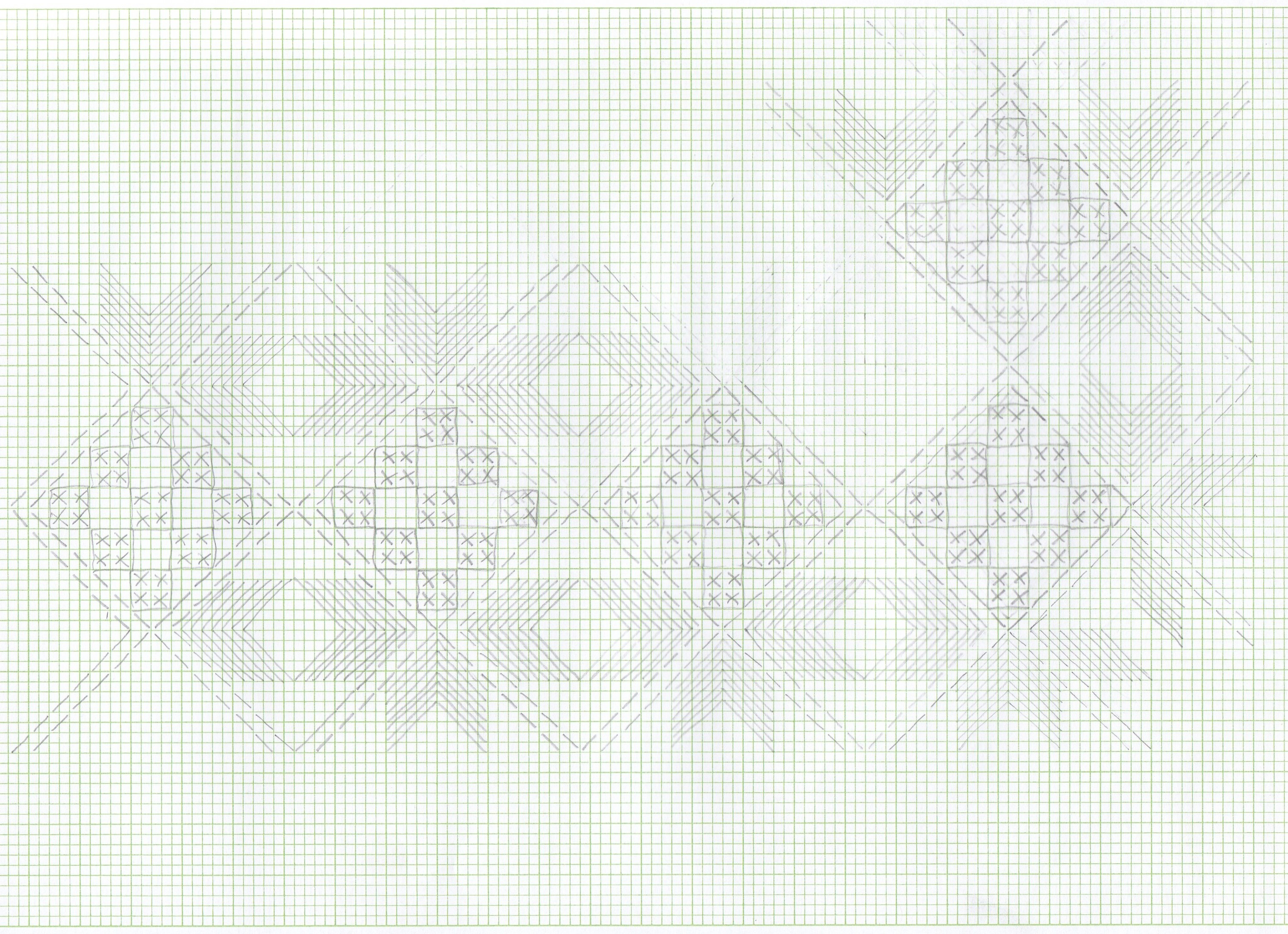
As the above may demonstrate, there is no question that a graphed design will make the most sense to the grapher.

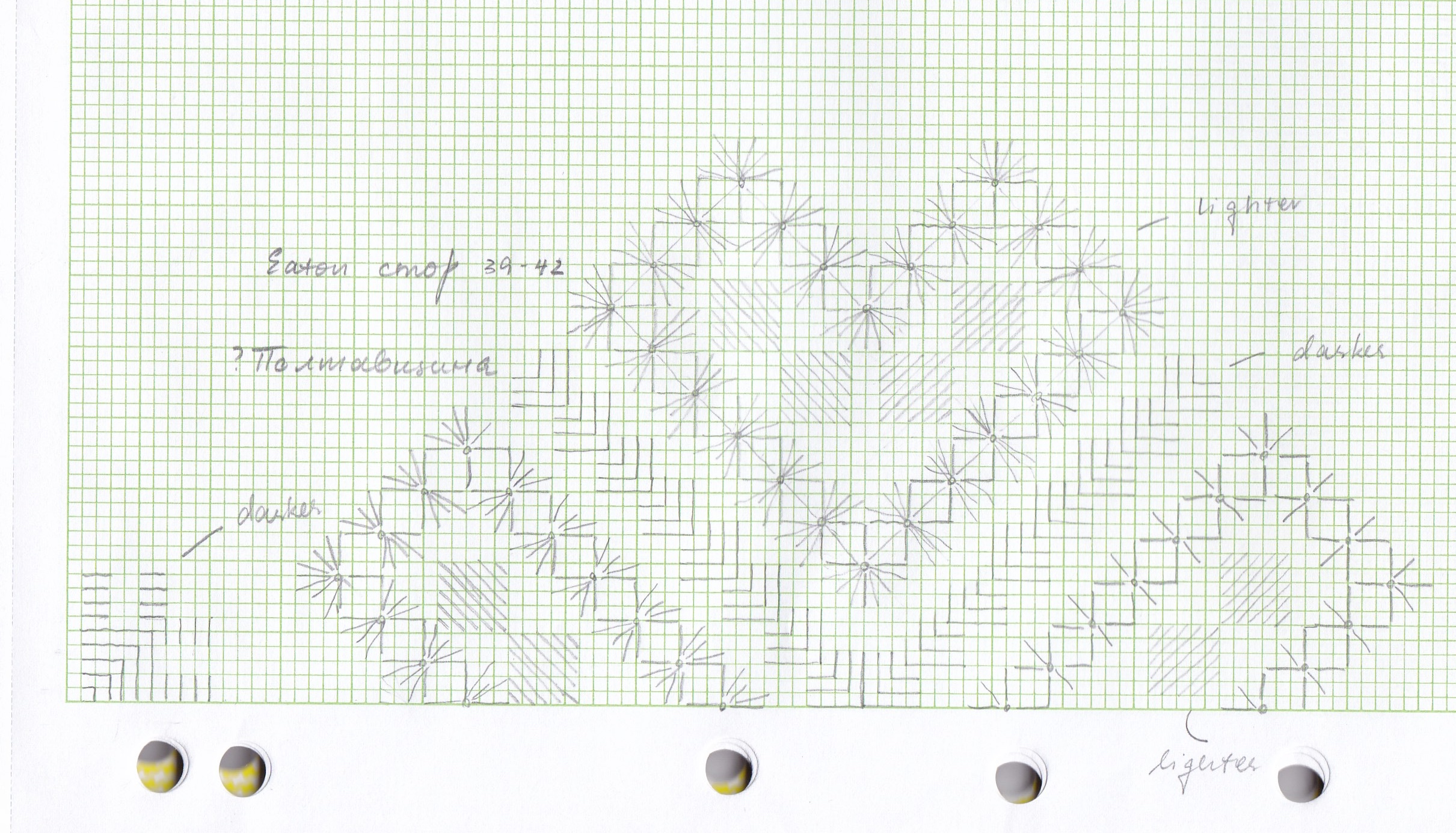
Even from books where designs are drawn out in schematic diagrams, I prefer to draw them out for myself before getting under way.

IMG_20181218_0008
IMG_20181218_0009
From Gay Eaton’s Ukrainian Whitework. See INSPIRATIONS page for details.

Why?

Apart from the fact that I sometimes find simply graphing a design a relaxing, mindful, satisfying activity, I learnt very early on the value of graphing.

In fact, I remember inventing designs as a little thing!  Not something I do so much any more!

For me, the main value of graphing lies in learning the design before starting to embroider it.  I would find it difficult, in the case of a simple design, and nigh on impossible in the case of a detailed or not zoomed in design, to embroider directly from a photo.

IMG_20181218_0011
A simple design, for example. From Ukrainian Embroideries by Maria Kutsenko. See INSPIRATIONS page for more details.

Even here, the relative size of separate motifs, their spacing, will affect the appearance of the embroidered pattern.  Something to work out on graph before getting under way.

IMG_20181218_0012

Here, the central star didn’t appeal to my eye and when embroidering it, I immediately changed its dimensions to appear more like the original design.

IMG_20181218_0013
Fabric: 25 count Floba. Threads: DMC stranded cotton, used in three strands, shades 3848 and 3849.

Designs presented in books as linear can be little devils when trying to get them to turn a right angle.

IMG_20181218_0016
From Ukrainian Embroideries by Maria Kutsenko. See INSPIRATIONS page for more details.

Who would have thought?

IMG_20181218_0015.jpg

But after this much rubbing out and retrying, I’m not really happy with how it looks and I think the idea of using this for a servetka has well and truly died off.

Or I just came across this again… once enthusiastically copied from a webpage, defeated by designs from Rava Rusha!  If I can’t get it right in drawing, I wont be doing it in needle and thread!

IMG_20181218_0017.jpg

I think the other important factor which graphing helps is composition – how much fabric, what dimensions?  I wont pretend that I very formally compose anything but I often find it helpful to have a design graphed, to count the thread number in a repeated motif and have sense of where I’m going with it before I get started on a more substantial project (than a bookmark anyway)!

Finally, graphing is like an archive of interest.  I have some designs that I’m sure I graphed back when I was a teenager.  And I still look at them and admire them.

DSC01222

In summary?  Graph away!  It is embroidery’s friend!

~oOo~
30th July is World Embroidery Day

Ukraine has an International Embroidery Day (Всесвітний день вишиванки) held on the 4th Thursday of every May since the year 2006.  It would be an amazing day to be in any Ukrainian city or town.  My experience from visiting music festivals was of people happily wearing their embroidered shirts and blouses with jeans, sneakers, braces, dreadlocks…  Imagine the impressions on the day when the festival is dedicated to Ukrainian embroidery!

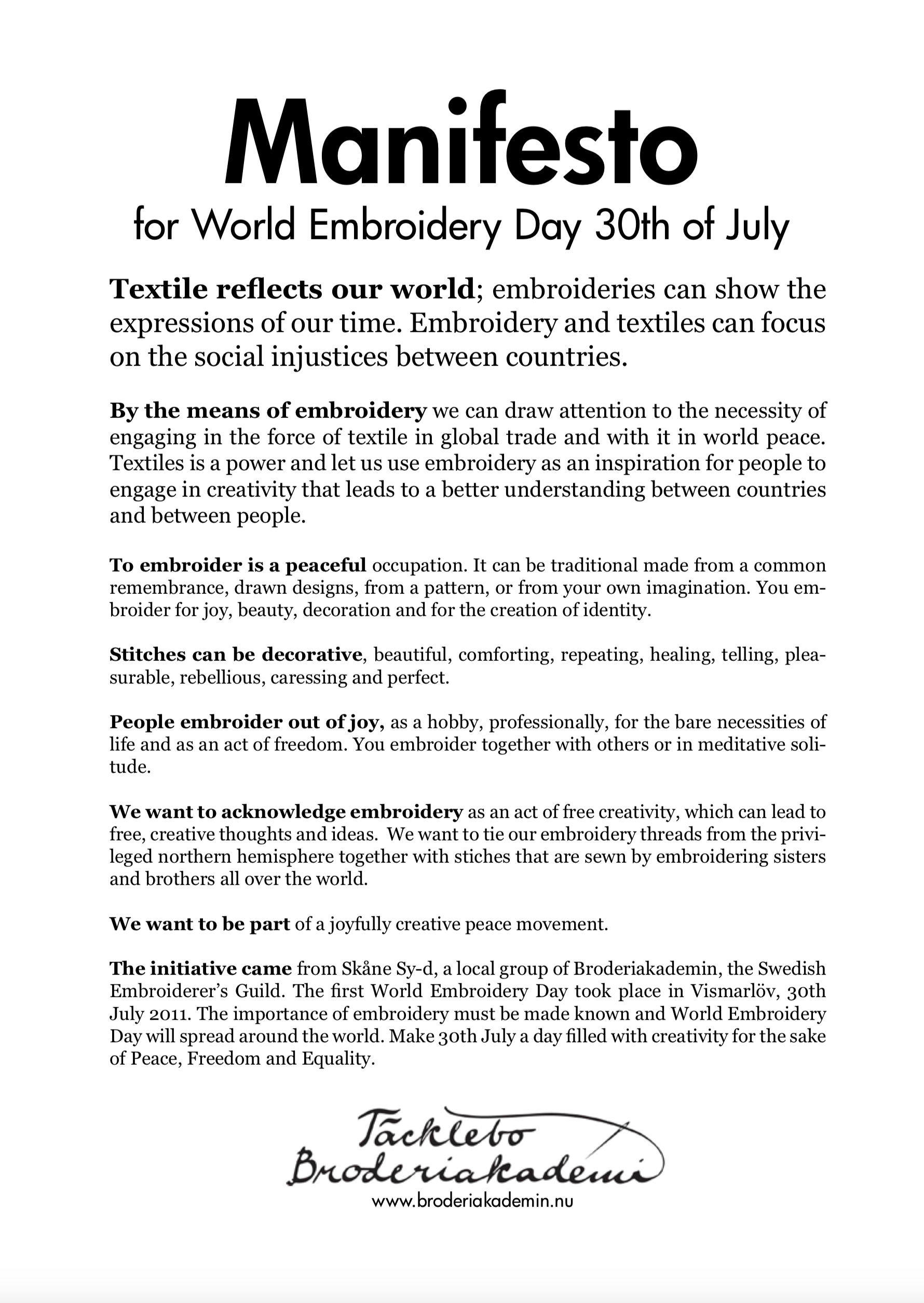
Although for Australia I am a day late, it is still the 30th of July somewhere in the world and World Embroidery Day is still taking place there.  World Embroidery Day is an initiative of the Swedish Embroiderers Guild.  I love their manifesto!

Screen Shot 2018-07-31 at 10.25.16 am

I LOVE THIS!  Stitches CAN be healing and embroidery CAN be an act of freedom and of creation of identity.

Most recently, a life-long friend brought to my place some embroidery that had been started but not completed by her grandma now departed.  With it came her own desire to expand her knowledge and skills of Ukrainian embroidery and I was only too happy to be asked to help.  I do believe that quite aside from the sheer enjoyment experienced from creating an embroidered piece, we have the capacity to also create our identities as women and men, daughters and granddaughters or sons and grandsons, friends, creative individuals and descendants of embroidering nations.

The Swedish Embroiderers Guild manifesto speaks of connection, creativity, beauty, giving and sharing.  How absolutely inspiring is that?

~oOo~
On the Making of Mistakes and Unfinished Projects

IMG_0698

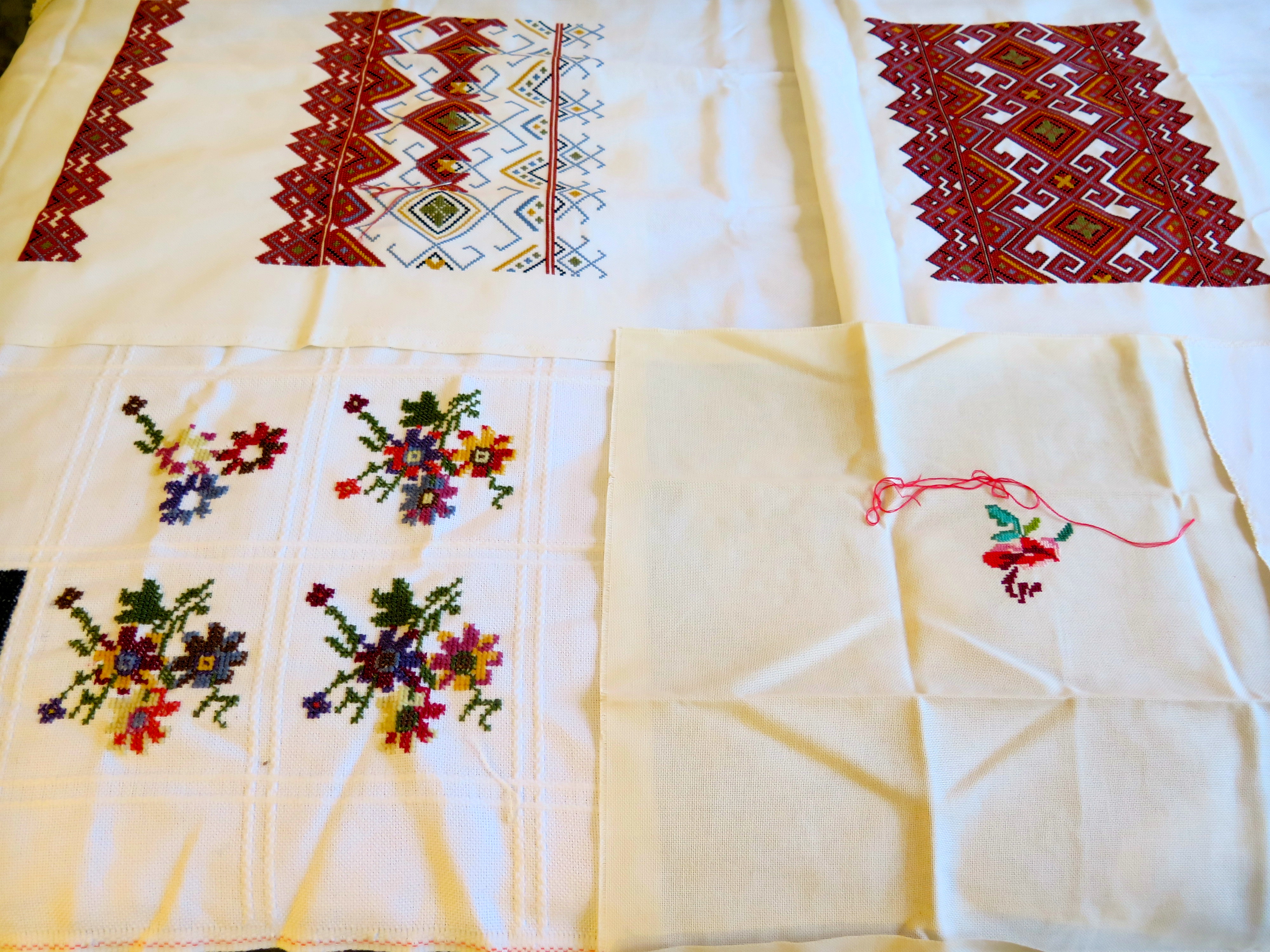
There are the inevitable projects conceived and commenced but never completed.  It may be because part way through, something looked wrong.  (It wasn’t quite accurate to say in my first post that everything ALWAYS looks better in fabric and thread).  Or that a good way in, I have made a pretty epic mistake that requires a lot of unpicking and I have become disheartened by its magnitude.

I have started things on too small a piece of fabric for their intentioned use.  At other times, I have misjudged dimensions in composition and by the time I’ve realised, the work is too far advanced for unpicking.  Sometimes the piece simply isn’t taking shape in the grand or delicate way I want it to and so I stop.

IMG_0704

Starting something large – a large project or a series of pieces intended to complement one another – is a risk because ones taste for a technique, colour scheme, working fabric or style may change before the large thing is completed.  And it lies about unfinished.

IMG_0701

Some techniques are plain hard and very fiddly and which means progress is slow and A LOT of patience is required.  The reward is too far away or the brave attempt gives way to doubt about the quality of the needlework and it lies about unfinished.

IMG_0700

One of the risks of experimenting with colour schemes is that the colours simply don’t complement all that well.

img_0703-e1532302106741.jpg

Sometimes a design involves a lot of different colours crowded into a small space which means a lot of tucking under of threads.  The design becomes thick on the reverse side and the needle is hard to pass through…  abandoned.

Otherwise, there is a discordance between the fabric count and the thickness/thinness of the embroidery thread/wool and the coverage I achieve doesn’t appeal to the eye.

IMG_0705

The MAIN reason I have a lot of unfinished projects lying about is that I LOVE STARTING THINGS!  Inspiration and the workings of imagination move too fast for my hands and the day-to-day time available.  I see a design in a new light, my mind goes to work on a possible colour scheme and I’m done – a new piece is born.

Currently, I have three servetky on the go.  Meaning I’m working on all three of them simultaneously.  Starting the kxembroidery page has meant a quiet commitment to completing projects.  All three of these servetky are very different and very beautiful.  One falls in the rather large category.  Another is smaller but involves a bit of labour.  The third is quick and fun and is flying.  I’m looking forward to sharing.  But bear with me whilst I get through at least one – the site will be a little quiet ’till then!

In the meantime, I don’t mind sharing my mistakes or failed experiments.  Each one teaches a good lesson and contributes to the chalked up experience of composing and working embroidery projects.

~oOo~
Red

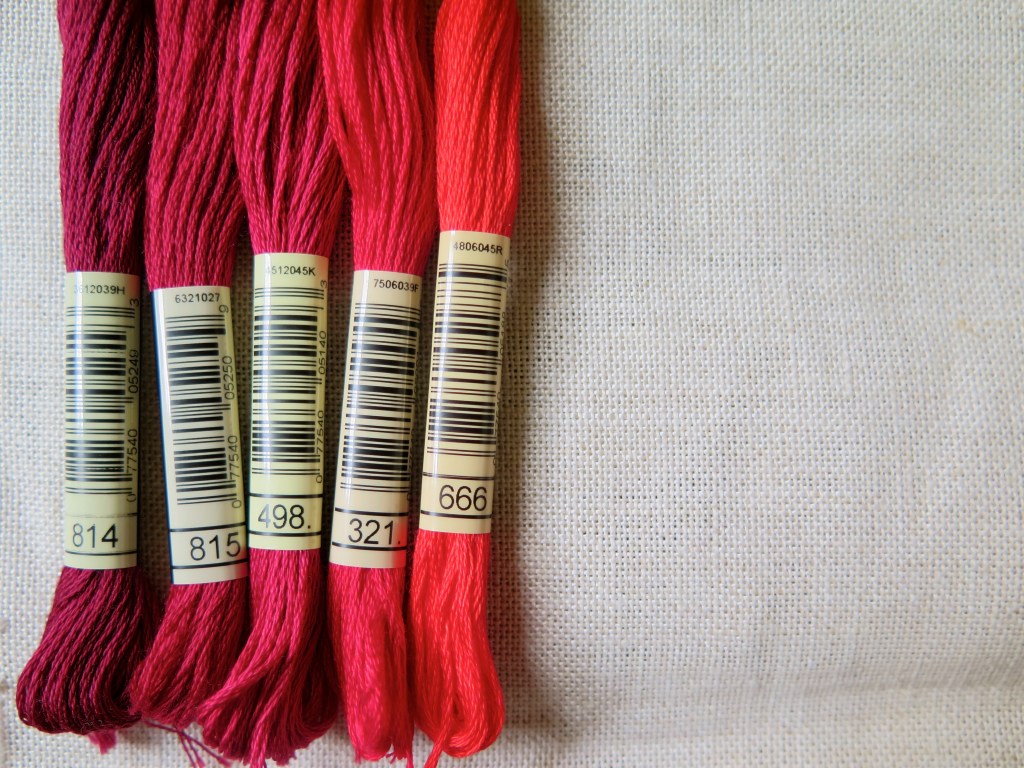
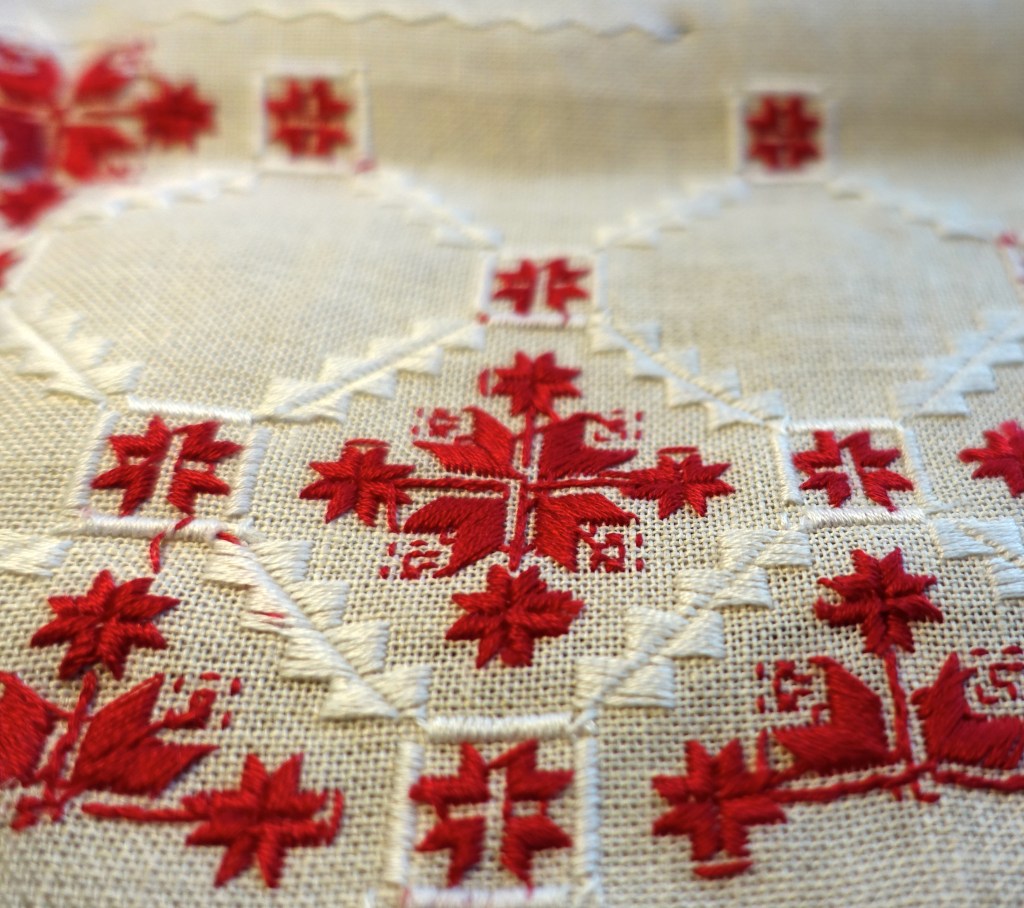
321 cherry

Red is one of THE most used colours in Ukrainian embroidery.  It features on it’s own and  in patterns of dual colours or multiple colours in the regional embroideries of many parts of UA.

Growing up, I was exposed primarily to my Baba’s embroidery and therefore her style of composition and colour choices.  Some shades of red were extremely familiar to me from embroideries of my childhood, and may well be familiar to friends and other Ukis around the world who have seen many of the black and red patterns so popular and quintessential in Ukrainian costume and decoration.

DMC colours 814 and 815 were the traditional deep reds, 321 the gorgeous cherry red and 666 the light and bright and slightly crazy.

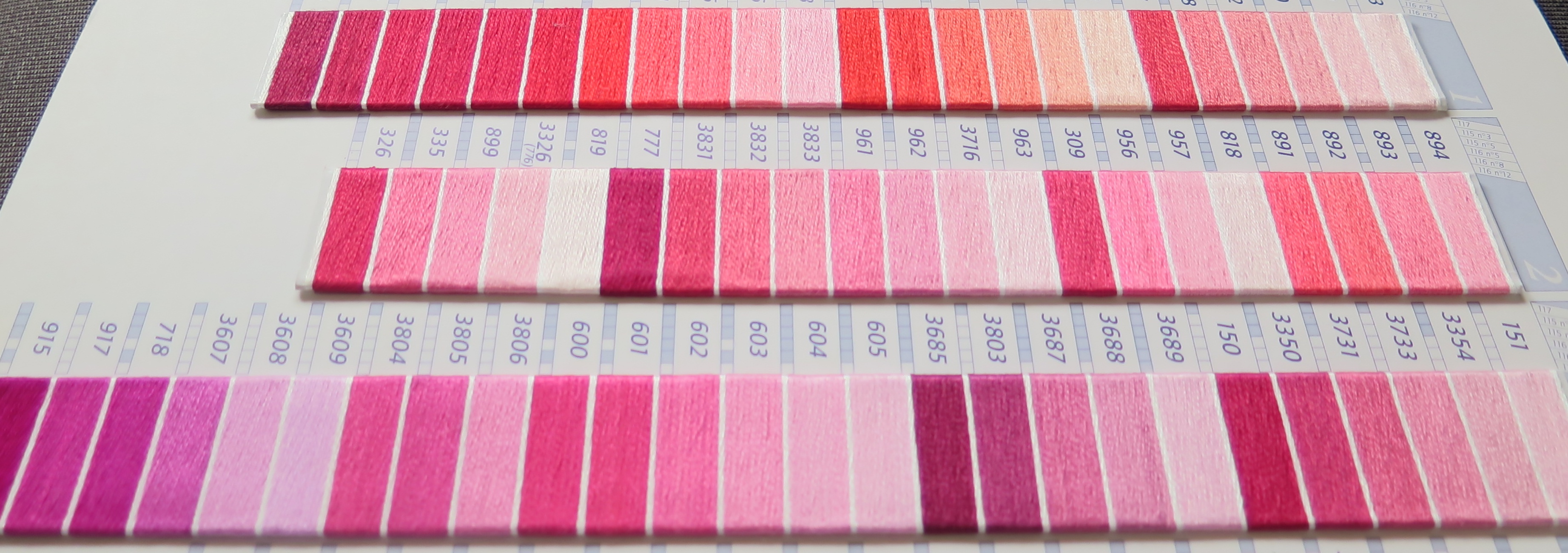
A few years ago, I wondered about subtle variations in colour and the inspiration they could bring with colour combinations and the overall appearance of a design.  I stood at the long wall of my go-to needlework supply store and picked out as many reds as I could and found there are definitely more that 4 or 5 shades of red available in my favourite embroidery cotton.

Sometimes in embroidery, patterns tell you what to do.  For example, there is no question in my mind that this design HAS TO BE done in 321 cherry.  I can’t imagine it any other way.

така краса, аж очі плачуть ~ so beautiful eyes could weep

But another shade I love is the subtle, tomatoey, vintage 347.  Slightly faded and a little bit pink, it has brought to mind an entirely different style of colour combination.

After all, in colour combinations, what the eye sees of a colour depends very much on its surroundings.  A shade of colour is suggested to the eye based on relative shades around it.

DMC colour chart

Understanding this has prompted me to try alternatives to the traditional darks and mediums.

Apart from being fun, playing with colour brings new dimensions, mood and an element of the unpredictable to embroidery projects.

so many reds

~oOo~

What is Embroidery?

This is a question probably a little bit like asking “what is borsch?” Some fundamentals will be the same, but there will be as many variations as there are people familiar with it, and all of them will be true. Embroidery will be something different to every person who does it or has seen it, or worn it for that matter.

I was taught cross stitch by my grandmother, Baba, who patiently let me stand by her knee and pull the needle and thread with each stitch after she’d passed it through her linen. She then taught me how to cross stitch in straight lines and then in little rows of zig zags, or zubchyky, “little teeth” as we called them. She was Ukrainian – as were all of my grandparents – and so my exposure to and passion for embroidery has always been with Ukrainian embroidery. I remember friends and neighbours coming to her house to talk stitch. I remember going out with her to buy materials and threads.

Baba made all of our sorochky, embroidered shirts – no mean feat as I have two brothers and four cousins on that side of the family and we grew at the going rate for children and adolescents. She also embroidered multitudes of rushnyky (a long, narrow piece with symmetrical design at each end), servetky (embroidered square or rectangular cloths), podushky (cushion covers), nastilnyky (table cloths) in a dizzying range of techniques and colour combinations. She was, in fact, prolific.

She had a huge garden in the suburbs of Sydney and loved planting flowers. I remember her telling me that her inspiration for colours came from nature – she would look into her garden to see what nature had combined and bring these colours to her embroidery.

Our Mama made exquisite embroideries – the christening gown we all wore, most recently used for my little nieces, and the collections of podushky and servekty that were kept in a deep dresser draw, opened and sorted through for choices for each Easter basket, special occasion or simply as ornaments at home. I loved them all.

I’m deeply grateful for this gift I have been given. Ever since I started visiting Ukraine, finding and buying as many books on Ukrainian embroidery as I could was essential. I remember one particular year when I visited a handful of music festivals with friends and saw EVERYONE in vyshyvanky worn with shorts, jeans, dreadlocks and sneakers. It was so funky and inspiring, I took A LOT of photos.

To me, embroidery is many things. It is something I do to relax or think things over – hands busy, mind working. It’s an opportunity for play with colour and composition. I get inspired by the books I’ve inherited and collected over time, and so much needlework that is posted on blogs and social media from Ukraine. I just can’t stitch fast enough! Sometimes sitting with a photo of a beautiful design and successfully mapping it out on graph paper brings me satisfaction. There are certain friends’ homes that I visit and come away with an array of new ideas. Sometimes a variation on a colour scheme is suggested by the linen at hand. At other times, I want to use a certain shade and find a design to match. Embroideries make what I think are extremely special gifts. No matter what the basis for a design, whether it comes from a book or a photo, each new piece is 100% unique and the time taken to complete a project means it is made and given with love. Sometimes I want to create something that presents what is my impression of the deeply traditional; at other times, I want to bend rules and get away with it. Starting a project is always incredibly rewarding. I don’t know why it surprises me each time that what I had in my imagination ALWAYS looks far more spectacular in linen and thread. At all times, I want my work to retain its Ukrainianess, if I may invent such a word. I want it to be Ukrainian.

Spending time with my embroideries makes me feel close to the women who have been in my life and made this very much part of the every day for me. To have that in such easy reach is something for which I am very grateful.

P7040784.JPG

~oOo~